Landscape studies
Part 1 Practise producing cloud and sky studies as Steve Strode begins a four-part series on painting elements of the landscape
Steve Strode
Acrylic
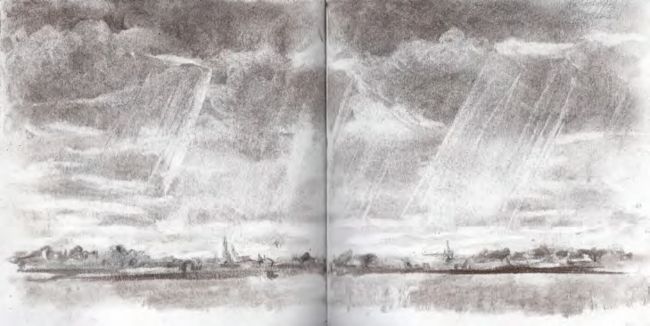
Sketch
, charcoal in sketchbook, measuring 4x4in. (10x10cm). Make a habit of carrying a sketchbook for tonal studies and notes.
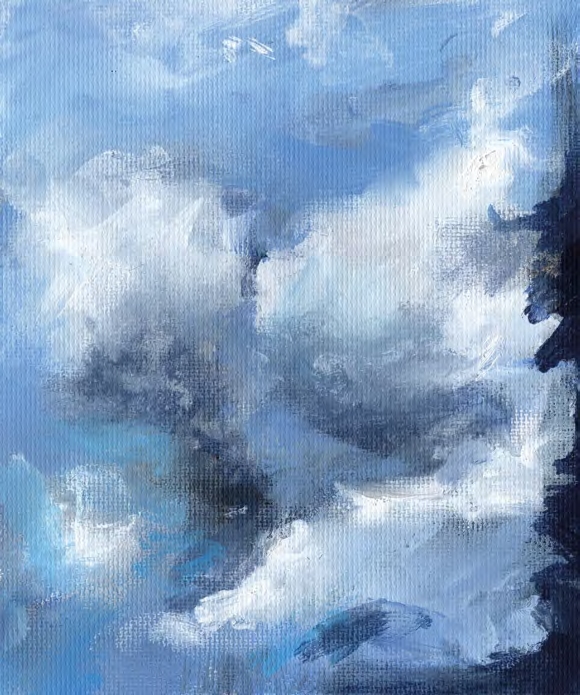
After John Constable
, acrylic on paper, 512⁄ x4in. (14x10cm). Look at the work of other painters and try to delve inside their heads by replicating their interpretations. Put what you have learned into practice by trying one of your own.
LEARNING OBJECTIVES
How to paint skies and clouds in acrylics
Four-point checklist to learn
How to depict aerial perspective
Need to paint a sky with clouds? This much-neglected background is often dashed off in the rush to focus on the juicer bits of the landscape, but before you reach for the blue and white paint, stop and think.
John Constable believed that painting the sky was crucial and that landscape painters who didn’t think the same were missing a trick.
‘It will be difficult to name a class of landscape in which the sky is not the key,’ he wrote. Constable had a sound knowledge of cloud formations, and no doubt the more you practise, the more your knowledge base and understanding will grow, but that knowledge is not essential when you’re starting out. Believable skies and clouds are within your grasp. After all, you don’t have to be a mechanic to paint convincing cars, but we can start improving those painting skills before we even pick up a brush.