Colour choices
Part 2 Tim Fisher chooses Sennelier soft pastel in orange lead as the focus colour in his harbour scenes
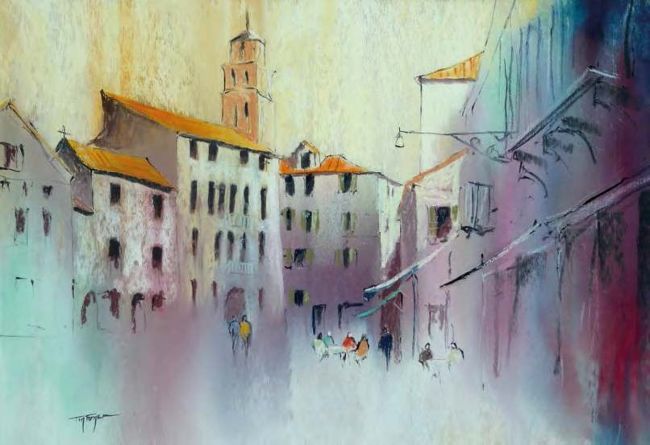
Campo Santa Margherita, Venice, pastel on Ersta 713E paper, 14x20in. (36x51cm)
Pastel painting has been one of my favourite pastimes for a number of years. This is a dry medium where the sticks are manufactured by combining pigment, chalk and a binder. Water is added to allow the mixing of these elements, resulting in a stiff paste that can then be formed into sticks and dried.
The hardness or softness of the pastel can be determined by the amount and type of binder added. The addition of chalk to make the colour lighter can also have an effect on how soft the stick is.
There are a number of advantages to using pastels. They can be worked quickly, switching from one colour to another without having to change brushes or wait for the paint to dry. It is direct, with very little between the artist’s fingers and the pastel surface. The effect of applying sticks is immediate, giving bright and colourful results. It is also an exciting medium and I enjoy applying colourful ink washes over carefully chosen papers, after which pastels can be added once the surface is dry.
I like to have a generous assortment of pastels to avoid the frustration of not being able to apply certain tints when working. Starting a pastel collection can be quite a haphazard business, occasionally needing a spring clean to eliminate sticks that are not useful.