GB
  
You are currently viewing the United Kingdom version of the site.
Would you like to switch to your local site?
28 MIN READ TIME

Pi-hole

STAY SAFE ONLINE!

Eat unwanted online nasties by sending packets to the Pi-hole. David Rutland helps you protect your browsing data with the ultimate in a paranoid’s delight!

Adverts are a plague on the internet – although we’ll grant that in their current form, they’re less intrusive than in days A of yore. It’s easy to look back on the late 1990s and early 2000s web through the haze of rosetinted glasses and view it as a utopia of high-quality independent blogs, free websites for everyone, and an explosion of experimental design along with non-predatory social media.

Lay your spectacles aside for a moment and consider that most of what you recall is wrong.

The internet at the turn of the century was never a utopia. Yes, you could get a free site from GeoCities, but you can make a better one today with GitHub Pages. Visually, the web was horrific, and adverts were both gaudy and omnipresent. Pop-up ads and pop-under ads would obstruct your browsing and slow your computer to a crawl. Webmasters (as they were then known) would do anything to make a buck.

Google did a great deal to clean up the web and the advertising space in general. When was the last time your PC crashed due to an infinite stack of adverts appearing out of sight under your active window? Do you recall the whack-a-mole of fighting against endless cascade of pop-ups appearing in random locations, and hammering the big red X, only to discover that it was a trick, and you’ve actually launched a new wave of attacks?

That doesn’t happen any more, and it’s largely down to Google’s dominance in the advertising space.

Even without running any kind of ad blocker, your browsing experience is much more pleasant and less brazenly predatory than it was two and a half decades ago.

There are trade-offs, of course, and the biggest is privacy. While websites no longer assault your visual cortex with an epilepsy-inducing assault, they instead quietly note what you’re looking at. They measure how long you’re on a web page and how you interact with it. Fair enough, you may say. Website owners need to know which articles are doing well and what people like to read. They’d be shouting into the void otherwise.

But consider how many websites you visit in a day. Your metrics, engagements and interests are noted down on each one, and tied together into a profile, which if it fell into the wrongs hands, probably wouldn’t paint you in the best possible light.

The detail of a profile constructed from search and browsing data is alarming, and tracking companies can and do collect data on (deep breath) your age, location, devices, sex, sexual orientation, religion, income, contraceptive use, fertility, political views, race, health, your friends, your business dealings, how often you call your mum, and much, much more.

It doesn’t stop when you’re not using your computer either – thanks to that ever-present lump of metal, plastic and glass in your pocket. As well as the usual players, third-party companies pay impoverished developers to slip SDKs into their apps. If given appropriate permissions, these SDKs use Wi-Fi signal strength to map your location to within inches and beam that info back to the mothership. All of this means that you get ads that are tailored to your interests – it’s mildly irritating and gives you a mild sense of paranoia that you’re being stalked, but at least you know about the latest Black Friday deals.
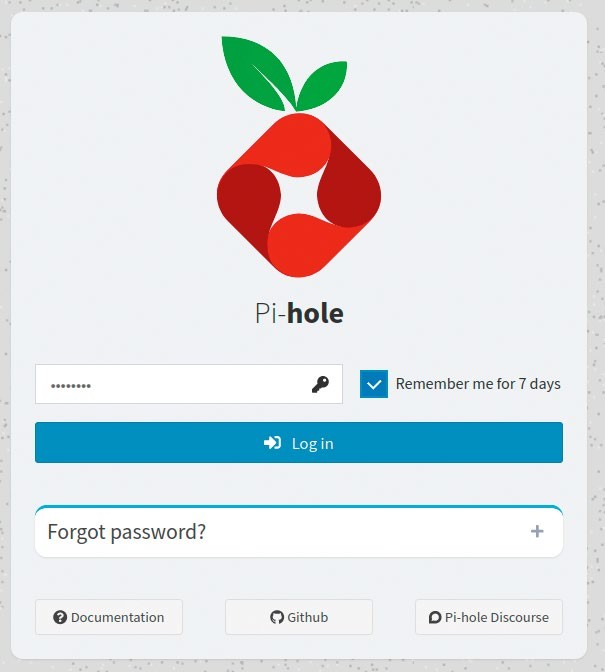
It may not look like much, but Pi-hole does more than just keep adverts out of your browser. It protects your privacy, too.
CREDIT: Magictorch

But consider what that intensely personal information could be used for in the hands of someone who wanted to do more than shill toasters.

There are many things that are illegal now that didn’t used to be, and some texts that were popular in the 1990s are now criminal to possess.

In parts of the United States, women’s search histories are being used as prosecution evidence in reproductive health cases. In November 2023, Russia outlawed the “international LGBT public movement” as an extremist organisation, meaning that gay people could be treated as terrorists (always a handy go-to).

Never having visited this site without Pi-hole before, it’s odd that Reach considers this writer the type to bet on sporting fixtures.

Rather than relying on search history, an ‘advertising profile’ would be far more useful in rooting out potential law-breakers and bringing them to justice. And God forbid that a malevolent actor could use your profile data to influence elections or referenda.

Ad blockers are a great solution, and this writer employs the UBlock Origin add-on for Firefox on his two laptops and two mobile phones. But there is a total of five ‘proper’ computers in the household, plus an additional three phones, a couple of Chromebooks, a streaming TV stick, an iPad, a few Raspberry Pis, and many other connected devices.

It’s a pain to set up ad-blocking extensions on every device, and on some – such as the Chromebooks and Roku stick – it isn’t even possible.

Unlock this article and much more with
You can enjoy:
Enjoy this edition in full
Instant access to 600+ titles
Thousands of back issues
No contract or commitment
Try for 99p
SUBSCRIBE NOW
30 day trial, then just £9.99 / month. Cancel anytime. New subscribers only.


Learn more
Pocketmags Plus
Pocketmags Plus

This article is from...


View Issues
Linux Format
February 2024
VIEW IN STORE

Other Articles in this Issue


WELCOME
MEET THE TE AM
We’re all about taking back control this issue, implementing Pi-hole protection. What open source tools do you use to help bring control back to your life?
Corporate takeover
Who said history repeats itself? First there was
REGULARS AT A GLANCE
Google steps up arms race against ad blockers
EXTENSIONS
X.Org being phased out
For four decades, the X Window System has endured despite competition, but major OSes are bowing out.
Road map to GIMP 3
Latest version of GIMP finally has a release schedule.
ALL AI HYPE
My crystal ball is only slightly better than
ALL IN THE PIPE!
PipeWire 1.0 was released late November (see right),
PipeWire turns 1.0
The audio/video bus designed to replace PulseAudio, JACK and other systems has now reached version 1.0.
More Linux-first laptops
Linux come preinstalled on more and more machines.
Open firmware doing very well
100 million firmware updates supplied by the LVFS.
Distro watch
What’s behind the free software sofa?
NEW YEAR! NEW LIBRE!
Like every year, there will be two new
UPSTREAM FUNK
A recent data corrupting bug in the ext4
Kernel Watch
Jon Masters keeps up with all the latest happenings in the Linux kernel, so you don’t have to.
Answers
Got a burning question about open source or the kernel? Whatever your level, email it to answers@linuxformat.com
Mailserver
I think we’ve misplaced the PDP-1 in the
HotPicks
Recoll »Polybar »Curtail »Betterbird »Bleach» Bit FileZilla» JDownloader
LINUX FORMAT
The #1 open source mag Future Publishing Limited,
REVIEWS
Intel Core i5 14600K
No one calls Jacob Ridley mid-range!
EndeavourOS 11-2023
Nate Drake endeavours to discover all that is great about this Arch-based Linux distro, created by former Antergos developers.
SysLinuxOS 12.2
Nate Drake dives into SysLinuxOS to find whether its reputation as the dream OS for system administrators is well deserved.
OpenMandriva Lx 5.0
Nate Drake relives Mandriva Linux’s heyday with its programmer and community-developed successor. Plasma has never looked so good.
Ultramarine Linux 39
Nate Drake decides to take this Thai Fedora-based distro for a spin and finds it fast, simple and surprisingly customisable.
Steam Deck OLED
Management is overjoyed: “Take an old product and slap a new badge on for more money?” Tyler Colp likes his job too much to correct them.
ROUNDUP
File managers
Dolphin Krusader Midnight Commander Nemo Thunar
Pi USER
Coolest Projects 2024 remote and in person
Start your Raspberry Pis! The coolest digital creators competition is ready to open in 2024.
Ubuntu 23.10 for Pi
The ever dapper Les Pounder has been using Ubuntu since Dapper Drake and has been looking forward to sampling this Pi-based iteration.
Bambu Lab A1 Mini
Good things come in small packages is something Denise Bertacchi never says – now she’s eating her delicious words.
Build a Pi Pico electronic piano
Les Pounder is trying his best to make his mum proud by not taking apart an electronic piano!
Torrent your slice of Pi
Torrenting isn’t all about taking – Christian Cawley helps you use a Raspberry Pi to serve open source ISOs on the BitTorrent P2P network.
IN DEPTH
The rise and fall (and rise again) of Basic
We plot the symbolic milestones of the most basic of allpurpose code with the instruction of Mike Bedford.
Roll out the Rhino!
In an increasingly crowded marketplace, Nick Peers discovers why this new Ubuntu derivative might be a barrel of fun!
TUTORIALS
Total shell recall
Too busy running around shouting, “Get your ass to Mars,” Shashank Sharma thinks a strong shell history can be a real life saver.
Build your own home CCTV system
Nick Peers reveals how to bypass expensive (and insecure) cloud security systems to create your own using a variety of cameras.
Emulate an analogue computer digitally
Today, computers are nearly always digital, but analogue computers also had their place, as Mike Bedford discovers through emulation.
Create and use inventory objects
Nate Drake invites you to relive the glory days of point-and-click adventure games by creating your very own.
ADMINISTERIA
Manage network downloads locally
Find out how to apply some admin knowledge to network downloads.
Farewell, Docker; hello, Rancher Desktop
Introducing yet another – better – way to manage your containers.
LINUX L APTOPS
Stuart Burns is a Linux administrator for a
HDDs up, this is a RAID!
Handy admin tips for locating those many drives in your redundant arrays.
AccuWeb Hosting
Power-packed web hosting for all levels of user, including the ever-so-picky Mike Williams.
Smartproxy
Sead Fadilpašić tests a versatile and fairly affordable proxy service.
Green PC Machines
The world’s biggest PC maker says it can achieve net zero by 2050. Barry Collins visits its US headquarters to get his hands on plant-based PCs, bamboo packaging and vegan leatherstyle covers.
CODING ACADEMY
Write your own Android application
Matt Holder investigates how to create cross-platform applications using a combination of Python and the Kivy framework.
It’s all redirection!
LXF SHELL
Chat
X
Pocketmags Support