GB
  
You are currently viewing the United Kingdom version of the site.
Would you like to switch to your local site?
14 MIN READ TIME

IN DEPTH Linux

Inside Linux

As we delve into what makes Linux tick, your guide Matt Holder explains how abstraction keeps you safely away from hardware voltages.

I n this new series of articles, we are going to investigate some of the plumbing that is used to give us the incredible experience that we are used to with Linux distros. This ranges all the way from the kernel that performs interactions directly with the hardware to Wayland, the display server used to support our graphical user interfaces. Along the way, we will also meet PipeWire, which is used for audio and video routing around our systems. In some cases, we will also discuss the tools that these technologies are on the way to replacing, such as PulseAudio for audio playback and the venerable X in the case of Wayland.

Let’s begin at the beginning, introducing the Linux kernel, as this performs the direct interactions with your hardware and then provides methods for our software to interact with it.

In 1991, a Finnish student began work on a hobby project, which he called Linux. This was the humble beginnings of what we now use to interact with the hardware in our computers. Most people refer to Ubuntu or Fedora as a Linux distribution. Technically this is incorrect, as a lot of other tools are required to complete the operating system. One school of thought is that we should refer to these operating systems as GNU/Linux, which references the large number of GNU tools that are included.

Part One!

Don’t miss next issue, subscribe on page 16!
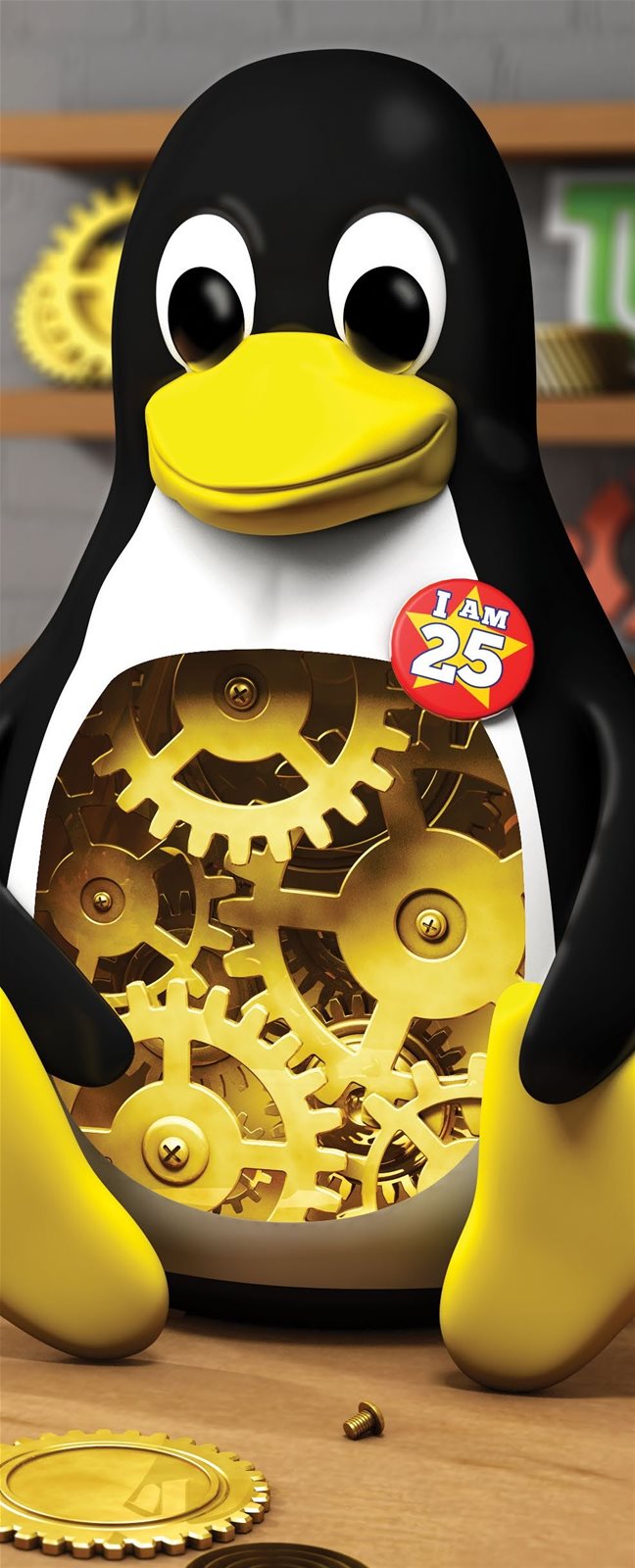
CREDIT: Magictorch

Kernel architecture

Ubuntu uses the Linux kernel. By design this is a monolithic kernel, which means it carries out a lot of functions all running in kernel space (running with the same privileges). A monolithic kernel handles interprocess communication (IPC), filesystems, scheduling, virtual memory and device drivers, to name a few. In contrast, the footprint of a microkernel is as small as possible. In terms of functionality, a microkernel manages IPC, scheduling and virtual memory.
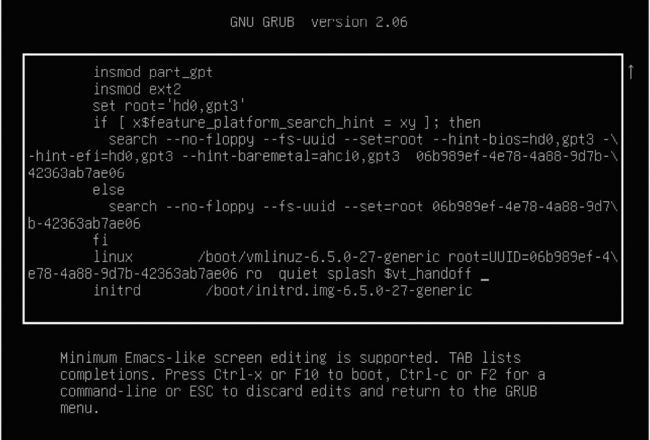
The GRUB menu can be used to set kernel options at boot time.

Everything else is managed in userspace by the kernel being able to communicate with corresponding services/daemons. For example, a device driver can communicate with the hardware by using a service that provides any data processing needed before the kernel then communicates this with the hardware.

Which kernel design has seized the day? Well, looking at examples of monolithic kernels – Linux, BSD, DOS, Unix – it seems that monolithic is the most popular. One school of thought is that having a kernel performing as few tasks as possible allows the code to be more rigorously tested and be more stable than a monolithic equivalent. Maybe a device driver crashes – using the microkernel example, the OS itself would not crash, but this hardware would be unavailable. A third kernel design exists, hybrid, which is a mixture of the two. The Windows NT kernel follows a hybrid model.

Unlock this article and much more with
You can enjoy:
Enjoy this edition in full
Instant access to 600+ titles
Thousands of back issues
No contract or commitment
Try for 99p
SUBSCRIBE NOW
30 day trial, then just £9.99 / month. Cancel anytime. New subscribers only.


Learn more
Pocketmags Plus
Pocketmags Plus

This article is from...


View Issues
Linux Format
July 2024
VIEW IN STORE

Other Articles in this Issue


LINUX FORMAT
LINUX FORMAT
The #1 open source mag Future Publishing Limited,
WELCOME
MEET THE TEAM
We’re looking at the KDE Plasma 6 desktop environment this issue, but what’s your favourite desktop of all time?
Desktop upgrades
Everyone thinks they know best when it comes
REGULARS AT A GLANCE
Ubuntu 24.04 scores 20% faster than Windows 11
Over 100 benchmarks on the AMD Ryzen 7 7840HS Framework 16 have shown that Ubuntu 24.04 seriously outperforms Windows 11.
Open source Z80 alternative
Zilog has announced the EOL of the legendary Z80, but it may live again.
Microsoft open sources MS-DOS
Criticism has been drawn for the “mutilated” release.
YOU NEED HELP!
Italo Vignoli is one of the founders of
IN THE CLOUDS
David Stokes, is a technology evangelist at Percona.
Systemd wants to add sudo replacement
The upcoming v256 release of Systemd is expected to include a sudo replacement called run0.
German state moves to LibreOffice
Schleswig-Holstein switches from Microsoft Office.
Compromised Dockers
Docker Hub hosted millions of imageless containers.
Distro watch
What’s behind the free software sofa?
KEEPING IT REAL
Frederic Plourde is XR lead at Collabora. April
POWER DOWN
Jon Masters is a kernel hacker who’s been
Kernel Watch
Jon Masters keeps up with all the latest happenings in the Linux kernel, so you don’t have to.
Answers
Got a burning question about open source or the kernel?
Mailserver
WRITE TO US Do you have a burning
BACK ISSUES MISSED ONE?
ISSUE 315 June 2024 Product code: LXFDB0315 In
HotPicks
DigiKam Haruna Switcheroo Wallpaper Downloader Joplin Remmina NIS One-Click-Backup Armagetron Advanced Taisei Project Varia Midori
SAVE YOUR OLD PCs!
Bring out your dead PCs! We’ll use 32-bit distros and restoration tricks to revive your old hardware.
REVIEWS
SanDisk Pro-Blade
Flashing back to Zip drives, Ganesh TS is perplexed.
Archcraft 2024.04.06
Daring Nate Drake takes a trip in the Archcraft and finds it flies at the speed of light.
Fedora 40
Nate Drake doffs his hat to the very latest version of Fedora as he gives the Workstation edition a twirl.
Austrumi 4.9.3
Nate Drake discovers how a distro can be both fast and clunky at the same time when booting Austrumi.
Calculate Linux
Nate Drake crunches the numbers with Calculate Linux and finds it earns top marks for its excellent performance and features.
Pepper Grinder
Abbie Stone finds management is thrilled to have drill-equipped staff!
ROUNDUP
Editors for authors
Whether you’re working on a fiction or non-fiction book, Michael Reed believes it’s vital to have an editor that works the way you want.
THE ULTIMATE DESKTOP
Ultimate desktop upgrade
Transform your desktop with hot KDE Plasma and a little Jonni Bidwell.
Pi USER
Pi Foundation co-founder Jack Lang dies aged 76
Lang was a “central part of the Cambridge tech entrepreneurship scene” and helped establish the Pi.
Booting Ubuntu
…or not. Not so noble after all, it
Moah memory!
Compute that baby.
MAKE Pi NOT WAR
Les Pounder works with groups such as the
Dosbian 2.5
Les Pounder lives in the past – he loves old computers and can remember a time when Snickers were Marathons.
Creality K1C
Constantly demanding perfection, Denise Bertacchi is finally pleased with Creality. Well, almost.
Build your own weather machine
Les Pounder is normally a ray of sunshine, but is feeling a little under the weather. Perhaps this project will lift the clouds.
TUTORIALS
Learn the periodic table
PERIODIC-TABLE-CLI
Getting comfortable with terminal control
LINUX BASICS
Playing a full (Steam) Deck of the classics
BATOCERA
UK’s first expandable home computer
The Microtan 65 was basic but expandable way beyond other ’80s home computers. Mike Bedford explains how to experience it via emulation.
Make secure video calls with Linux
Well-known chatterbox Nate Drake walks newcomers to Linux through the many excellent videoconferencing options on your Linux system.
Feel the pressure with drawing tablets
After ignoring a key feature of Krita, under pressure Neil Mohr brushes away all criticism and paints over his mistakes.
ADMINISTERIA
Protect your data with strong encryption
When Stuart Burns was told to lurk around the data centre, he brought a packed lunch and his laptop running Ubuntu 24.04.
LUKS BEFORE YOU LEAP!
Recently, one of my mechanical hard disks started
StartMail
A man who trusts no one, Krishi Chowdhary demands ad-blocking and third-party trackers from his secure email. Looks like he’s found them.
SiteGround
Always demanding more and more features, James Capell suddenly wonders whether he’s willing to shell out for them!
Our green and pleasant phones
The environment is being destroyed by an addiction to devices. Neil Mohr investigates one company trying to turn the tide.
Fairphone 5
Bram Lodewijks casts a meticulous and moral eye over the latest ethical phone.
CODING ACADEMY
Create turn-based internet games
David Bolton takes inspiration from his past and explains what postal games are, and what’s needed to create and run one in the modern age.
Code a classic Star Wars scroller
There’s nothing more classic than Star Wars, so Ferenc Deák brushes off his ancient dusty demo code for a scroller celebration.
Chat
X
Pocketmags Support