GET INTO GENTOO
Famed as the fastest penguin on the planet, Mats Tage explains how you to can use it to run the fastest of Tux boxes.
Q
he builders of the Gentoo distribution were clearly keen to save on computer resources. In this respect they’ve succeeded brilliantly, although beginners are left out in the cold. But then again, how many people new to computing possess the technical know-how to optimise the compile process for a specific CPU model? We suspect not many…
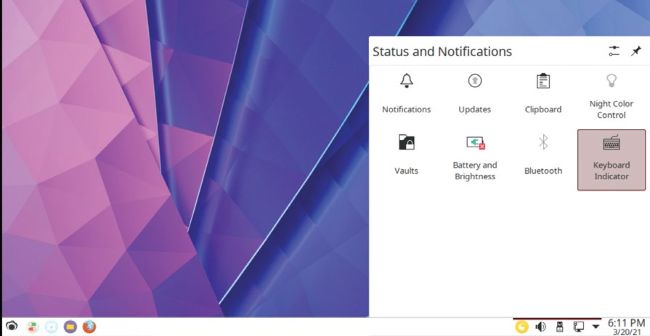
The Redcore distro is based on Gentoo with a focus on simplifying the installation process and package management.
This sounds like snobbery, but the maintainers’ point is that you’ll gradually adapt to handling your computer with this mind-set. As you grow as a Linux user, you’ll realise what you want, like and have any use for. You can’t obtain this information from browsing a website – you must experience this for yourself.
Many readers will think that they must be an expert in compiling software to use Gentoo. This isn’t the case, because Gentoo’s package manager has a good selection of sensible defaults. There’s also a helpful Stage3 file. When you unpack this, it creates a small system. From there, you can add programs, adjust settings and start experimenting with advanced settings.
Initially, Gentoo requires a high degree of input from the user, but the benefits will show up in performance, after some practice. Whether you’re willing to put in the effort… well, that’s entirely up to you.
Think like a penguin
Most distributions have worked hard to save you the job of compiling your software and dealing with dependencies. There’s no such help in Gentoo apart for the documentation. You take the decisions that make your system as fast and safe as possible. By default, you compile your software in Gentoo, thus making it possible for you to manage your own options.
These options cover everything, enabling you to compile your choice of packages down to the smallest detail. You may feel that you could end up with too many responsibilities on your plate, but fear not – help is available. The documentation is packed full of information and the Gentoo community is very active.
In fact, one of the fundamental principles that the Gentoo Foundation operates under is “For the Community, by the Community”. By this it means that volunteers underpin any support you might require, including the Foundation’s employees.
The developers view the distribution as a metadistribution, and it all comes back to choice. You don’t have a specific desktop as the default – you make that decision yourself. This principle even extends to a lack of an installer. This is because a ready-made installer would set you on a path towards a specific system. It should be your choice, rather than the developer’s.