NO DISCO
Gareth Murphy visits Downtown Manhattan at the dawn of the 80s to explore a dazzlingly influential moment in pop culture that forged the decade and pointed the way into the 90s…
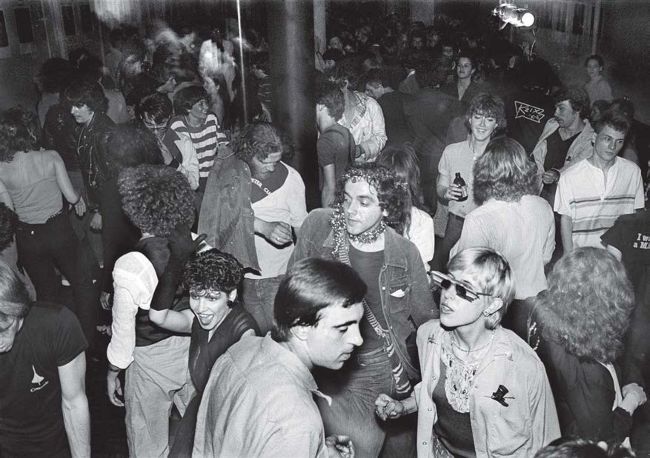
A view of the dancefloor at the Mudd Club on White Street in New York in 1979
Typically, a musical happening acquires a genre term. But every now and then, there are happenings referred to only by a time and a place. New York in the 1979 to ’82 period is possibly the most spectacular example. Too big for any one genre label to fit, this was the mother of all melting-pot eruptions, that shaped the popular landscape for at least two decades to come.
To understand what was happening and why it was concentrated in Downtown Manhattan, the story begins in the bankrupt mid 70s, when New York City was a ratinfested wasteland of junkies and crumbling brownstones. From a grotty Downtown club called CBGB, the Ramones detonated the punk explosion, but the word ‘punk’, meaning scumbag or petty criminal in American slang, was always going to be a hard sell to American radio stations. that’s why, in and around late 1977, the term ‘New Wave’ was popularised by indies such as Sire. the idea was to persuade sceptical jocks to spin punkish records such as Psycho Killer by Talking Heads, which to be fair, weren’t really punk anyway. the idea took off and New Wave became synonymous with punk’s prettier cousins on both sides of the Atlantic: Blondie, Talking Heads, Devo, Ian Dury & the Blockheads, Lene Lovich, the Stranglers, Elvis Costello, XTC and others who rose up on the back of punk but, being ‘real’ musicians to begin with, made ever-more slick and radio-friendly records through 1978.
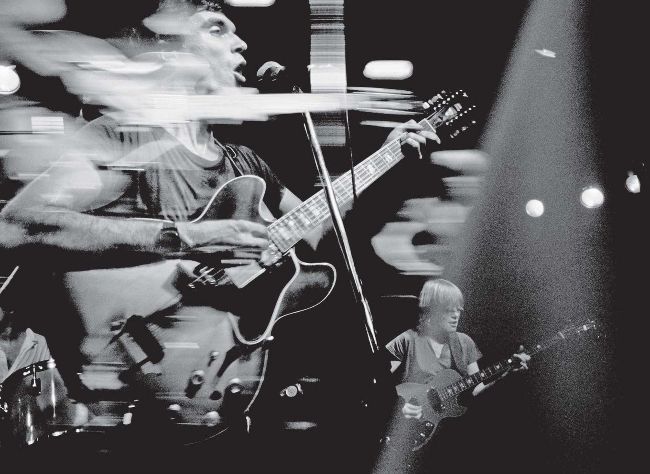
Heads were pivotal to the development of the New York scene at the turn of the 1980s
At exactly the same time, disco was exploding on a grand scale. But in its original form, it too had begun as a local DIY subculture. In the early 70s, long before the uptown disco palaces such as Studio 54 opened, a pioneer DJ named David Mancuso had been turning cheap loft spaces into makeshift party zones with lighting, balloons and state-of-the-art amplification. And because Mancuso grew up in a multicultural orphanage, he wanted his loft parties to embody the principles of diversity and community. Everyone was welcome: black, Latino, white, gay, straight, young, old, poor… It was the same for the records he mixed: Afrobeat, European electronica, percussive, psychedelic, soul, Latin, funk and more.