THE EMPIRE STRIKES BACK
After more than a decade of dominance, Intel has fallen behind its main rival, AMD. Jeremy Laird investigates where Intel went wrong and how it will fight back
Jeremy Laird
WHAT, EXACTLY, has happened to Intel? The once unassailable leader in both PC processors and chip manufacturing generally now looks second best by almost every conceivable technological metric. AMD’s CPUs appear cleverer. TSMC’s manufacturing technology seems more advanced. Intel, it seems, has completely lost its way.
Even in the mobile PC space, which Intel has absolutely owned for decades, AMD’s new Renoir APU has the edge. Likewise, how is it that AMD has offered PCI Express 4.0 on desktop PCs for a year, but Intel hasn’t even announced future support for what is a crucial high-speed interconnect?
Things are so bad that Apple is said to be planning to ditch Intel in favor of its own ARM-based processors. Worse, Intel itself is rumored to be considering TSMC as a manufacturing partner for selected future products, including its first consumer graphics card in decades. Truly, that would be the ultimate humiliation.
Or would it? Last year, despite those issues, Intel enjoyed record revenues of $72 billion. In fact, in pure commercial terms Intel’s main problem has been keeping up with demand for its chips from so-called hyperscalers. That’s the likes of Amazon, Microsoft, Google, Facebook et al, who simply can’t get enough of Intel’s Xeon processors. Meanwhile, there are good reasons to think that Intel will soon be back on track when it comes to both chip manufacturing and CPU architectures.
WHAT SINGLE thing summarizes Intel’s woes? Try “10nm.” Chip production technology isn’t Intel’s only failing—a strong case could also be made for the company becoming ever more complacent over the past decade when it comes to CPU architectures—but 10nm? What a disaster.
By 10nm, of course, we mean a specific production process or node used to manufacture computer chips. The measurement 10nm refers, in theory, to the size of the smallest features inside the chip. In practice, the monikers attached to production processes and the actual size of components like transistor gates inside a PC processor have become somewhat estranged in recent years. There probably isn’t any individual feature that actually measures 10nm within a “10nm” Intel CPU.
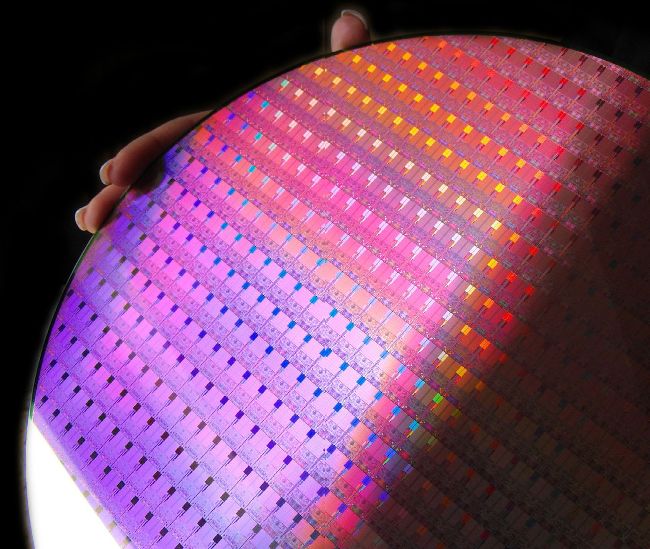
Intel is finally cranking out viable 10nm wafers.
© INTEL
Intel has upped the ante to 10 cores for mainstream desktop processors
That arguable lack of direct correlation between feature size and the description of a given node becomes even more problematic when it comes to comparing process technologies from competing manufacturers. But more on that in a moment. For now, what matters is that 10nm is Intel’s latest production process and surely its most troubled. Originally, 10nm was due to arrive way back in 2015. Here, in the second half of 2020, 10nm still only makes up a small minority of Intel’s production. You can’t buy a 10nm desktop or server CPU from Intel. Only mobile processors for laptops and tablets have moved to 10nm, and even then just some of Intel’s low and ultra-low-power range have moved to 10nm. Others have been refreshed on 14nm.