THE HAMMER INTERVIEW
GLORIA CAVALERA
She’s the self-taught manager who steered her husband Max’s band, Sepultura, to global success. Even heartbreaking tragedy and painful acrimony haven’t dented her groundbreaking career
WORDS: ELEANOR GOODMAN
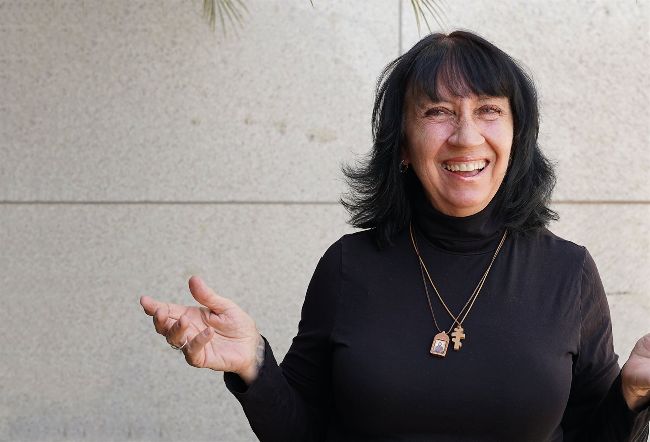
COURTESY OF GLORIA CAVALERA
A couple of months ago, Gloria Cavalera was watching a movie when her phone rang. It was 10.30pm, and her husband Max told her not to answer it. She picked up anyway. The voice on the other end was unfamiliar, but they said that their mother had passed away. Abandoning the movie, Gloria took the time to chat with this stranger. “I really tried to be the person who’s there, even though I’ve had a lot of mud slung at me through the years,” she says today. “The more mud that was slung, the more I learned about people. I think it helped me to grow a lot, you know?”
Born Gloria Bujnowski to a mother who survived a Nazi concentration camp in Austria, she was a fiercely independent spirit early on, hanging out with hippies while still in her teens. By the mid-80s, she’d embarked on a career in management, eventually going on to help turn unknown Brazilian metal band Sepultura into a global phenomenon. Along the way, she and frontman Max Cavalera fell in love and got married. Sadly, tragedy struck when her son Dana Wells died in a car crash in 1996, plunging the family into grief. An acrimonious dispute between Sepultura and Gloria just a few months later resulted in her quitting as manager of the band she had done so much to build, with Max exiting at the same time.
Today, Gloria is still a powerhouse, looking after Max’s post-Sepultura band Soulfly alongside his many other projects, while acting as a ‘metal mom’ to her immediate and chosen family.
You were raised in South Dakota, but you left home at 16. Why?
“I’d gotten pregnant when I was 16, and I married a man who had just returned from Vietnam. It wasn’t really the best decision, but every one of those bad decisions gave me the opportunity to take a step up or a step back. And, you know, I grew up with my mother talking about being in a concentration camp [in WWII]. She was very vocal about politics and freedom, and how important freedom was.”