On the BOX
The adventures of the Third Doctor attracted huge audiences in 1973 – especially when he was joined by his two predecessors. There was, however, plenty of high-quality alternative viewing on offer from ITV and the BBC.
By ANDREW PIXLEY
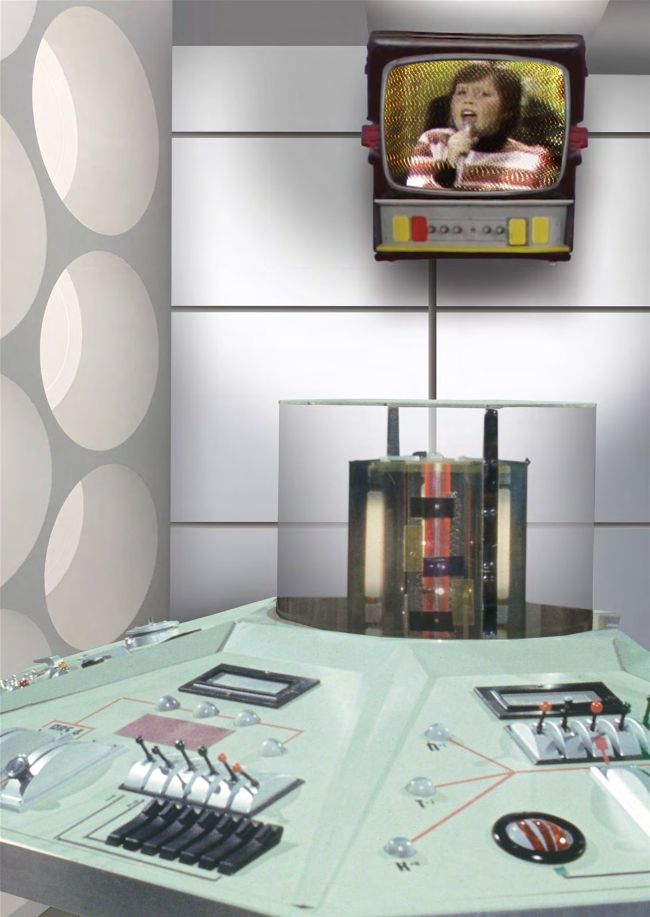
Jimmy Osmond topped the UK charts in December 1972 with Long Haired Lover from Liverpool.
Idents for Bristol Channel, Sheffield Cablevision and the title card for Hunters Walk.
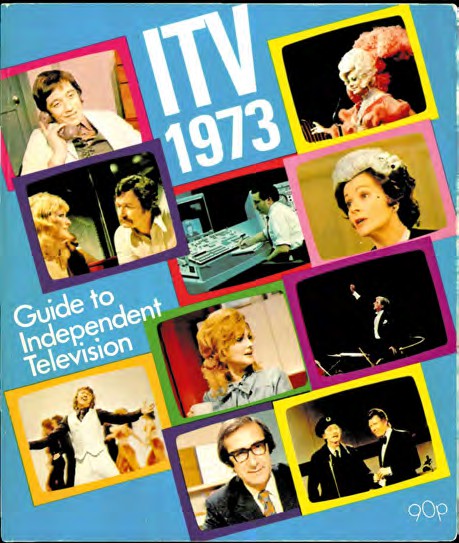
The ITV 1973 Guide to Independent Television.
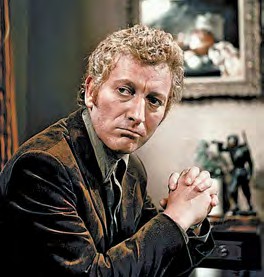
Barry Foster starred as Van der Valk.
“7.30 Dr Who Jimmy Osmond makes his acting debut as Dr Who. In this adventure the good doctor visits the empty Planet Earth and has an eerie feeling in the new Prime Minister’s new official residence in Petticoat Lane.” n Monday 12 March 1973, Sir John Evans, the Telecommunications Minister, announced that the charters for both the BBC and ITV were to be extended by five years, taking them up to 1981; he also noted that the operation of a fourth television channel was under consideration. The news prompted the Daily Mirror’s Michael Hellicar to imagine the Radio Times schedule for 14 March 1981 – atime when Jon Pertwee’s successor might be the American singer Little Jimmy Osmond. As Hellicar was writing, Jimmy wasn’t quite ten and was still enjoying chart success with his 1972 hit Long Haired Lover from Liverpool.

In 1973, British television was changing in various ways. In addition to the three existing channels, experimental community cable channels were being launched – Bristol Channel in May, Sheffield Cablevision in August and Swindon Viewpoint in September. On the same theme, 11.30pm on Monday 2 April marked the beginning of community programming on BBC2. Open Door was a live 45-minute programme from the newly created Community Programme Unit; in its opening weeks, a group of Black teachers condemned the education system for the limited choices it offered to pupils of African descent, and the Transex Liberation Group discussed the difficulties they faced in society.
There were also plans for text pages to be buried in the ‘vertical interval’ between the frames of the picture, demonstrated that spring by the Independent Broadcasting Authority (IBA) via their prospective ORACLE system (Optional Reception of Announcements by Coded Line Electronics). The BBC equivalent, Ceefax, had been announced back in October 1972 and had already begun experimental trials outside normal transmission hours.
Friday24 August saw the final broadcast of a colour trade test film on BBC2. Since 1954, the BBC had aired such items for the benefit of their own and trade engineers outside standard hours. But, with colour programming now available during the day, the 185th broadcast of the awardwinning 1960 short Giuseppina brought this kind of transmission to an end. Of the various broadcasters, only the offshore Channel franchise was yet to operate a colour service. Almost 20 per cent of UK TV licences were now in colour, at a cost of £12, compared to £7 for monochrome.
April saw the dawning of a new era of British television made on film. ITC – asubsidiary of the Midlands commercial station ATV – was starting to focus more on cinema than the glossy 35mm adventure shows that had served it so well since the 1950s. Filling the gap came Special Branch, a location-heavy drama shot on 16mm by Euston Films. Euston was an offshoot of the London weekday franchise Thames, which had originated Special Branch as a videotaped studio show back in 1969. Now, the cases of Detective Chief Inspectors Alan Craven (George Sewell) and Tom Haggerty (Patrick Mower) proved popular enough to top the charts on two of their 13 weeks on air.