Small wonders Supercharged superminis
BLOWN AWAY
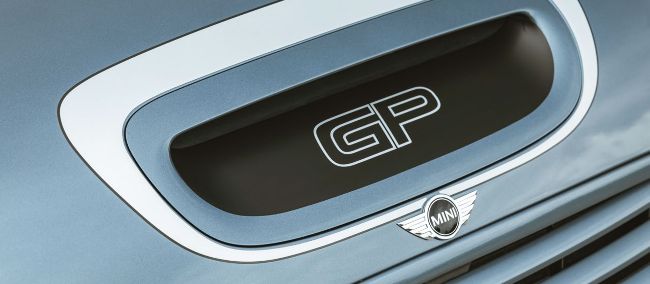
Force-fed hot hatches are ten-a-penny – but not this super-rare, supercharged trio. Octane hangs on tight to the wheels of the Mini Cooper S Works GP, Toyota Yaris GRMN and the VW Polo G40
Words Adam Towler
Photography David Shepherd
The ongoing struggle for supremacy between supercharging and turbocharging stretches back nearly 100 years. W hen one route to increased performance has taken a technological step forward, the other has then superseded it just a few years later. Sometimes it’s seemed as though car makers have woken up one morning and decided, after a gap of years, simply to start making the other option because the, er, wind has changed.
Generally, though, it is the turbo-supercharger (to give it its full name) that has become the ubiquitous fitment in the latter days of the internal combustion engine. The supercharger’s key advantage is its instant response from being driven directly by the crankshaft, which has been eroded by increasingly sophisticated technology for exhaust-driven compressors. In return, the flaw of the supercharger – its parasitic nature on the efficiency and power of the engine – looks increasingly undesirable.
In the case of the hot hatch, the charms of the supercharger have usually given best to traditional tuning of naturally aspirated engines, or the fitment of a turbo. Just occasionally, though, there are outliers – like the trio we have here.
We begin in the 1980s. Sure, supercharging a Mini Cooper in the 1960s was not unheard of, but never as a production car, and there have been other oddities such as Nissan’s home-market-only K10 (Micra) March Super Turbo, which used both. However, if we consider the Golf GTI Mk1 as the originator of the hot hatchback breed, it was not until the following decade, with the craze in full swing, that Volkswagen began to introduce its fascinating G-Lader technology.
The G-Lader was so named because of the shape of the twin parallel spiral channels that compress the air from the outer inlet to the central outlet; within this double spiral is another spiral mounted on an eccentric shaft. With every rotation, the air is forced from the outer open channel to the inner, with two pulses per rotation, or four overall, given that it’s double-sided. The idea was originally patented in 1905 by Leon Creux as a rotary steam engine pump.
A warm GT version of the Polo Mk2 – with 75bhp! – was already available in the early 1980s as a little brother to the Golf GTI. Then, at the 1985 Frankfurt motor show, Volkswagen unveiled a Polo GT G40, with a G-Lader supercharger boosting the output of its 1272cc, eight-valve four to 115bhp. Finally, at the beginning of 1987, 500 of them were built, all left-hand drive.