ENVIRONMENT
SUSANNE MASTERS
Ballan wrasse (Labrus bergylta)
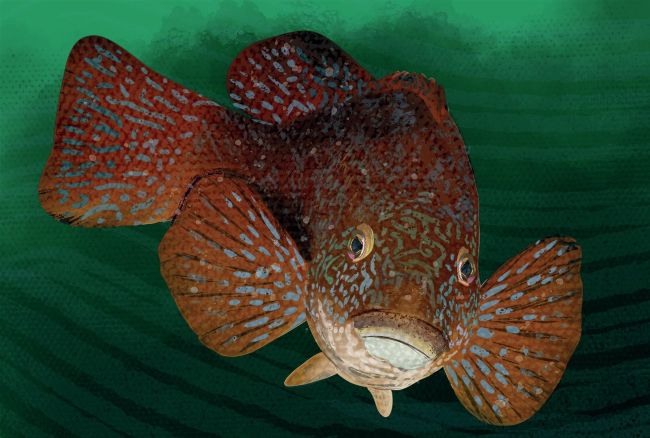
Illustration: Alice Goodridge
WILD LIFE
Ballan wrasse are so variable in colour and pattern, you might be left feeling that they are difficult to recognise. Juveniles are bright leafy green, but adults can have blue spots on red or blocks of brown and green colour. From a swimming view, there is a behaviour that will give you a jolt of instant recognition.
Looking down on fish below, usually you just see their backs. Watch ballan wrasse rummaging on the seabed and every so often they tilt to the side and flash their flank at you.
All ballan wrasse are born female, some become male later in life. They live in groups with one male accompanied by a few females and occupy small territories. Ballan wrasse aren’t particularly shy of people, and tend to carry on about their business if you don’t go too close to them. There is a risk to enjoying watching ballan wrasse; you may never want to eat farmed salmon again as ballan wrasse are caught and transported to salmon farms as an organic means of keeping sea lice under control. Watching them pottering along the seabed and flitting around seaweed it’s hard to imagine them living a life of captivity in crowded salmon pens. Indeed, their mortality once caught and used by salmon farms is high. In the wild they can live up to 29 years and are an important custodian of underwater forests as they feed molluscs that graze on seaweeds.