AI & devteams
AI & DEV TEAMS
The start of a beautiful friendship
Are real-life programmers living on borrowed time? Nik Rawlinson explores the growing popularity of AI-powered development
In a recent survey of business leaders, MIT Technology Review Insights found that 94% of firms were using generative AI as part of their software development process. Some were running nothing more than a small pilot, but for a fifth it was a “well-integrated part” of the process. A further third said it was “widely used”.
We’re not just talking about resource-poor startups and nimble little disruptors. Between 20% and 30% of Microsoft’s code is written by software, according to CEO Satya Nadella. Meta’s Mark Zuckerberg, speaking at last year’s LlamaCon, said he couldn’t put an exact figure on how much of Meta’s code was generated by AI, but revealed that the firm was “focused on building an AI and a machine-learning engineer to advance the Llama development itself”. Meta’s bet, he suggested, was that “in the next year, probably, maybe half the development is going to be done by AI as opposed to people – and that will increase from there”.
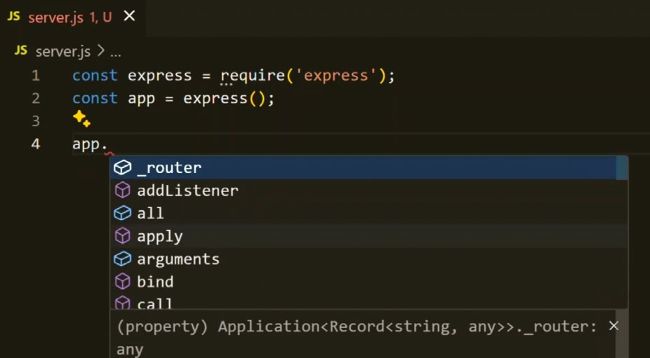
Smart code completion is just the tip of what AI can do
If two of the biggest names in tech are deploying AI across their coding teams, that’s proof that it’s no longer just an experimental curio or a helping hand for less experienced programmers – it’s the latest evolution in a process that’s been unfolding for many decades.
Assistance isn’t cheating
Developers have always looked for ways to speed up and smooth the code-creation process. As early as the 1950s, the term “automatic programming” was being used to refer to code interpreters and compilers; these tools let them use easier forms of language, which were quicker to write, edit and read than machine code, and greatly reduced the amount of time and effort it took to produce code from scratch. Today, thanks to interpreted and compiled languages, most programmers never need to learn assembly language at all.
Later innovations, such as code completion, began to work more like a modern-day virtual assistant. In the mid-1990s, Microsoft’s IntelliSense feature introduced context-aware logic to pop up suggested keywords, function names and tokens in Visual Basic and Visual C++, while also balancing braces, checking code on the fly and more.