EOSS.O.S
Our technical guru is here to help. No Canon conundrum is too big or small. Get in touch today at EOSSOS@futurenet.com
Photo Plus EXPERT
BRIAN WORLEY
CANON PRO
Brian is a freelance photographer and photo tutor, based in Oxfordshire. He has unrivalled EOS camera knowledge, after working for Canon for over 15 years, and is on hand to answer all your EOS and photographic queries
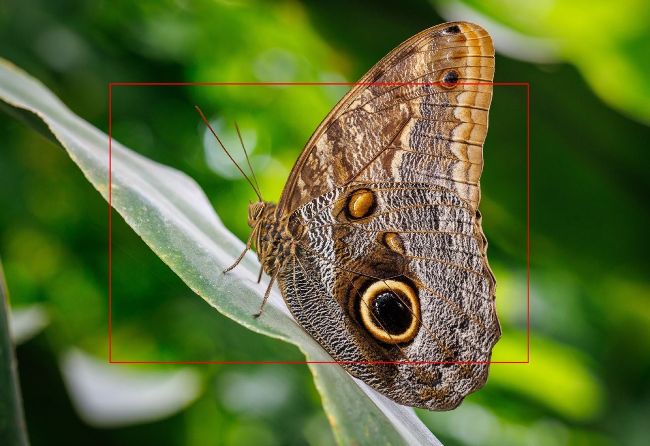
The red frame shows the area covered by a crop sensor which would make use of the best central section of a full-frame lens
Lens quality is better at the centre of the image, so will image quality be better with a camera with an APS-C crop sensor than a full-frame camera?
Per Homann Jespersen, Denmark
BRIAN SAYS… Lenses have the best optical performance at the centre and it reduces towards the edge. Lenses designed for full-frame can be used on APS-C cameras, and those cameras will only make use of the better central part of the lens.
RF-S lenses are designed for APS-C cameras so the edge performance might be less than a full-frame lens, though the RF-S lens is smaller and lighter. However, image quality is not only dependent on lens performance but also on the sensor itself. The smaller APS-C image sensors pack in smaller pixels, and pixel size is a contributing factor to the noise performance and dynamic range. If a full-frame camera had the pixel density of a 24MP APS-C model, it would have more than 60MP.
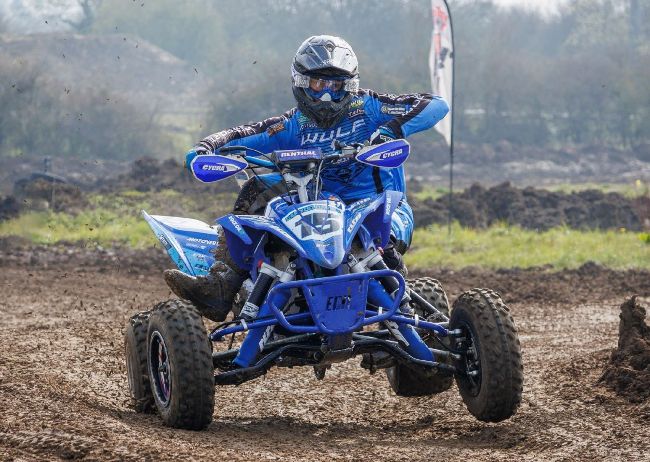
Upgrading to mirrorless brings amazing autofocus capability for all kinds of moving subjects such as this motocross event
I plan to update my EOS 750D and wondered if a mirrorless camera would be a good choice, if so which one?
Tom Duffy, Wallingford
BRIAN SAYS… It’s clear there are not going to be more DSLR cameras coming out from Canon, and that is a good indication that if you are upgrading, mirrorless is the smart choice. Among the current line-up certainly consider the EOS R10 or EOS R50 as a good update to your existing camera.