PLANKTON V. FISH
What do you do when your fi sh are such specialist feeders that they only accept plankton? Tim Smith investigates.

TIM SMITH An ichthyologist and oddball aquarist, Tim has been involved with fi sh for 15 years, from retail to academia.
SHUTTERSTOCK
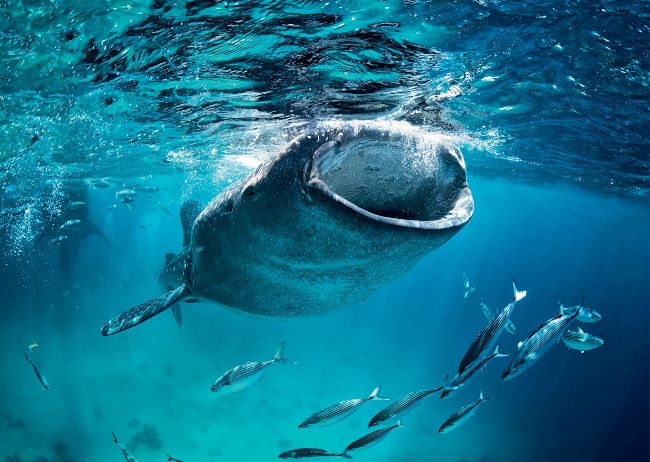
Just because the food is small, the fi sh don’t have to be.
PLANKTON REALLY makes the aquatic world go round. Nearly every fi sh’s fi rst meal is a planktonic buffet, with these tidbits being just the right size and mix of nutrients to power their growth. In turn, many fi sh eggs and larvae act as a planktonic food source for others.
As they grow, only a few fi sh retain a planktivore status - those that not only partake in planktivorous diets, but will struggle to survive in your aquarium if not catered for.
Plankton are so abundant that they comprise well over a billion tons of living mass in the oceans, providing the fundamental bases for almost every food web in aquatic ecosystems, as well as providing more than half the world’s oxygen.
The term ‘plankton’ is a catch-all, comprising both phytoplankton and zooplankton - microscopic plants and animals respectively. Zooplankton can be anything from fi sh eggs and larvae, protozoans, bacteria, and almost any life stage of various invertebrates from crustaceans to corals.
Phytoplankton, too, consists of a smorgasbord of microscopic organisms capable of photosynthesis from bacteria to dinofl agellates to diatoms to algae.
Feeding planktivores isn’t as simple as scaling down the sizes of the food offered, although that’s a good start. It is the sheer volume that they eat, and they do so all day long. These two factors create the challenge in keeping planktivorous fi shes: provide an appropriately small, nutritious, regular food source.
Eating plankton isn’t just about having a small mouth - whale sharks prove that. The specialization of eating minute foodstuff is a meeting between anatomy and behaviour.