ALGAE CONTROL
AN AQUASCAPER’S GUIDE
When it comes to taming unsightly algae in our tanks, we could all take some tips from the side of the hobby that’s mastered immaculate set-ups.
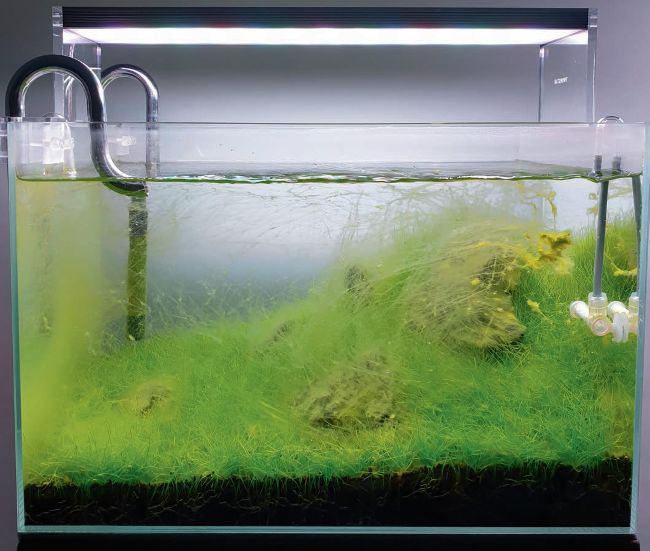
Ten days of lighting led to this filament outbreak.
JORDAN STIRRAT
JORDAN STIRRAT
Aquascaper Jordan is one of the scene’s up and coming rising stars, with an impressive portfolio. of displays.
MANY HOBBYISTS are plagued with nuisance algae in their aquariums. At worst, this can lead to some giving up on the hobby, while others accept unsightliness as inevitable. Although outbreaks of green can certainly test our love for aquatics it’s absolutely achievable to maintain a tank with no visible algae. If faced with issues, its constructive to look at the situation as a possible learning experience.
Maintenance
During the initial cycling phase, a tank’s biological ecosystem is unstable, and a certain algae population is normal. Diatoms will appear during the first few weeks (leading some to panic) but will eventually disappear after the tank has matured. Until stability is reached, performing consistent maintenance to remove organic waste that may accumulate from dead plants, fish waste, or uneaten food is crucial.
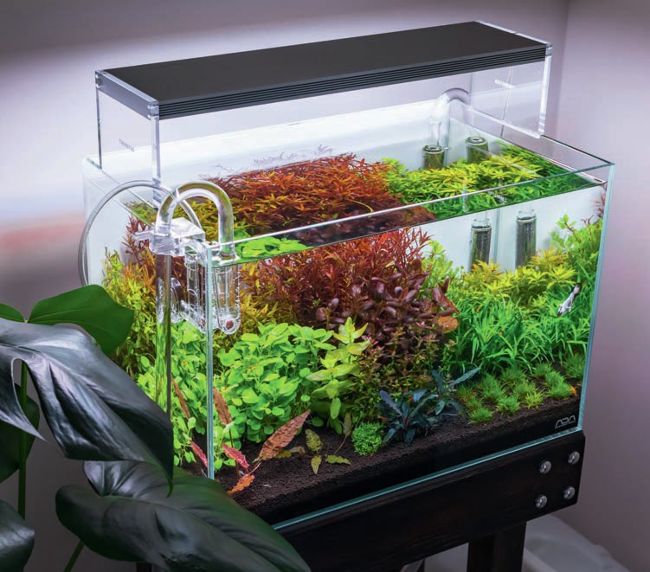
Excess lighting can be a major algae cause.
JORDAN STIRRAT
Plant husbandry plays a large role as old leaves will deteriorate, which can often attract algae. To maintain your aquarium in the long term the older, lower plant growth should be discarded and the healthy tops replanted. Adding algae eaters once the parameters are safe will help prevent the initial algae blooms.
Lighting
Lighting should be set to a reasonable level based upon plant requirements. Excessively long or intense lighting periods will encourage algae growth if there isn’t a sufficient plant mass. It is recommended that the lighting period for new tanks starts short and gradually increases: a lighting duration of six hours, slowly increasing to eight hours over the first month is common practice.