Starship Troopers
Fifty years ago, Yes unexpectedly discovered the path to stardom and embarked on a magical journey that led to them becoming one of the biggest progressive rock bands in the world. Prog invites Bill Bruford, Tony Kaye, Rick Wakeman, Steve Howe, Phil Franks and Roger Dean to explore the journey up to and beyond the band’s annus mirabilis: 1971.
He’s seen all good people: Sid Smith Images: Ron Howard/Redferns/Getty Images
“Yes bore no resemblance to anything else that was about at the time and I thought, ‘Shit, this is going to be a great band.’”
Rick Wakeman
O
n the morning that Prog speaks to Rick Wakeman, the veteran keyboard player is in a very good mood and about as far removed from his ‘Grumpy Old Rick’ Twitter handle as is possible to imagine. The reason? “I’m going to get my [Covid vaccine] jab this morning,” he says with some enthusiasm. It’s also possible another reason the 71-year-old is so chipper is that he’s talking about the events of 1971, a year that saw his career coincidentally given a massive shot in the arm after joining Yes.
In February 1971, The Yes Album was released and, nine months later, Fragile: two remarkable albums representing the survival and arrival of a progressive rock institution. The first secured their future, protecting them from the whims of record label executives. The second was a new integrated unit marching in lockstep that defined their own destiny on their own terms. Both records were, in part, the result of a catalyst; two new members whose contributions brought about a decisive change. Both enabled Yes to finally slip into another league entirely after nearly three years of commercial stalemate and the looming threat of obscurity.
Taken together, those two albums last a little over 81 minutes and stand as a testament to tenacity, decisiveness, and a remarkable flowering of creativity. With them, the transition from earnest hopefuls to bona fide stars was achieved. Yes would soon be able to say goodbye to gigs at Portsmouth Poly and bask in FM Radio’s heavy rotation in sun-drenched California and beyond.
“It was a great period. A time of tour, record and tour some more… it was another level… everybody was playing in a way they’d never played before,” recalls Wakeman, an astonished tone animating his voice, as if he still can’t quite believe his luck.
“Being in a band is sometimes like being in a family, you know, you’re living cheek by jowl especially in the early days of the group, and plenty of bands have had problems dealing with each other possibly because it is that family thing,” says Yes’ first keyboard player, Tony Kaye, speaking from his home in Florida.
In any family, there will be times of joy, excitement, disappointments, and loss. Alongside the support, respect and regard between siblings, thorny rivalries may grow, some left unresolved, or even undeclared for decades. Resentment for sleights, both real and imagined, unfurl in the undergrowth and along the branches of the family tree. Like some pernicious knotweed, they slowly choke the life, trust and joy out of their interactions.
Tony Kaye, reflecting on the band he helped to found in 1968 and which he first left in 1971, experienced all this, and probably more internecine adventures than he cares to remember or talk about. Yet Kaye’s enduring enthusiasm for the group is such that he returned to the family fold for 1983’s 90125 and once again in 2018 as a guest on the 50th anniversary tour.
Yes are now a firmly established musical dynasty with a fanbase broad and deep-pocketed enough to sustain two different groupings, not only in the late-80s with Yes versus AWBH but again around the 50th anniversary with Yes running alongside Yes Featuring Anderson Rabin Wakeman (aka ARW). None of that and none of what’s been achieved over the last five decades and more could have possible had it not been for Yes’ very own annus mirabilis in 1971. The events that made 1971 so vital to Yes’ success had their origins in the previous year, and even go back further back.
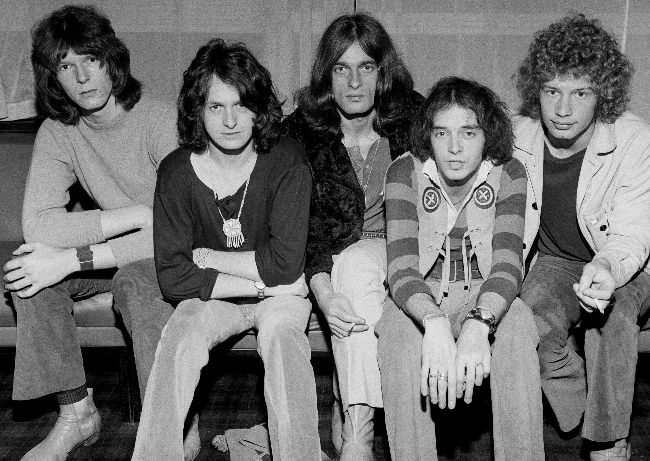
Yes in August 1969, L-R: Chris Squire, Jon Anderson, Tony Kaye, Peter Banks, Bill Bruford.
GEORGE WILKES/HULTON ARCHIVE/GETTY IMAGES
“I’d seen Steve Howe playing with Bodast probably on one of my visits to Speakeasy and I remember telling Chris and Jon I thought he would make a good replacement for Peter Banks.”
Tony Kaye
In truth, ‘overnight success’ doesn’t really exist. Yes had slogged away paying their dues in thankless support gigs including, most famously perhaps, Cream’s farewell concert at the Royal Albert Hall in November 1968. “I think we kind of took it in our stride,” says Kaye. “Obviously, it was a pretty big deal for the band. We certainly weren’t very popular at that time. I guess it was between our manager Roy Flynn and Robert Stigwood who managed Cream to swing that for the band. And of course, yes, it was a bit intimidating.”
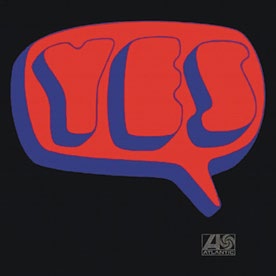
Yes’ eponymous debut album, released in 1969.
Just how intimidating was seared into the then 19-year-old Bill Bruford’s memory after dropping a stick in the opening moments of their cover of Leonard Bernstein’s Something’s Coming from West Side Story. There, literally in the shadow of Ginger Baker’s huge Ludwig double bass drums, he lost his grip on his stick. “I can assure you, the sound of a drumstick clattering and rattling down over a bass drum to the hard wooden floor of a silent and packed Albert Hall is absolutely the loudest sound I shall ever hear,” he’d later write.
For Kaye, further embarrassments are brought to mind. He laughs when he remembers his early career. “I used to try and disguise my Vox Continental with a three-sided wooden plyboard stand that was laid around the front so it looked a little more like a Hammond. It was pretty bad,” he admits.