THE PROG INTERVIE
GORDON GILTRAP
Every month we get inside the mind of one of the biggest names in music. This issue it’s Gordon Giltrap. The British guitarist and songwriter made his mark on London’s folk music scene in the 60s, performing alongside Bert Jansch and Mike Oldfield, and released his self-titled debut in 1968. But within the space of a few years, he quickly found a welcome audience in the world of prog. Since then, he’s enjoyed a lengthy career collaborating with members of Fairport Convention, Soft Machine, The Who and both Rick and Oliver Wakeman. His latest multimedia project, Scattered Chapters, finds him collaborating with keyboard player Paul Ward and Harry Potter film scorer Nick Hooper. He takes Prog on a journey through his past, present and into his plans for the future.
WWords: Mike Barnes
Gordon Giltrap is one of the most respected and influential guitarists of his generation. Ritchie Blackmore has proclaimed him “One of the best acoustic players in the world” and even Jimmy Page has cited him as a major influence.
Born in 1948, Giltrap became a highly regarded teenage singersongwriter and guitarist on the London folk circuit, signing to the Transatlantic label and releasing his self-titled debut in 1968. By his third album, 1971’s A Testament Of Time, arranger Del Newman’s strings had given his work a more orchestral feel and after Giltrap (1973) he switched from being the lead singer to making instrumental music. Although a latecomer to progressive rock, Giltrap made his name in that genre – and proved that it was not killed off by punk – by recording a landmark trilogy of albums: Visionary (1976), Perilous Journey (1977) and Fear Of The Dark (1978), as part of a prog supergroup playing electric and acoustic guitar with former Caravan bass guitarist John G Perry, drummer Simon Phillips and keyboardist Rod Edwards. He scored a hit single in 1977 with Heartsong, which was nominated for an Ivor Novello award.
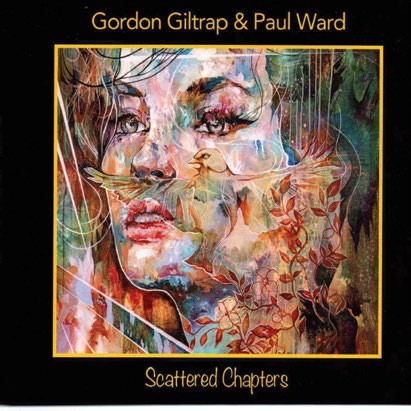
Scatter ed Chapt ers is out now.
Thereafter Giltrap turned his attention towards soundtrack and library music and, in 1995, released Music For The Small Screen, a compilation of pieces made for television. He’s worked with myriad musicians including Rick and Oliver Wakeman, Brian May, Steve Howe, Midge Ure and Neil Murray, Fairport Convention fiddler Ric Sanders, Soft Machine guitarist John Etheridge and classical guitarist Raymond Burley. He’s played with symphony orchestras and contributed music and appeared onstage in Cliff Richard’s West End musical, Heathcliff, in 1997.
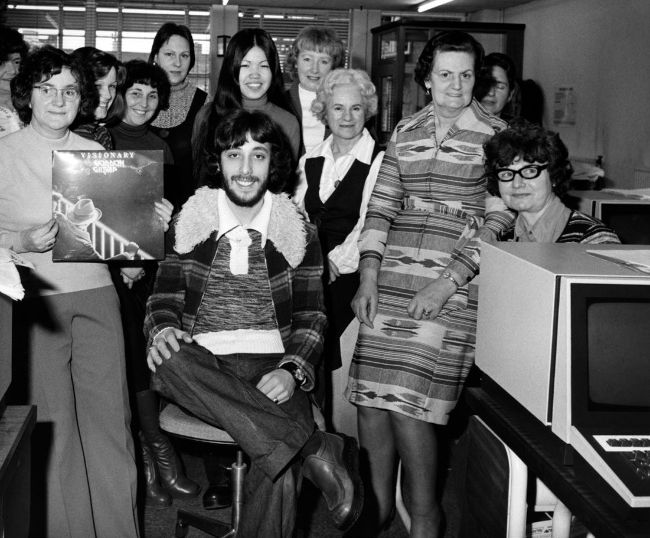
A true visionary! A cheerful Giltrap with staff at the offices of Decca in January 1977.
GRANT GODDARD/REDFERNS/GETTY IMAGES
I was a great admirer of Yes. I loved the whole idea of these musicians being highly skilled virtuosos, coming together to create this amazing music.