GB
  
You are currently viewing the United Kingdom version of the site.
Would you like to switch to your local site?
13 MIN READ TIME

Prophet and loss

With Alan Greenspan and the economy, a lot of knowledge proved to be a dangerous thing

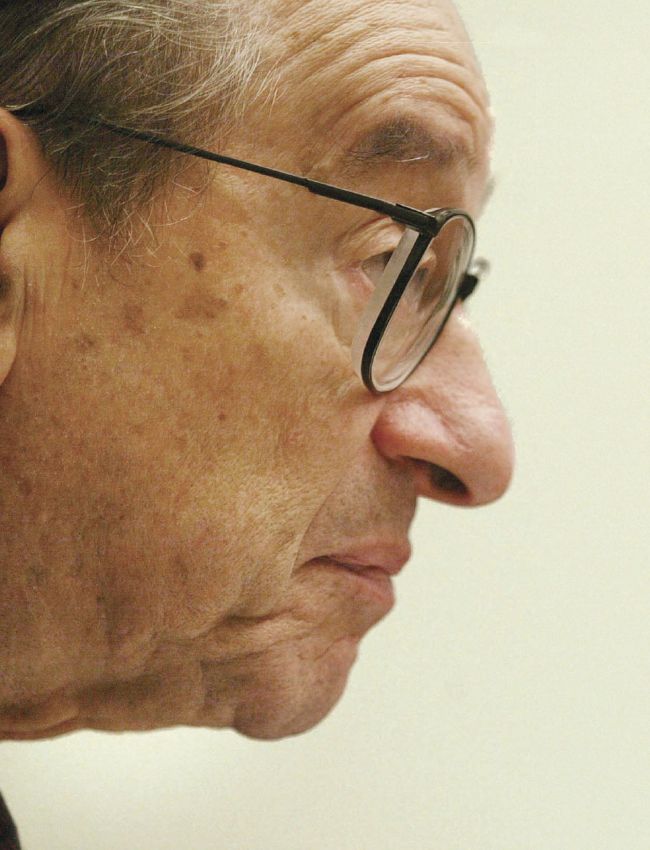
© MARK WILSON/GETTY IMAGES

The Man Who Knew: The Life and Times of Alan Greenspan

by Sebastian Mallaby (Bloomsbury, £30)

In retrospect, it is easy to see what happened. The 2008 crisis was triggered by the mother of all bank runs: a pan- icky loss of confidence in the financial system, which had loaded up on lousy mortgages that remained unsafe even though they were wrapped up in new and exotic ways. Financial institutions had made too many loss-making invest- ments, but the bubble they had inflated delayed the day of reck- oning—until it didn’t.

The surprising thing is not what happened, but that so few people saw it coming. And even that is not quite right. Many did see enough to know the risks. Some of them were even in a position to do something about it. If they did not do so, it was because either they wilfully ignored the dangers or found the potential remedies worse than the disease. In short, they thought the boom was worth having.

Eight years after the crisis—in the wake of a US election campaign fuelled by the political fallout of economic tough times, and with a previously unthinkable President-elect having been chosen— this sanguine faith seems like an obvious delusion. As Donald Trump’s America dawns, we can see that financial laissez-faire has ultimately proved ruinous not only for the economy, but for the liberal political order. But the 1990s and early 2000s were very different times. It was as though economic policy-makers had fallen under a collective spell. At the heart of it all was the chair of the US Federal Reserve from 1986 to 2005, supposedly “the world’s best central banker,” and the man who more than anyone else was responsible for casting that spell: Alan Greenspan.

The ascent of this shy child of Jewish immigrants was hardly written in the stars (except for his doting mother, to whom some of his self-belief can be attributed). But Greenspan’s career illustrates the extraordinary upper-Manhattan milieu of his 1930s youth. Young Alan, a gifted saxophone player and for a while a working musician, practised with the even more gifted Stan Getz. A few years above him at George Washington High School was Henry Kissinger, who would decades later become a rival in White House power games. Greenspan made it first in business as a consultant, then in government by matching his unsurpassed knowledge with a huge appetite and talent for politics.

The cult of Greenspan culminated with his valedictory appearance in August 2005 at the annual central bankers’ conference in Jackson Hole, Wyoming. Greenspan’s 18-year reign as Chair of the Fed, under four different presidents both Republican and Democrat, was nearing its end. His assembled colleagues were celebrating not just Greenspan but also how he reflected their collective achievement of permanently taming (so they thought) the boom-and-bust business cycle, an outcome they called “the Great Moderation.” It was an orgy of professional self-congratulation unsurpassed in the recent annals of central banking—unless you count European Central Bank (ECB) boss Jean-Claude Trichet boasting in 2009 that the euro had brought unprecedented stability at a time of crisis. The attitude of the financial world is best captured by the title of Bob Woodward’s 2000 book on Greenspan: Maestro.

Read the complete article and many more in this issue of Prospect Magazine
Purchase options below
If you own the issue, Login to read the full article now.
Single Digital Issue December 2016
 
£5.99 / issue
This issue and other back issues are not included in a new subscription. Subscriptions include the latest regular issue and new issues released during your subscription. Prospect Magazine
PRINT SUBSCRIPTION? Available at magazine.co.uk, the best magazine subscription offers online.
 

This article is from...


View Issues
Prospect Magazine
December 2016
VIEW IN STORE

Other Articles in this Issue


Editor’s Letter
Trump feeds on despair. Don’t surrender to it
Fear and loathing: two emotions connected with the American right,
Letters & Opinions
If I ruled the world
If I ruled the world, I would re-introduce the Classics
Letters & opinions
Joris Luyendijk (“Narcissist nation,” November) nails the ridiculous national grandiosity
In fact
Uber recorded losses of roughly $1.2bn in the first half
A preposterous answer to a serious grievance
By grappling with class, however crudely, Trump has smashed a smug consensus
Statement of intent
The “just managing” need deeds, not words
The art of dealing with Trumpski
Putin spies an opportunity for some sorely-needed conversations
Partied out
You can sometimes get what you want—but if you do, expect trouble
A hard Brexit will spell hard times
The belief that the UK can go it alone defies economics, geography and the law
A continent confronts the ballot box. Again
Matteo Renzi has put Italy’s future—and that of the Euro—at stake in a referendum
British exit, Irish wound
The border dividing Northern Ireland from the South has been a problem for years. If it now becomes a land frontier between the UK and the EU, old sores will open up
Brief encounter
The invasion of Egypt in 1956 during the Suez crisis
A driverless journey down a dead-end street
Self-driving cars are a distraction from a transport policy that puts people first. So who is behind the obsession?
Playing with gender
The question of “trans” is at the heart of a new culture war. But centuries of box office history reveal that the line between male and female has always been clouded
The Brexit Brokers
Meet the men who will deal the cards that could seal Britain’s fate—on Europe’s behalf UTA STAIGER AND NICHOLAS WRIGHT
Spin and death in Raqqa
In Syria’s war, perception is everything. There is no objective reality—except the bodies
Brexit, the backstory: poets, princes and an island apart
To many who voted “Remain” in June, the Leavers’ insistence on British or English exceptionalism was chauvinistic and deluded. But reflecting on how our great writers and rulers over the centuries would have voted reveals that conflicted attitudes towards Europe are nothing new. Besides, don’t you want to know how George Orwell would have voted?
Speed data
Will the NHS fall off a cliff this winter?
The General Medical Council has warned a crunch is coming, and polls suggest the public is getting worried. John Appleby of the Nueld Trust reviews the evidence
The Duel
Should parliament have a binding vote on the terms of Brexit?
The High Court has ruled that Theresa May cannot commence
Features
Welcome to the void
Trump is a born campaigning demagogue. But will he be too lazy to rule?
A nation loses its ardour
For better or worse, the US has led the world. Trump threatens to change that
Unbalanced, unchecked
Individual states might resist Trump. But the Constitution can’t hold him back in Washington
Grabber in chief
Trump’s contempt for women is astonishing. Decades of progress are now at stake
Arts & books
He’s a poet and don’t we know it
Bob Dylan reaches his audience with the power of the best writers. The Nobel committee was right to place him in their company, says
Delivery man
A politician more interested in striking deals than posturing? Alan Johnson belongs to another age, says Michael White
When the feeling’s gone and you can’t go on...
How can Rowan Williams reconcile his Christianity with the Greek tragic vision, asks Edith Hall
Out for blood, not tea
One hundred years after Saki’s death in the Great War, his stories are still wickedly funny, argues Fatema Ahmed
Books in brief
Ken Clarke became an MP when David Cameron was three
Things to do this month
Recommends Art
Robert Rauschenberg (1925-2008) was a pioneer of almost every art
Recommends Theatre
5th December to 11th February 2017 Henrik Ibsen’s heroine is
Recommends Classical
You know the soloist is special when the Royal Opera’s
Recommends Film
After a bird strike caused both of his plane engines
Recommends Opera
When it was premiered in Dresden in 1911, Der Rosenkavalier
Recommends Science
The stunning new gallery, dedicated to mathematics, is funded by
Events
The Prospect Book Club meets every third Monday of the
Life
Leith on language
Say what you like about Jonathon Green: the man works
Life of the mind
“I’m depressed,” my patient said, settling into her chair with
Matters of taste
I went to Northern Ireland in October because my boyfriend
Wine
The most over-used word in the world of wine is
DIY investor
Possibly the least contentious financial prediction one can make for
Endgames
The way we were
Extracts from memoirs and diaries, chosen by Ian Irvine
Chat
X
Pocketmags Support