POLITICS
Labour's Chance
Keir Starmer and Rachel Reeves will inherit a country in economic crisis. The times call not for modest ambition, but for daring
by Will Hutton

Feature Hutton.indd 33 25/04/2024 6:48 pm
© SHUTTERSTOCK, ALAMY
The shift in Britain’s political mood has been so sharp and sudden that both main parties are bewildered. Conservatives recall that it was only four years ago that Boris Johnson’s position as prime minister seemed unassailable: even two years ago they were level-pegging with their rival.
Can it really be true that they are hurtling towards electoral oblivion? Labour, for its part, is no less startled; under Jeremy Corbyn the party nearly split, and after the December 2019 general election—yet another electoral defeat and its worst since 1935—there seemed every chance that it had the same dismal future as the French socialists. It may now be criticised for its caution—but it is a caution framed by history.
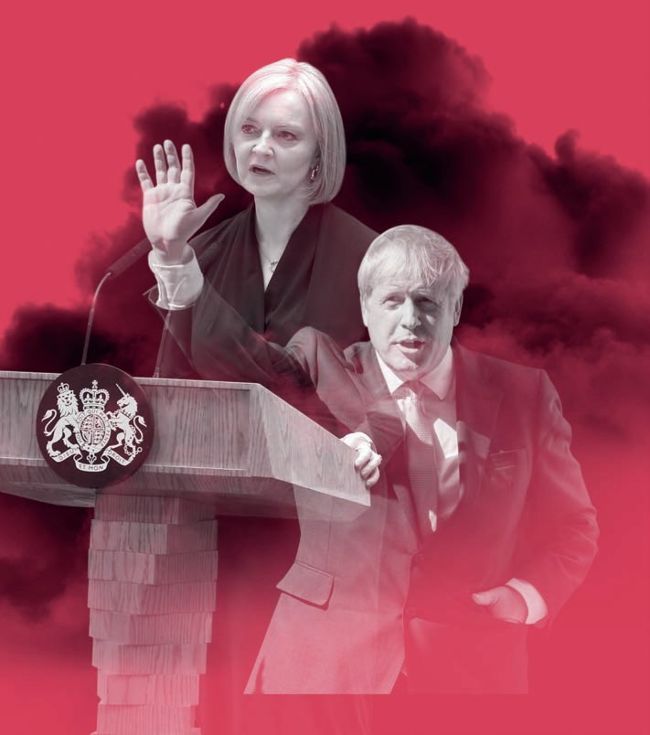
What transformed the political landscape was the twin seismic resignations of Johnson and Liz Truss within months in 2022, cutting through to the majority of voters who take little interest in the daily twists and turns of politics. Crucially, the resignations revealed truths about modern Conservativism impossible to shake off.
The first was that the party had chosen, and then sustained as prime minister, a man who had no moral compass and whose sense of entitlement permitted him to lie shamelessly over breathtaking breaches of rules and ethical standards. They had put winning before fitness for office, betraying a deep political cynicism that has broken a bond of trust with the electorate.
Secondly, their core beliefs and policies have led to a series of catastrophic blunders, culminating in and exemplified by Liz Truss’s 49 days in office. She talked libertarian nonsense and delivered financial mayhem, which mortgage holders felt immediately. Today’s Tory party is condemned as offering no solution to the country’s profound challenges, most of which it has caused itself.
In contrast, Keir Starmer presents as a decent man in firm control of a coherent political party, whose policies, however modest, speak to current ills while not upsetting any electoral apple carts. The bitter loss of the Hartlepool byelection in May 2021 was a turning point, along with just about holding Batley and Spen that July by little more than 300 votes.
It put steeliness in Starmer’s determination never to be in that perilous position again. Labour would become a vote-winning machine as it was under Blair, and he appointed people with experience of those years, or who shared that vital imperative to win, to key positions. Ever ything—from the strippeddown policy mix to rooting out antisemitism and even withdrawing the whip from Corbyn—is consecrated to that end.
© SHUTTERSTOCK, ALAMY
Thus he has been in a position to capitalise on the country’s recoil from the suddenly detested Tories. Yet, for all the success in winning byelections by enormous swings and sustaining a substantial opinion poll lead, the open question is whether—in his and his advisers’ resolution to give the Tory party and its press as little to aim at as possible—Starmer’s party is overdoing its policy minimalism.