TOP MPS HACKED!
Murdoch’s company did not, it’s claimed, just hack phones to get a scoop. It hacked elected politicians—and for commercial ends
By Nick Davies
© PA IMAGES / ALAMY
● Nick Davies blew open the original phone-hacking scandal...
● ...now, with new documents emerging in court, he pieces together a previously untold story
One February afternoon in 2010, the Guardian published on its website a call from the Liberal Democrats’ home affairs spokesman, Chris Huhne, for a judicial inquiry into the phone-hacking scandal. This was part of a story that disclosed that the News of the World had hired four private investigators who had used unlawful methods when Andy Coulson—director of communications for Conservative leader David Cameron—was deputy editor and later editor of the newspaper.
On the following day, Fred Michel, a senior political lobbyist for NewsCorp— the Murdoch parent company in New York—emailed Colin Myler, the paper’s new editor, about the story. “Very damaging for Andy,” he wrote. “We need to get Chris Huhne.” Myler replied: “Totally.”
And so it came to pass that on 20th June, the News of the World exposed Huhne for having an affair, with the result that his marriage ended and his credibility was damaged. To do this, the paper hired three private investigators who specialised in using unlawful methods to get access to confidential information and paid £2,600 to a former police officer, Derek Webb, who ran undercover surveillance on Huhne for a total of 11 days that June.
This was not ordinar y journalism, even of the News of the World’s kind. That email from Michel, which was made public this year in the High Court, confirms what has often been feared but rarely proved: that the commercial side of the Murdoch news organisation would use its journalists to damage somebody for purely political reasons. Huhne was threatening Coulson, who was to be Murdoch’s man in Downing Street, so Huhne had to be “got”. If that involved using criminal methods, so be it.
Now something much bigger begins to emerge—a previously hidden side of the phone-hacking saga that may yet prove to be its most important revelation. Namely, signs that the Murdoch company was using criminal means to spy on the heart of democracy, targeting politicians of every rank, right up to the level of the government’s own law officer, Dominic Grieve, in 2010; and for five years—from 2005 to 2010—Gordon Brown, when he was chancellor of the Exchequer and then prime minister.
Acouple of years ago, when new information came his way, Huhne sued. Various court orders eventually allowed him to see a collection of the Murdoch company’s internal records about him— invoices for the private investigators who had targeted him, emails that referred to him and, above all, the record of calls that had been made over five years to his mobile phone from Murdoch HQ in east London. There were 222 of them— far more than he had ever received from Murdoch journalists, who would usually speak to press officers, not to him directly—and they were striking in three ways. First, 218 of them were made through “hub” numbers, which meant that there was no clue as to which individual was making the call; second, over and over again, the calls were brief—far too brief to be a journalist legitimately interviewing a politician; third, they were all coming from the Murdoch building, whereas if ever political journalists did call direct, they did so from their mobiles or from the press gallery in parliament. Huhne and his lawyers concluded that the overwhelming majority were attempts to hack into his voicemail.

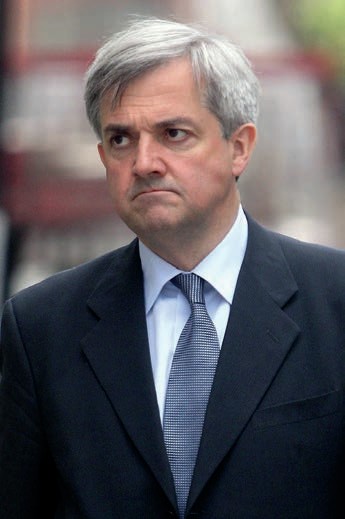
Liberal Democrat Chris Huhne threatened Andy Coulson’s position— and that meant he had to be “got”, reports Davies
In court, the Murdoch company has said that this conclusion is unreasonable, arguing that some of the calls will have been legitimate contacts by journalists, that some were brief because they were the receipt of text messages, that some had been double-counted, and that the arrests of Clive Goodman and Glenn Mulcaire—the former royal correspondent for the News of the World and a private detective, respectively—had deterred phone hacking. In December last year, they paid six-figure damages to settle Huhne’s case.