CHOOSING GREEN & HEALTHY BUILDING MATERIALS
Looking to make your self-build or renovation as sustainable as possible? Nigel Griffiths reveals the essentials you need to know when specifying what goes into your new home
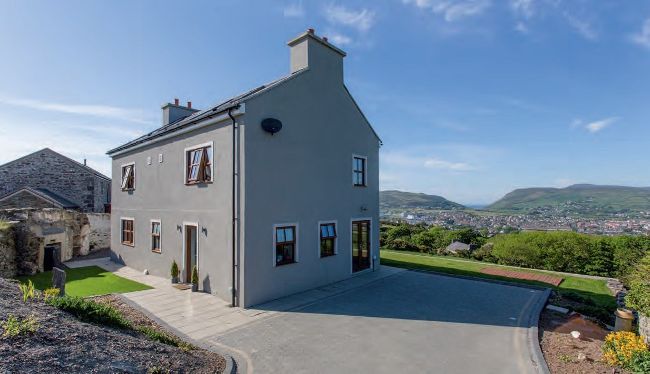
Winner of the 2017 Build It Award for Best Eco Home, this project by Beattie Passive features a factoryproduced timber frame. The finished house exceeds Passivhaus requirements for airtightness and is so well-insulated it doesn’t require conventional heating to provide year-round comfort.
JEWELL PHOTOGRAPHY
If you want a truly sustainable, healthy home, then every aspect of your project needs to be considered in detail – from low-energy design strategies through to the products and finishes that go into both the structural fabric and the internal fit-out.
When it comes to specifying products, there are a number of core factors to keep at the front of your mind. How much carbon is consumed in their fabrication? Are they made from renewable resources? And how recyclable are they at the end of their useful life?
Health is another vital area that should be top of everyone’s list when it comes to green construction. Whatever we build, and whatever we use to construct it, a home should enhance the occupants’ wellbeing. Avoiding toxic materials, providing thermal comfort, ensuring a good supply of fresh air and designing in plenty of daylight will all help to deliver a home that’s sustainable and makes a positive contribution to physical and mental health.
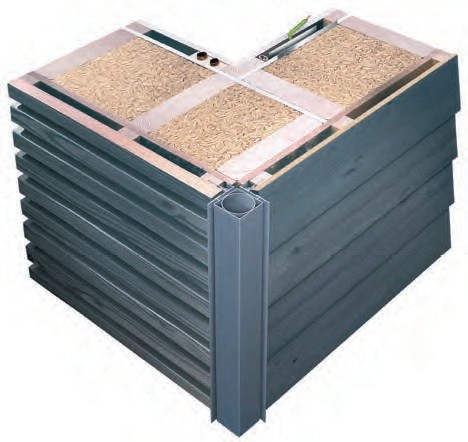
German home supplier Baufritz uses breathable, vapour-open yet airtight timber panels – complete with compressed wood shaving insulation – for its sustainable homes
Structural options
In terms of the main shell of your home, the rather vague phrase ‘green building materials’ could cover anything from straw bale construction through to brick and block systems. At a recent Build It Live show, I met a couple who were planning to construct their home using hempcrete; and another who were going to have a crack at straw bale – both exciting but challenging routes to building a new house (best of luck to you if you’re reading this!).
Most people, however, will be thinking in terms of more conventional techniques, such as masonry or timber frame. But there’s a point to mentioning those couples: they’re using waste products as their primary building materials, which will hugely reduce the environmental impact of their projects. In terms of the circular economy, it also encourages recycling by providing a valuable market for waste products.