The benefits of prefab homes
Off site-manufacture is a buzz word in the housing world – but is it suitable for self-builders looking to create one-off homes?
Prefabricated homes are hugely popular in Germany, Australia and the United States, but so far they’ve only managed to corner a relatively small part of the UK housing market – despite presenting the big developers with an opportunity to benefit from speedy construction and economies of scale. The government has clocked this and has been pushing for greater uptake in a bid to help solve the housing crisis, but the fact is that until recently the main group investing in offsite-manufactured homes has been (you guessed it) self-builders. And some of us don’t even realise we’ve technically gone prefab.
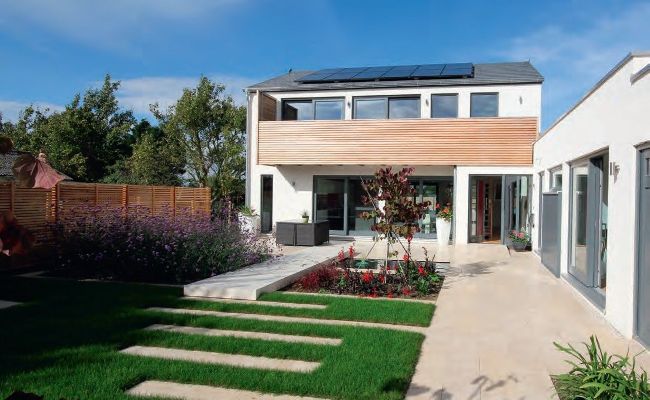
Meisterstueck- Haus completed the structural design and premanufactured shell for this 200m2 contemporary selfbuild. The main house was erected in two weeks, while the internal fit-out took 14 weeks
What is an offsite-manufactured home?
If the idea of a prefab house fills you with dread, fear not. The industry has moved on completely from the practice of throwing up cheap and cheerful boxes that pervaded the mid-20th century. Speed of delivery is still important, of course, but modern offsite-manufactured homes are all about design flexibility, accuracy and quality control.
One thing that’s worth clarifying early on is that prefab is a broad church covering a range of options – and it doesn’t necessarily mean craning in entire pre-finished rooms. In fact, by far the most common route for self-build projects is to engage a company that specialises in highly premanufactured closed panel timber frame. This is the type of product that’s come to our shores via the German package home suppliers, such as Baufritz, Hanse Haus and Meisterstueck. It’s something of a hybrid route, where much of the internal fit-out work is still carried out onsite.