planet-friendlier
WHY wild venison SHOULD BE ON YOUR FESTIVE TABLE
Wild venison is a sustainable meat that you can now enjoy whatever the season
words TONY NAYLOR
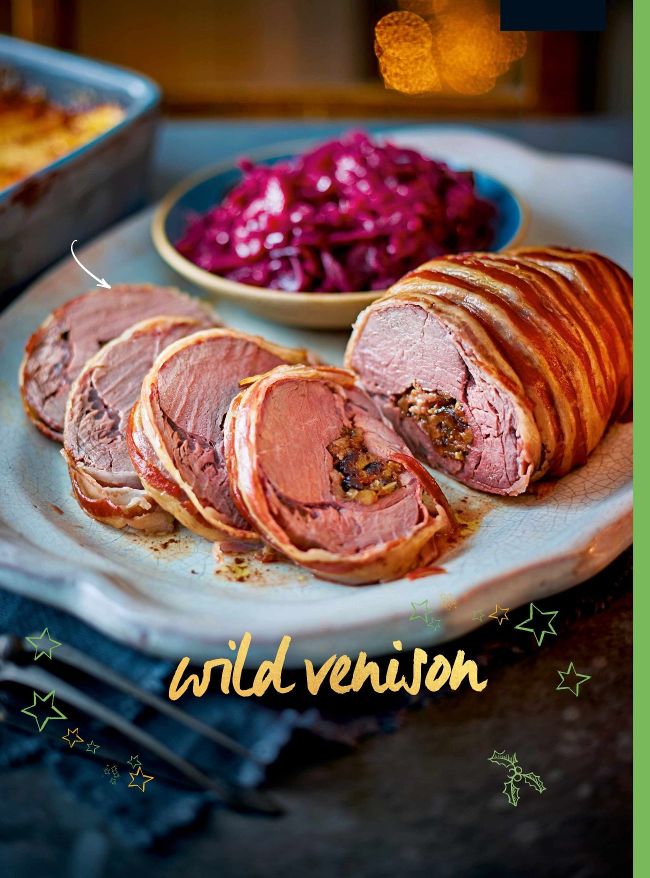
Stuffed saddle of venison with prunes & brioche
In recent decades, the number of UK deer has, to quote Forestry England in 2022, “skyrocketed”. With an absence of predators or sufficient culling, deer numbers may have more than tripled since the 1970s – and where wild herds roam freely across the countryside, eating through farm crops, vegetation and saplings, they are doing traumatic damage to Britain’s biodiversity.
Consequently, national agencies, land managers and private businesses are now encouraging Britain to eat more wild venison. There’s broad agreement that we must cull greater numbers of deer (particularly free-roaming herds; see opposite) and, to make that financially sustainable for stalkers who cull professionally, increasing consumer demand is vital.
Wild venison has long been common in gourmet restaurants, especially at Christmas. Arguably, it’s still perceived as meat for the elite. But, it’s now making inroads in wider society: it’s becoming easier to buy wild venison, not just from specialist game suppliers and butchers, but in wider food retail (where farmed venison has long been the standard product). New bodies, such as British Quality Wild Venison, are working to expand understanding of what, compared to big sellers such as chicken or pork, is a marginal meat – but one racking up some impressive wins.