COLD KILLS
by Dr Steve McCabe
FOR NAPOLEON’S retreating Grand Armee the Russian winter of 1812 proved more deadly than the conflict with Moscow itself.

Rafail Zotov, a young Russian recruit who witnessed the harrying and harassing of the fleeing French, described what he saw: “December 14th…marked the start of the most severe frost, which even those of us who lived in St Petersburg had rarely experienced. Temperatures dropped every day and reached -29º to -31º Celsius. This was a final devastating blow to the French army, which completely lost its morale. Its every bivouac and encampment was like the terrifying sight of the battlefield, where thousands lay dying in great agony. And so the warriors who perhaps survived Austerlitz, Eylau and Borodino now easily fell into our hands. They were in a state of trance so that every Cossack captured and brought back dozens of them. They could not comprehend what was happening around them, could not remember or understand anything. The roads were littered with their corpses and they lay abandoned and without any attention inside every hut.”
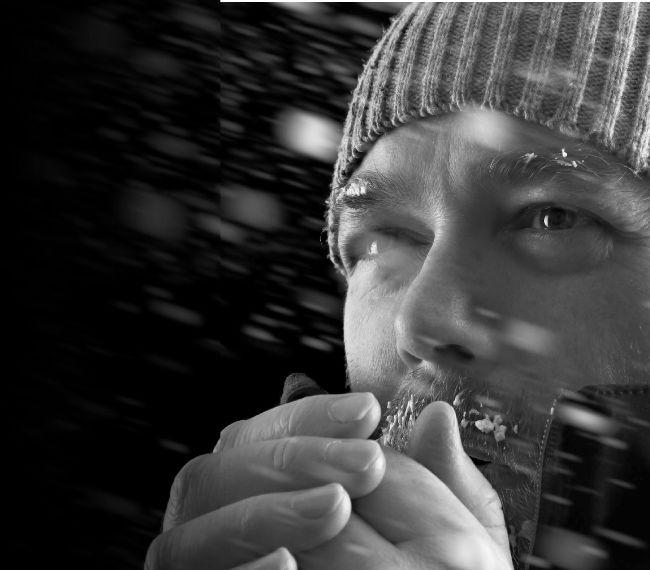
A quarter of all Scottish pensioners live in fuel poverty with even higher rates in rural areas and in the lowest socio-economic groups
This hellish description was matched by that of Dominique Jean Larrey, Napoleon’s Surgeon-in Chief: “The muscular action became noticeably weaker. Individuals staggered like drunken men. Their weakness grew progressively until the subject fell – a sure sign that life was totally extinct. Men who couldn’t keep up had to get to the side of the road where, lacking the support of their comrades, they would fall. Instantly they were stricken by a painful stupor, from which they went into a state of lethargic stupor, and in a few moments they’d ended their painful existence”.