Debrief
ANALYSIS • INSIGHT • DATA
RACE OF THE MONTH / STRADE BIANCHE / 6.3.2021
Van der Poel reigns alone in Siena
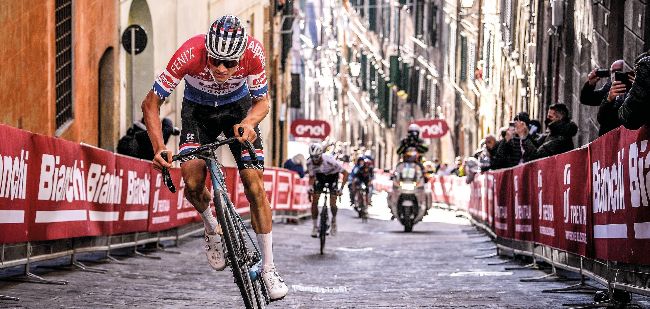
A Van der Poel is streets ahead of Alaphilippe and Bernal on the final climb to Siena
Images: Luc Claessen (main), Tim de Waele/Getty Images.
The period between 1260 and 1355 was Siena’s golden age. The city grew to around 50,000 people and the significant architectural landmarks - the Duomo, and the gothic Palazzo Publicco on the Piazza del Campo - were built, giving the hilltop city the look it retains to this day. Siena was ruled by the Noveschi - the Government of the Nine -a bankingmercantile oligarchy who were quite democratic by the standards of the time. As elected officials, they defended the interests of the people of the city against the rich families who had presided over decades of anarchy and strife, and their structure was given architectural permanence in the nine triangles into which the stones of the fanshaped Piazza del Campo are divided. The Nine sponsored the pre-Renaissance artist Duccio to create his masterpiece, the Maestà altarpiece at the Duomo (though in a pragmatic show of mercantile tightwaddedness, they paid him as a wage labourer and he would die in obscurity), and they ruled the city as a co-operative.