PICTURE PERFECT
WITH CATHODE-RAY TUBE TVS OUT OF PRODUCTION AND DWINDLING IN NUMBER, RETRO GAMES MUST INEVITABLY BE PLAYED ON NEWER DISPLAYS. BUT IS THIS COSTING US VITAL VISUAL CHARACTERISTICS OF THE GAMES WE LOVE - AND IF SO, WHAT CAN WE DO TO PRESERVE THEM?
NICK THORPE
L
et’s not kid ourselves - as far as most of the world is concerned, the humble cathode-ray tube television is obsolete. They’re heavy, they’re often as deep as they are tall and they aren’t particularly energy efficient. The vast majority of them were only intended to show standard-definition TV signals, too. Modern TVs can be large enough to display a life-size human diagonally yet still hang on your wall, they have more pixels than your family has had hot dinners, and you don’t even have to plug anything into them to watch YouTube. But they have one nasty little flaw - they’re terrible for nostalgia. Hook up a classic console or computer to your LCD TV and you may well be left wondering if your old games really looked that bad. What’s more, you probably won’t be able to escape the nagging feeling that games just don’t feel right.
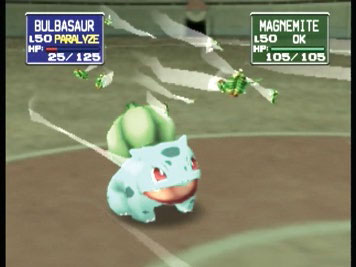
» [N64] With no native RGB support and a deliberately blurred output, the N64 is a console that needs modding for sharp images.
MINI MELEE
How well do the major mini consoles fare in terms of image options? We rank them from worst to first
PLAYSTATION MINI
Sony’s console forces a bilinear filter giving a blurry look to most games, though high-res games like Tekken 3 fare better. There are no options at all, so you’re stuck with the default look.
NEO GEO MINI
On its built-in LCD display, SNK’s effort is sharp and vivid. But the TV output has a forced bilinear filter, and the only optional extra is an added smoothing effect that looks even worse.
PC ENGINE MINI
Many games suffer from shimmering scrolling due to uneven scaling in 4:3 mode, and the CRT filter is pretty dark and blurry. The PC Engine GT mode is a nice novelty, though.
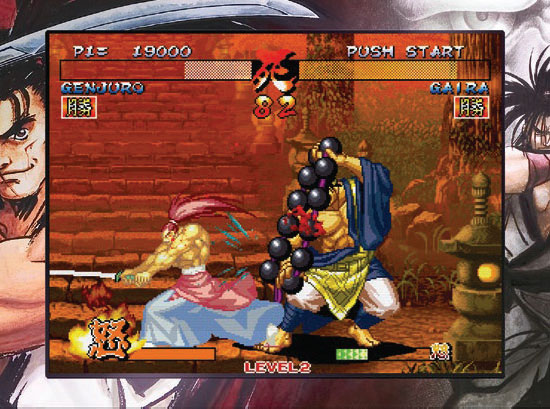
» [PC] Some modern releases even include multiple CRT options, recognising the lack of a singular ‘true’ experience.
The good news is that you’re not imagining things - modern TVs really do make old games look and feel worse, at least on original hardware. “At first I was somewhat blind to what other small pieces of the classic console experience were being eroded away as I bought newer and newer displays,” says Marc Duddleson of the YouTube channel My Life In Gaming. “It wasn’t until I learned about RGB video, upscalers and PVMs that I realised that yes, input lag is real; yes, the consoles are treated very differently on proper 15kHz CRTs; and no, TV manufacturers don’t care about optimising the gaming experience, especially for outdated analogue output consoles.” That last part is key. While TV manufacturers put a lot of thought into how to handle the wealth of standard-definition content that’s still out there, their choices are always made with film and TV images in mind. Because of that, most TVs have internal scaling systems that have a bias towards smoothing, meaning that pixel art loses definition and appears blurry. Another problem is that consoles didn’t adhere to video standards of the day, outputting a low-resolution progressive image that most TVs will treat as an interlaced image, which leads to visual artefacts such as horizontal lines where you should see rapidly flashing sprites. Worse yet, all that processing introduces a noticeable delay between your button presses and visual response, a phenomenon known as ‘input lag’.
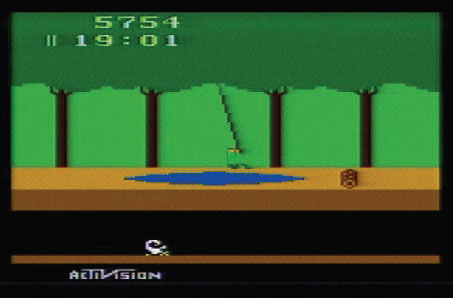
» [Atari 2600] Early consoles only output RF video - tremendously noisy and fuzzy, but details weren’t fine enough to be lost.
But if that’s the case, surely the way to make our games look good is to simply bypass low-resolution analogue video and play them in high definition on devices designed to output to modern displays? Unfortunately it’s not that clear cut either. There are plenty of people who feel that a CRT display is crucial to the look of a retro game, and some argue that by simply showing razor-sharp pixels, many emulated games - and indeed, this magazine - misrepresent the original intent of the graphic artists. “I tend to agree, at least in the case of home console games through the Nintendo 64 era,” says TroggleMonkey, the author of the popular RetroArch shader ‘crt-royale’. “Not only did every console gamer at the time use a CRT screen (except for the occasional projection screen or rear-projection TV), but the artists knew that and authored their pixel art accordingly. We didn’t start thinking of Mario, Link, or Samus in terms of sharp, blocky pixels until the console emulator craze started taking off on PC in the late Nineties.”