Studio Profile
Volition
Retro Gamer looks back at the 30-year history of Volition, one of the games industry’s more recognisable developers, to celebrate its creations, honour the team and pour one out for the untimely loss of a beloved studio…
WORDS BY ADAM BARNES
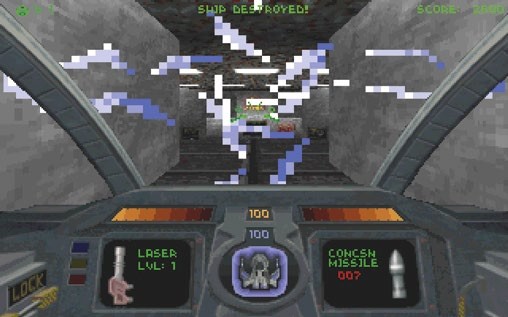
» [PC] Descent is beloved for its innovative approach to the FPS genre (and its multiplayer mode), though the freedom did mean a lot of lost players.
Well, all things told, 2023 wasn’t a golden year for the games industry. For all the potential future classics that have been released, there’s been untold heartbreak. An unprecedented amount, really. Whether you blame the economy and gamers with fewer coins to spare or point the finger at cynical corporate entities, the fact is layoffs and studio closures have been happening on a weekly basis. From massive billion-dollar publishers to smaller indie teams, there have been over 6,000 game industry professionals put out of work this year. And among these closures have been some long-running notable developers, such as Volition Inc which announced in August that the 30-year-old studio with more than 200 employees will be closed. That’s a blow that every generation of gamer can understand.
Volition was one of those developers that had proven itself in a number of genres, with some gamers remembering the team for its retro classics like Descent and FreeSpace, or more modern titles like Red Faction: Guerrilla or, perhaps most notable of all, open-world chaos simulator Saints Row. But Volition never even began life as Volition. Mike Kulas and Matt Toschlog had been working at Looking Glass Studios at the time, having first met one another at Sublogic where they were working on flight simulators. While at Looking Glass, they’d come up with an idea for an indoor flight simulator that would allow for a full six-degrees of movement around the environment, and the two of them would slowly work on this together.
Eventually it reached a point that they wanted to take it further and so in 1993 Mike and Matt left Looking Glass to found Parallax Software. Initially called Miner, their game was a novel use of technology at the time that allowed for a truly 3D environment to be explored freely by the player, at a time when 3D was only just beginning to find its way into games. “I was there at the beginning with John Slagel [programmer],” says Che-Yuan Wang, who worked on Parallax’s first game as a designer. “It was a four-person team for months before we hired our first artist, so I was doing some crude art at the beginning as a placeholder. Some of it did end up in the game.”
Yuan had interviewed with Mike during one of the open interview days at the University Of Illinois, Urbana-Champaign. At the time Mike had been representing Looking Glass and the two kept in touch, but it wasn’t until Parallax formed that Yuan was hired. “On one of my first days on the job, I remember the whiteboard in the small office we were in had a to-do list, with one of the tasks being ‘Figure out the name of the company’. To be honest, that was the moment I realised I wasn’t working for Looking Glass.”