THE SNIDER-ENFIELD AT WAR
15 Minutes of Fame
Terry Wieland
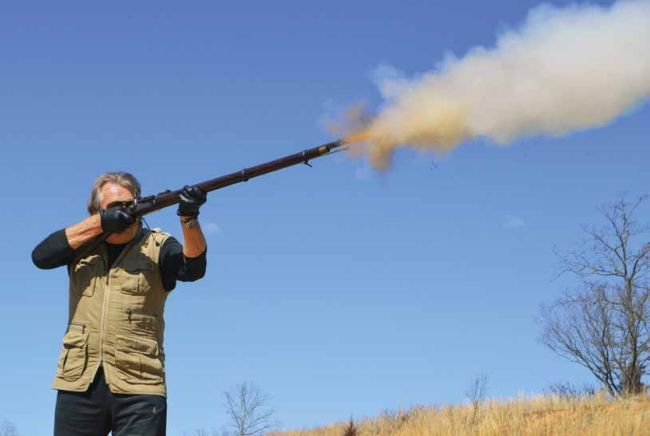
The Snider-Enfield is fun to shoot and to load for.
O
n April 10, 1868, a small British force under the command of Lieutenant General Sir Robert Napier climbed onto a plateau in central Abyssinia to face the army of Emperor Theodore II. The British were exhausted, having just completed a grueling two-month, 400mile journey from the sea over some of the most forbidding terrain on Earth.
What ensued has gone down in history as the Battle of Magdala. It lasted, by some estimates, about 30 minutes. Others say 90. Either way, it was a short, sharp engagement. When it was done, Theodore’s army fled, leaving 700 dead and 1,200 wounded. The British had lost not a man, although they had 20 wounded, of whom two later died.
The battle was the culmination of one of the most remarkable military episodes of the Victorian era. Modern historians, intent on disparaging anything with even the faintest whiff of colonialism, have sniffed that it was using a sledgehammer to snuff out a flea – that Theodore (Tewodros, he is now called) posed no threat. However, establishing a colony was not the goal. Napier’s army was in Abyssinia (now Ethiopia) to rescue several dozen hostages, held in dungeons in chains, including the British consul. Negotiations had not worked – one envoy was thrown into prison with the others – so the British, reluctantly, turned to the military.
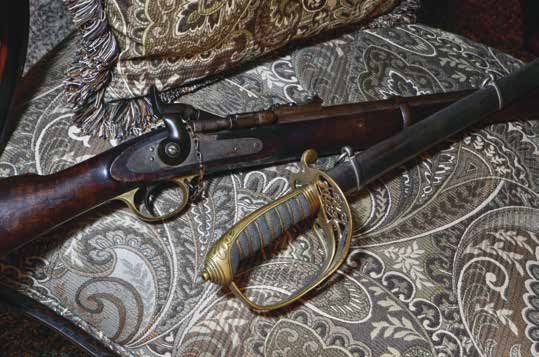
The Snider-Enfield was short-lived as an official British infantry rifle (1866-1871) but it was pivotal in the Abyssinian campaign, probably the finest operation carried out by the British Army in the Victorian era.
Accustomed to facing down hordes of tribesmen with a small force of highly-trained infantry, the War Office assigned only three British battalions to Napier’s army and, since they had just completed final trials on their first breechloading rifle, armed these units with the new Snider-Enfield. It was to be the Snider’s baptism of fire and “flying colors” hardly does it justice.
From the beginning, the rifle that came to be known as the Snider-Enfield was intended as nothing more than a stopgap, and a short-term one at that. By the early 1860s, it had become apparent that the future lay not with muzzleloading rifles but breechloaders. Since 1853, the British Army had carried the superb Model 1853 Enfield and had used it in the Crimea and later, in much greater numbers, in the Great Indian Mutiny of 1857.