JEROME A R I A R I ZONA
P AY I N G H O M A G E T O M I N I N G H I S T O R Y T H R O U G H A R T A N D T O U R I S M
STORY AND PHOTOS BY HELEN SERRAS-HERMAN
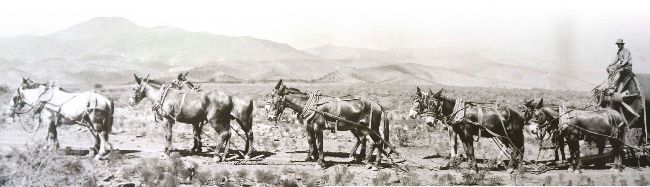
A wonderful historic photograph inside the Jerome State Historic Park-Douglas Mansion Museum, taken in 1915, shows an 18-horse and mule team in the Verde Valley transporting 14,000 pounds of ore.
The town of Jerome was founded in the late 19th century on top of Cleopatra Hill of the Black Hill Mountains. The Cleopatra Hill is situated at 5,200 feet and overlooks the Verde Valley below. Jerome is about 100 miles north of Phoenix, along scenic State Route 89A that connects the famous Red Rocks of Sedona to the northeast, and the town of Prescott to the west.
The mining town of Jerome popped-up in temporary tents in the 1870s soon after the discovery of copper by three prospectors. The town was founded as a copper mining community in 1876 after the fi rst claims were fi led. The original prospectors sold their claims in 1880 to Frederick Tritle and Frederick Thomas, who, with the help of eastern fi nanciers James McDonald and Eugene Jerome, created the United Verde Copper Company in 1883. Ironically, Eugene Jerome never visited the town, he only asked for it to be named after him.
That company only lasted two years, and the new owner, William Andrews Clark, a senator from Montana, had the vision to bring a narrow-gauge railroad to transport the ore, thus helping reduce the freight costs, and made the United Verde a successful mining venue and the largest copper-producing mine in the early 20th century Arizona Territory.
After multiple problems at the United Verde, including a geologic fault line, fi res on the 400-foot level of sulfi de ores, and the beginning of an open pit operation, the smelter was relocated from Jerome to the nearby new town of Clarkdale. It was completed in 1915. (Read more about Clarkdale in my article Taking a Closer Look at Copper, R&G August 2019).
After the fi nancial crash of 1929 and the onset of the Great Depression, the price of copper sunk to fi ve cents per pound, and by 1932 the United Verde mine closed (Jerome, Story of Mines, Men and Money, Western National Parks Association, 1993). Following Clark’s death in 1925, the mine was sold to Phelps Dodge in 1935, only to be shut down in 1953.
The two mines in Jerome that produced over 84 billion dollars in recovered metals were the United Verde Copper Company and the United Verde Extension (U.V.X. or Little Daisy), which was purchased in 1912 and developed by James S. Douglas. The mines produced the mind-boggling amount of three million pounds of copper per month and were dubbed the Billion Dollar Copper Camp. Jerome was once known as the wickedest town in the west, although I am sure several other mining towns were vying for that same title.