WR APPED WITH Wire
Expert Advice for Getting Started
BY DEB BRANDT
Wire wrapping is among the earliest forms of handmade jewelry. Dating back to 2000 B.C., wire has been used to secure and frame both found and created elements. It is a dynamic way to create jewelry with tension and shaping of wire.
“Wirework was discovered in ancient tombs,” explained Judi Wild, wire instructor at the William Holland School of Lapidary. “Wire wrapping is used to make a much more elegant piece than its individual materials would indicate. No heat, glue or solder; just tension and shaping of the wire make the piece come together.”
Wild explained that wire wrapping has changed over time. It continues to change and yet stays the same as pieces include polished cabochons as well as other mediums such as glass, intarsia, gemstones, beads and shells. The ongoing changes in wire work keep it fresh, new and modern.
Wild started as a student of wire work at William Holland learning the foundations of traditional wire wrapping that she now teaches. And while different styles help capture the types of stones one wants to wrap; she also prepares her students to create professional fine jewelry-level wire wrapping.
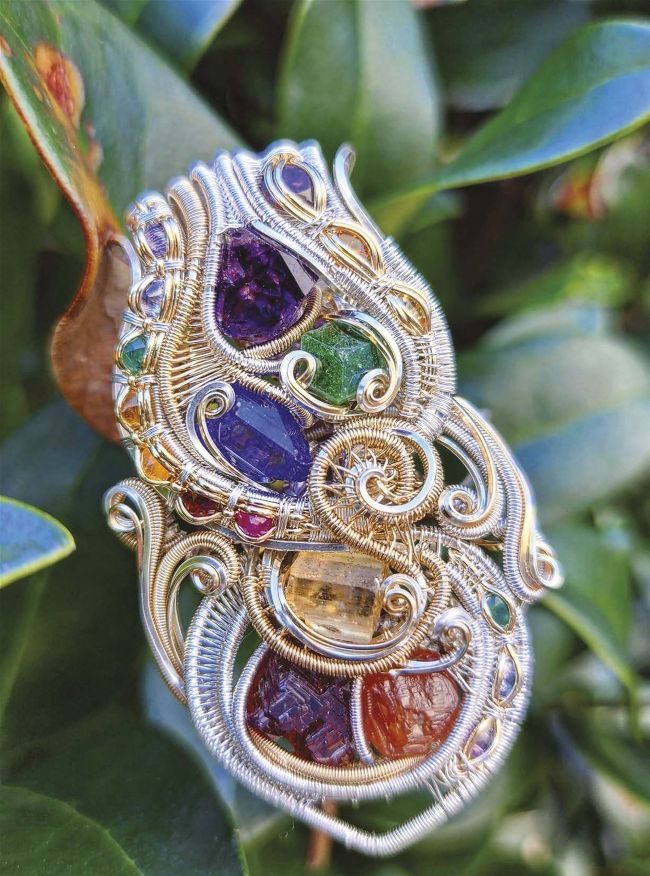
Goose Duncan’s finished pieces feature multiple gemstones and wire wrapping styles.
Courtesy Inna Sergeeva
WIRE WRAPPING TECHNIQUES
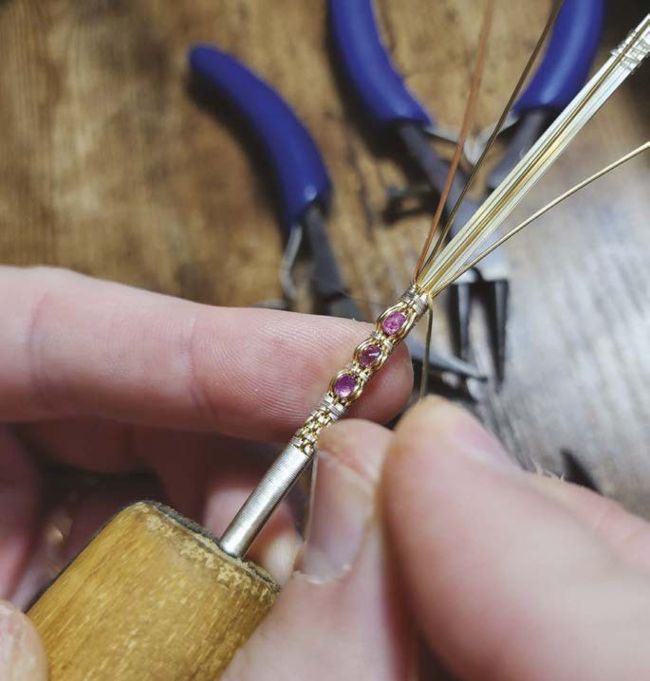
The beginning of a new piece being wrapped by Goose Duncan.
Courtesy Inna Sergeeva
From the beginner to the experienced professional, here are some techniques that represent the diversity of wire.