GB
  
You are currently viewing the United Kingdom version of the site.
Would you like to switch to your local site?
8 MIN READ TIME

Labradorite

The Northern Lights in a Gemstone

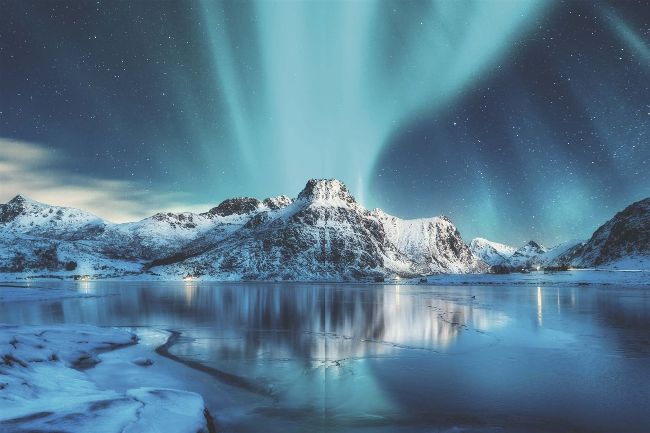
The northern lights are an awesome celestial display; the mineralogical phenomenon that best replicates their splendor is labradorescence. Courtesy Wikimedia Commons

The northern lights, those glowing curtains of cyan, green, gold and magenta that brighten the night skies in the northern latitudes, are among nature’s most stunning displays of color. The mineralogical phenomenon that best replicates this celestial splendor is labradorescence—the multicolored, subsurface, iridescent sheen that characterizes fine specimens of labradorite.

Labradorite’s classic source—its geologic type locality, namesake, and the birthplace of its legends—is the remote coast of Labrador, the northern part of the Canadian province of Newfoundland and Labrador. Labrador is named for the Portuguese mariner Joāo Fernandes Lavrador who, in 1498, braved the region’s subarctic climate to explore its rugged, deeply indented coast.

“FIRESTONE”

In 1771, Moravian missionary Jens Haven founded the coastal settlement of Nain in northern Labrador. Intrigued by the brightly colored stones displayed by the indigenous Inuit, Haven sent specimens to Germany where they became known as “Labrador Stein,” and to England where they were called “Labrador stone” and “firestone.”

As the first new mineral reported from what would become Canada, Haven’s specimens, with their eyecatching colors, attracted great scientific attention in Europe. In 1780, German geologist Abraham Gottlieb Werner, unable to determine the composition of Labrador Stein, erroneously described it as a distinct mineral species.

The first clue toward understanding the chemistry of “firestone” came in 1820, when researchers described the plagioclase feldspar minerals albite (sodium aluminum silicate) and anorthite (calcium aluminum silicate). Soon afterward, French mineralogist François-Sulpice Bedant determined that the Labrador specimens were a type of feldspar with characteristics of both anorthite and albite and named them “labradorite.”

Unlock this article and much more with
You can enjoy:
Enjoy this edition in full
Instant access to 600+ titles
Thousands of back issues
No contract or commitment
Try for 99p
SUBSCRIBE NOW
30 day trial, then just £9.99 / month. Cancel anytime. New subscribers only.


Learn more
Pocketmags Plus
Pocketmags Plus

This article is from...


View Issues
Rock&Gem Magazine
Sep 23
VIEW IN STORE

Other Articles in this Issue


Beckett Rock & Gem
Editor’s Letter
This issue was a lot of fun to
Spinosaurs Were Designed for Water
But their Brains Were Still Wired for Land
To Stay Safe During Quakes
Build with Wood
A New “Burgess Shale” Is Found in Wales
The Burgess Shale high in the mountains of
Is Mining Degrading a Large Swath of Venezuelan Rainforest?
When the Venezuelan government established the Orinoco Mining
On Mars, A River Runs Through It
Was our sister planet Mars once lush and
Shrinking Lakes Great No More?
The word “great” is often applied to some
More Tails from the Museum Storeroom
Ichthyosaurs Are Far Older Than Thought
A Sustainable Planet in Peril?
Crossing “Earth System Boundaries”
ALL  ABOARD!
Colorado’s Tourist Trains for the Geologist
Caring for CRYSTAL PARK: Preserving this One-of-a-Kind Experience for Future Generations
Excellent example of how the crystals form in
RUBBED RIGHT: Moissanite & Silicon Carbide
Walk the Crater’s edge, take in a 4D
ANOTHER LOOK AT GLASS BUTTE OBSIDIAN
Many people who make cabochons avoid working with
ROCK & GEM FIELD GUIDE: Pyrite & Marcasite
P yriteand marcasite are two minerals that share
THE ROCK CAFÉ
Oklahoma Sandstone Created this Route 66 Pop Culture Icon
Citizen Scientists UNCOVER Thousands of Microfossils
A Portal to Earth’s Past Emerges in a Remote Corner of the World
COLUMNS
The Great-Great Grandma of Us All
The First Animal on Earth?
Mining the Deep Seafloor
Do We Have the Data to Do It Right?
Taking Our Family Tree Back Way, Way Back!
We humans belong to the branch of life
Tails from the Deep
Mantle Rocks Recovered Deep Beneath the Sea
How to Make Soaps That Look Like Rocks and Crystals
Adobe Stock / nataliazakharova STORY & PHOTOS BY
SHIELD OF THE HEART DESIGN
Learning to facet gemstones can be rewarding and
PLACODERMS
Armor-Plated Fish of the Devonian
ARIZONA’S METEOR CRATER
Arizona’s Meteor Crater measures three-quarters of a mile
Show Dates
TO VIEW MORE CALENDAR DATES VISIT ROCKNGEM.COM .
Diamonds
What has always surprised me is the emphasis
DRYHEAD AGATE GEODE FROM MONTANA
ROCKS, MINERALS AND JEWELRY
Chat
X
Pocketmags Support