NATURE
The new seekers
What’s next for butterfly counters and bird-watchers? Today’s wildlife enthusiasts are taking their spotting skills to another level
by MIKE UNWIN
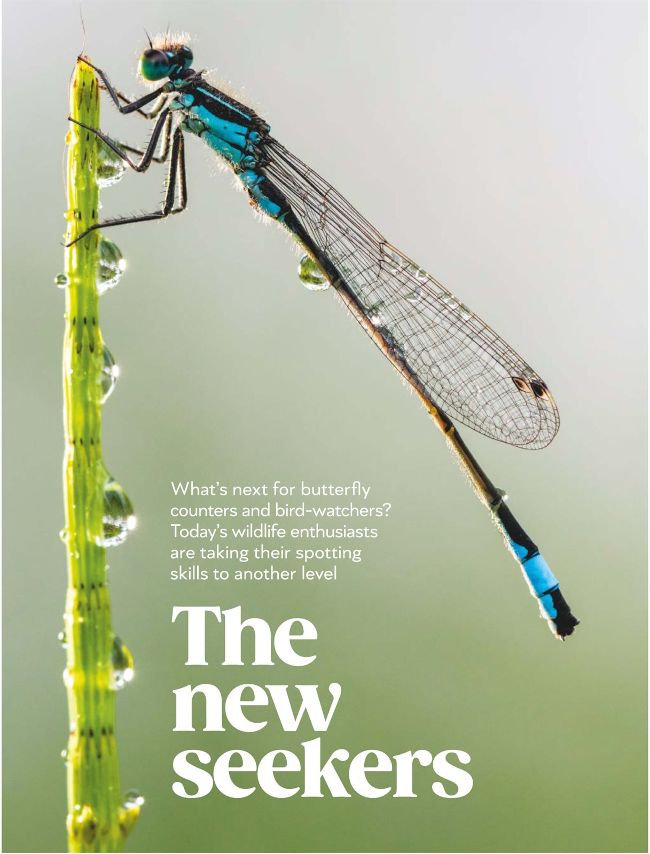
The beautiful blue-tailed damselfly
Can you tell a downy emerald from a golden-ringed? How about a red-tailed from a broken-belted or a whiskered from a brown long-eared? No, these names have not just been made up by me. They are, in fact, the names of British animal species - dragonflies, bumblebees and bats, respectively.
The UK is home to an impressive variety of wildlife, and also of wildlife spotters. Today, it seems, the scope of that spotting is starting to expand. Those who have long known their way round, say, birds and butterflies, are now getting a thrill out of chasing more elusive and harder-to-identify quarry. They are setting their sights on 'trickier' animals: the tiny ones, the water-based ones, the nocturnal ones.
Take moths. These humble creatures are all the rage among many enthusiasts who once stuck with butterflies. Wildlife spotters typically knew a few of the 'classics', such as the garden tiger beloved of old guidebooks. But the UK is home to more than 2,500 moth species (as many as there are bird species in Africa), many of which are tiny and nocturnal and require serious expertise to fmd and identify.