Moroccan Mysteries
Is it really possible to absorb the flavour of a foreign culture when you’re racing that out through the middle of it? Markus Stitz raced the Atlas Mountain Race and found out.
WORDS & PHOTOGRAPHY MARKUS STITZ
While airports around the world are pretty interchangeable, hotels are often not and the Mogador Kasbah hotel offers a first flavour of the weeks ahead of me. A massive chandelier looms above the lobby, its light reflected by the shiny stone floors. While I walk to the check-in desk, I spot a small sofa with a table to my left, occupied by two men drinking tea, engaged in a conversation. the unique Moroccan tea, often called Berber whiskey, can be found everywhere in the country. Usually consumed with a hefty amount of sugar, mint tea is not just a drink, but also a symbol of hospitality, tradition and Moroccan culture. As alcohol is not easily available in the country, having tea is the equivalent of catching up for a nice single malt back home in Scotland. there is an art not only to making the tea, first introduced by the British in the 18th century, but also to serving it. I observe one man holding the teapot more than a metre above the small cup while pouring it. As I find out later this is the proper Moroccan way or - better - the ‘art’ of serving tea.
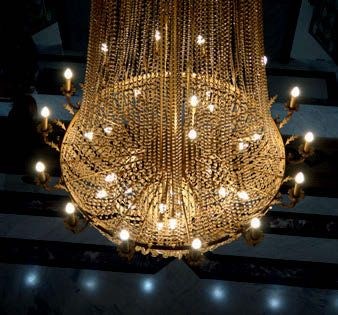
Shortly to be replaced by twinkling stars.
there are other symbols that follow me on my two-week journey through the country. While I drag my cardboard box across the second floor, I notice the red carpets feature a stylised lily, the fleur-de-lis. A symbol used by French royalty throughout history, it’s the first of many reminders of the country’s colonial past I come across. Establishing a protectorate in Morocco from 1912-1956, the French influence is still evident everywhere. I am no expert in colonial history or French, but I remember the symbol from a conversation I had with my girlfriend a few weeks before the race, when she spotted a fleur-de-lis on the carpet in the Moulin Hotel in Pitlochry. A white fleurs-de-lis on a royal blue background, similar to the colours in the Scottish Saltire, makes up the flag of the Canadian province of Quebec, where she hails from. While this is a lovely reminder of my girlfriend I’ll be missing for the next two weeks, it also serves as a painful reminder that I postponed my French lessons until after the race. A decision I will regret at times.
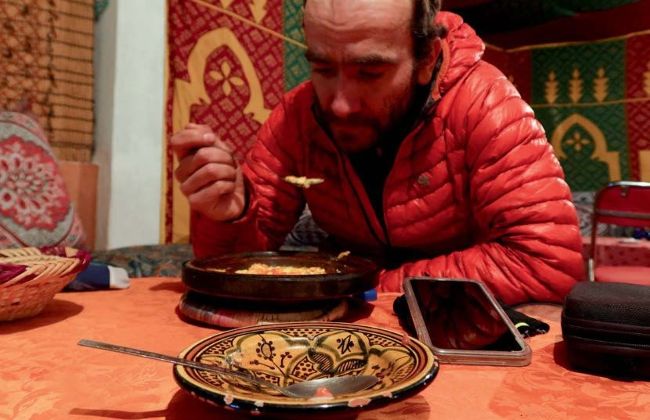
Now THAT is a tagine…
Although I don’t speak French, I get on OK. English is spoken in some places in Marrakech and Agadir. Conversations with the locals during an ultra-endurance race in a very remote part of the world are rare, and if they happen, they mostly concern food and places to stay. the route is set on my GPS. the remoteness of the mountains makes it easy to follow the red line, as settlements are sparse and often very simple to navigate through. However, next to the right mindset and physical fitness, food is one of the most important ingredients needed to make it successfully over the finish line, so I use the two days before the start to familiarise myself with the Moroccan cuisine.
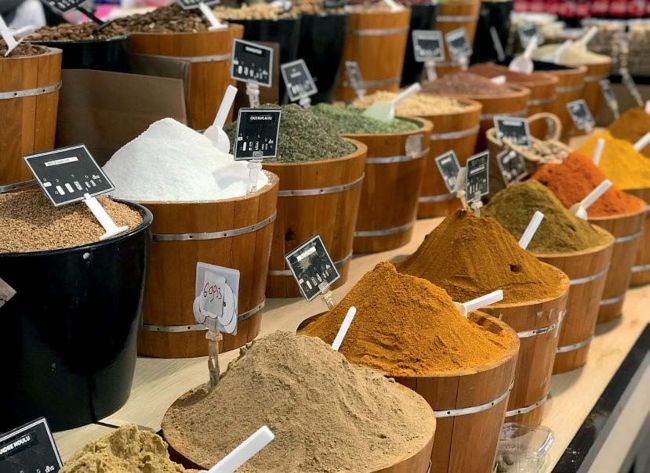
Invited by Nelson Trees, who organises the Atlas Mountain Race, I join the race crew of drivers, videographers, photographers, writers, podcasters, sponsors and parents for a ‘posh’ dinner in the city’s Medina quarter on the evening of my arrival. Like the hotel, the restaurant impresses with its grandeur. We are the only party dining this evening, and the choice on the menu is as simple as the options to pay (cash only) especially for vegetarians. My main course is roasted vegetables, which arrives in a tagine, a cone-shaped cooking vessel made of ceramic or clay, traditionally used in Morocco. this is followed by orange slices and strawberries flavoured with cinnamon as dessert. the most fascinating fact about Moroccan food is the extensive variety of spices used, like the unique saffron from Taliouine, a small town in the mountains, which I will pass in less than a week’s time during the race.