Pathfinder 2
After toppling Dungeons & Dragons from its throne a decade ago, Pathfinder finds itself faced by the might of Fifth Edition. As it prepares for its first major revision, can the fantasy RPG keep up?
Words by Matt Jarvis
THE PATH AHEAD
As someone who spent his formative years in the 1980s playing Dungeons & Dragons, Jason Bulmahn could have never imagined he would himself go on to become a guiding light into roleplaying for a new generation of gamers just two decades later.
“That never gets not weird for me!” he laughs. “It’s always strange to run into folks who are like, ‘Yeah, I first played roleplaying games with Pathfinder!’ I’m like, ‘No, c’mon now…’”
It is Bulmahn who has been at the heart of Pathfinder since the fantasy RPG first appeared ten years ago; as director of game design at Paizo, he was lead designer for Pathfinder’s first edition and now leads the team working on its upcoming second incarnation, which launches into a playtest this month ahead of a planned full release next year.
“It is really exciting how that audience has grown over the years and how it’s kind of matured,” he says. “We’ve kind of reached a point now where there are people who consider themselves old-school Pathfinder players. They were there in the alpha playtests.”
As its creators and audience have expanded and evolved, so has Pathfinder itself, rapidly ballooning from an evolution of Dungeons & Dragons 3.5 created as a reaction to Wizards of the Coast’s restrictive fourth edition to a roleplaying giant in itself, with a singular universe – the capacious setting of Golarion – and gameplay systems that, while derivative, were distinctive enough to take it beyond being a simple act of preservation.
The significant modifications Pathfinder layered on top of D&D (the game was nicknamed ‘D&D 3.75’ during development) converted roleplaying diehards and newcomers alike. Within two years of the first edition’s launch in August 2009, Pathfinder had become the first roleplaying game to outsell D&D since the seminal title’s release almost four decades prior – a lead it went on to hold for over three years. Dungeons & Dragons’ fifth edition retook the crown in 2014, spurred in part by streamlined gameplay changes and a free rules taster. Pathfinder has continued to nip at D&D’s tail since, offsetting its aging systems with fresh injections of supplements and modules, but has remained outpaced by the bigger game’s more drastic iteration. Pathfinder: Second Edition presents the chance to bring together the RPG’s decade of many parts into a whole and finally take the leap forward.
“You know, it’s funny; I think the first steps for Second Edition started the day we sent first edition to the printer,” Bulmahn says. “Because there’s always things that you look [at], you’re like: ‘Well, I wish we could’ve done more. I wish we could’ve changed this.’ The design of a game is never really done. I think you eventually come to a point where you just have to kind of go, ‘Well, it has to go now, so this is as good as we can make it.’ Because you can always work to make a game better. You can always spend more time iterating. You can spend more time creating a better ruleset and testing it and refining it.
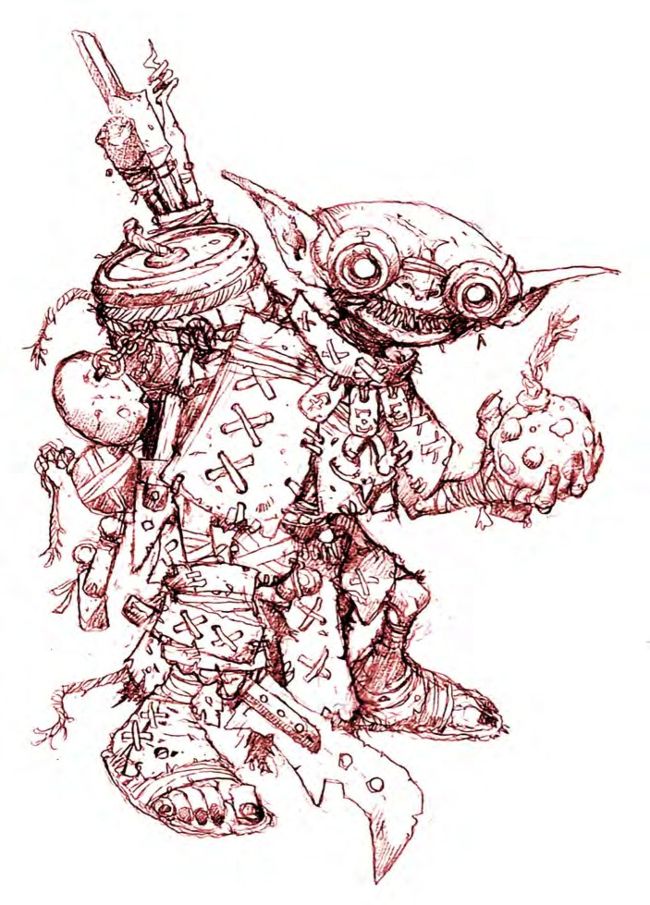
Goblins are now a fully playable race, inviting players to take control of the bloodthirsty creatures for the first time