Linear drawing techniques
In this first of two articles Adele Wagstaff explores how artists have used dry media and drawing techniques to explore the structure and form of the head
Adele Wagstaff
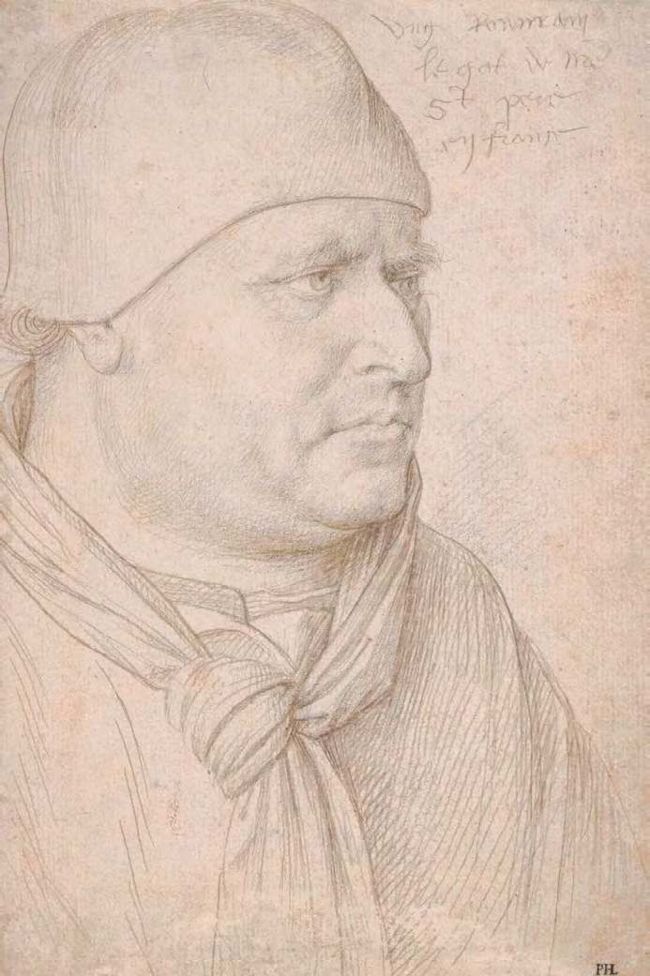
Jean Fouquet Portrait of an Ecclesiastic, c1461, metalpoint, black chalk on white prepared paper, 73⁄4 × 51⁄4in (20 × 13.5cm). Courtesy Metropolitan Museum of Art; image in public domain.
Which landmarks of the underlying anatomy do we need to look out for when we begin to work from observation? Which medium do we select to achieve the marks and textures we desire when starting out on a particular drawing? Line is our most expressive and immediate vehicle to explore the world around us; it is used to jot down rapid sketches and ideas or to work on longer, more detailed and observed drawing from life.
Expressive qualities of line
Many materials are available to work with: pencils in many grades of softness and hardness, graphite sticks in various sizes, charcoal, chalks and pastel, in both pencil and stick form. The marks made using a particular medium will vary considerably, depending on a number of factors including pressure, speed and scale. Lines will flow differently if we stand to work rather than sit. Does the line convey movement made through the entire arm, or only from the wrist? Lines we make with a pencil may have less variety, as we hold one with the point downwards, but what happens if we use more weight? Can we make a broader and darker mark or what happens if the pencil is held at its very end, how will this change the type of line we make?