GREATEST BAT SMAN
Jack Hobbs
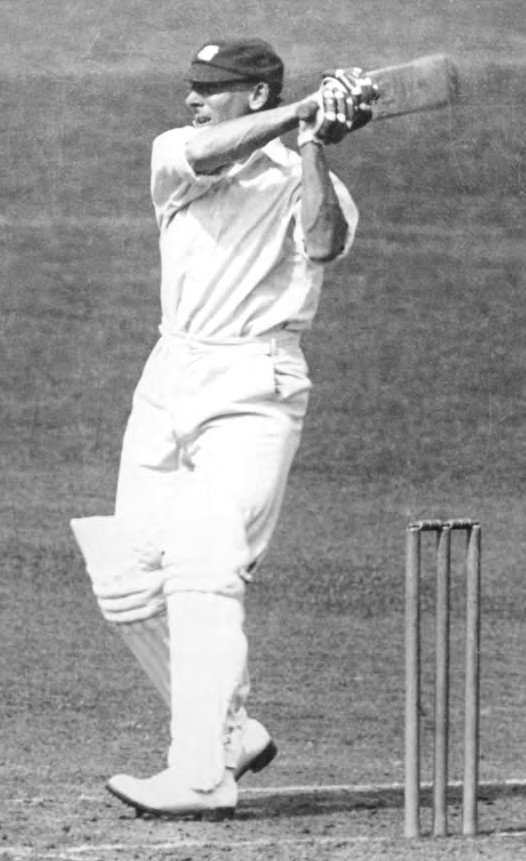
Jack Hobbs bats in 1926
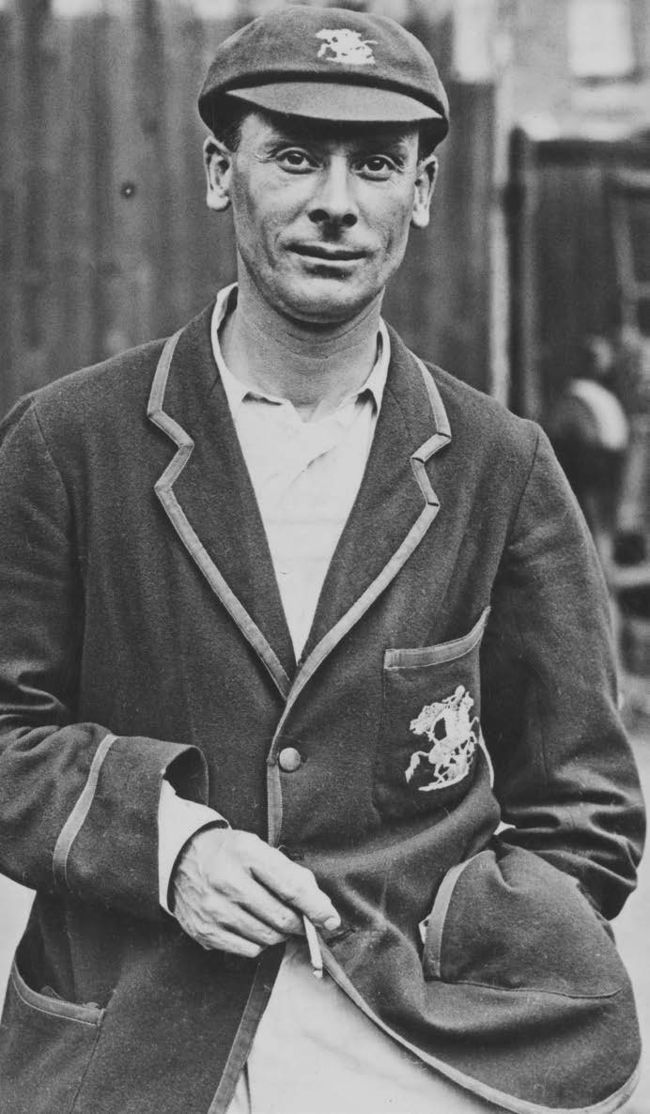
At Blackheath the year before
Deftness of touch and superb timing
Given that Jack Hobbs scored more firstclass runs (61,760) than anyone in history, including an astonishing 199 hundreds, he has fair claim to the title of England’s greatest batsman. But his anointing at the top of the list is not explained only by eye-watering statistics. What is more important is the three Ws: who he made those runs against; when; and where. For instance, he has scored more hundreds against Australia (12) than any other Englishman (Walter Hammond is next with nine). More Ashes runs too (3,636). More than half those runs – and nine of those hundreds – were scored in Australia, where he averaged 57.97. And one of those hundreds was made on a treacherous, sodden pitch at The Oval in 1926 with the Ashes – which England had not won for four series – still at stake. His command performance in a second-innings opening stand of 172 with the inimitable Herbert Sutcliffe ensured England clinched the urn for the first time in 14 years. As it was made in front of an ecstatic Prince of Wales, it pretty much guaranteed a knighthood.
Hobbs, christened John Berry when he was born in Cambridge in 1882, was not a natural showman. With a father who was a professional net bowler (and then a groundsman) at Fenner’s, he was always destined to be a batsman, and went quietly about the business of becoming one by endlessly hitting a tennis ball against the wall of a Fives court with a stump. Positively Bradmanesque. He never had any coaching.
Playing for Cambridgeshire in his teens, he was offered to Essex but rejected, so teamed up with his idol and subsequent mentor Tom Hayward (the second man to achieve a hundred hundreds after WG Grace) at Surrey. On debut – as it happened against Essex – he made 155. The Essex selection panel would already have been suitably chastened. By the time he had reeled off nine more hundreds for Surrey it was becoming one of the worst oversights in English history until 11 literary agents rejected JK Rowling’s first Harry Potter manuscript. Success at Test level was almost inevitable, and by the age of 28 he had eclipsed Australia’s Victor Trumper as the best batsman in the world. His batting average after 20 Tests was nudging 60.
With a beautiful flowing style and nimble footwork he was hard to restrict, and had a deftness of touch and superb timing that enabled him to prosper on any surface. He was especially proficient on the famous ‘sticky dogs’, stunning awkward, lifting deliveries into the ground for quick singles and dispatching anything short with great panache. He had “regal control” said an obituary, “from the twiddle of his bat before he bent slightly to face the attack” to “the beautifully timed push to the off to open his score,” perfectly placed wide of the fielder so “Hobbs could walk his first run.” The celebrated writer RC Robertson- Glasgow, who played for Somerset, described being confronted by Hobbs at The Oval as “like bowling to God on concrete.”
A naturally self-deprecating character, he shunned the limelight and after dominating the bowling on a flat track would often sacrifice his wicket to a toiling bowler and stroll off the field chuckling to himself. His first regular England opening partner, Wilfred Rhodes, said: “He could have got 399 hundreds if he’d wanted.” After play he would quietly retire to Lyon’s Cornerhouse on The Strand with Mrs Hobbs, his childhood sweetheart, for steak pie and ginger beer. He never drank alcohol. Denied the chance to be England captain because he was a ‘professional’ (paid £440 a year by Surrey) he was happy in the rank and file, and far too magnanimous to protest.
He elevated his game to supernatural levels in that Oval Test of 1926. Knowing the result of the match – and the destination of the Ashes – largely depended on him, he rose to the challenge. Nimble and resolute in defence, repelling the awkward lifters, he was quick to punish the wayward delivery, punching short balls between the cluster of close fielders on the legside or sometimes flipping the ball deliberately over them and placing the ball delicately wide of point or driving past mid-on. It was a flawless innings of agile defence, controlled aggression, superb shot selection, meticulous placement and fleet-footed running. This was why he was referred to as The Master. When he reached his hundred – made in just three and a half hours on a minefield – the standing ovation held up play for several minutes. He was out immediately once the game resumed but he had more than done his job and England regained the Ashes the next day.