VIOLIN MAKING IN CHINA
THE ENTERPRISE SYSTEM
China has become a world leader in stringed instrument making, based on a system of bulk production combined with respect for craftsmanship. Sisi Ye speaks to the heads of manufacturing firms in Pinggu, Queshan and Huangqiao to learn more
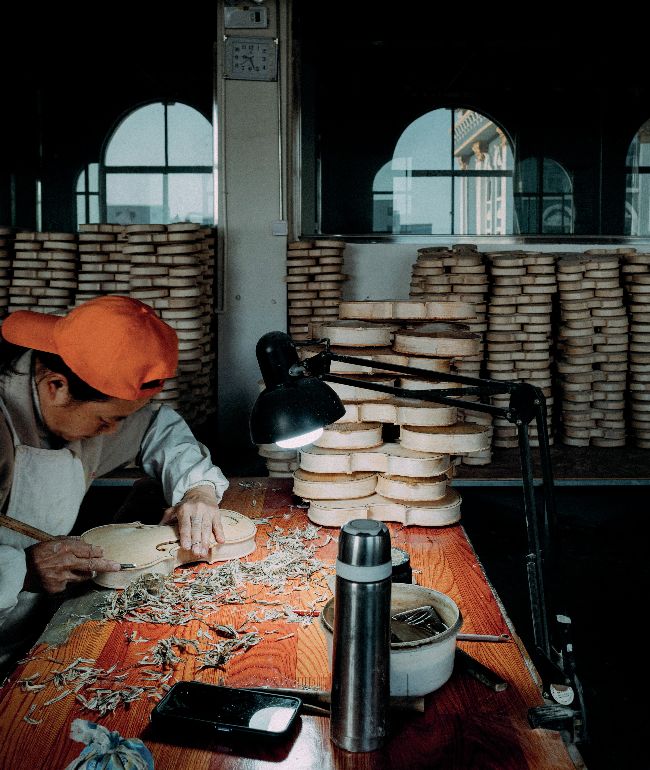
A worker at Fengling Musical Instruments in Huangqiao, the largest violin making company in China
In just under 30 years, China has become the world’s most prolific country in making stringed instruments. It is estimated that more than 1.4 million violins are made in China annually, nearly all of them emerging from the industry heartlands of Pinggu, Queshan and Huangqiao. These three areas represent 35 per cent of annual global violin production, even though the citizens of those regions barely knew about Western stringed instruments little more than a decade ago.
At the start of the 1980s, most violin factories were stateowned. As the decade went on, many of those companies switched to private operational models, and new firms began to appear. More interest in Chinese violins began to come from abroad, which attracted large numbers of entrepreneurs from the provinces to enter the industry. Unlike the traditional artisan workshops of Europe and the US, Chinese violin manufacturers looked at bulk production to meet the vast demand for Western musical instruments, both in their own country and further afield, and strove to meet the market demand with greater efficiency in production.
Located around 40 miles from central Beijing, Pinggu district is dedicated to the cultural and creative industries, and to musical education in particular. It is home to the town of Donggaocun, one of the national bases of the violin industry, with more than 40 violin manufacturers working there. The development of the district began 15 years ago, as part of Beijing’s preparations to host the 2008 Olympic Games: to improve the city’s traffic and pollution problems, a programme of urban reconstruction was initiated, with many factories moved out of the central areas and into the nearby regions.