AYRTON SENNA
SENNA
It’s been 30 years since the fateful weekend that took the lives of F1 drivers Ayrton Senna and Roland Ratzenberger and shook the world. Senna defined his generation and stands as one of the all-time greats. Think you’ve read everything about him? Here are 30 things you might not know about Brazil’s driving legend...
WORDS JASON BARLOW & OLLIE KEW
PREVIOUS PAGE: Senna lined up on pole position for the 1994 San Marino Grand Prix ahead of Michael Schumacher – Rubens Barrichello was hospitalised in a crash on the Friday, Austrian driver Ratzenberger died during qualifying. F1 doctor Sid Watkins tried to persuade Senna not to race, but he wouldn’t have it
1 SENNA TESTED FOR Williams, McLaren, Brabham and Toleman during 1983. On one run in the McLaren-Ford MP4/1 he kept the throttle pinned even as the engine lunched itself behind him. Team principal Ron Dennis (below) was not very impressed but he let him have another go.
Senna duly set the fastest time of the day and signed for Toleman, the lowliest of the four teams, but he figured it would give him time and space to learn.
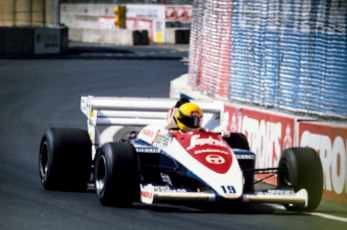
2 AFTER WIPING OUT of the 1984 Dallas GP, a distraught Senna insisted to Toleman technical boss Pat Symonds that the wall at the offending corner had ‘moved’. Amused, Symonds went to check it out, and found concrete scrape marks on the ground. A car ahead had tapped the concrete blocks forming the track boundary. Senna was driving to such tight tolerances that shifting this block a few mm lap-to-lap was enough to cause him to clip the edge and retire.
3 SENNA WAS A VAUNTED Monaco master, but why was he so quick in a turbo F1 car around the principality? The answer comes in detailed study of his throttle use. Through corner entry and apex, Senna would blip the revs to keep the turbo in the boost sweet spot, while slipping the clutch to maintain control. By precisely judging when the biting point re-engaged he could keep his car on the boil and shave huge chunks of time from his laps. Team members were astonished at his delicacy, managing to maintain boost pressure without wearing out the clutch, lunching the engine, missing a gearshift, or losing control of the car around the notoriously unforgiving twisting road track.