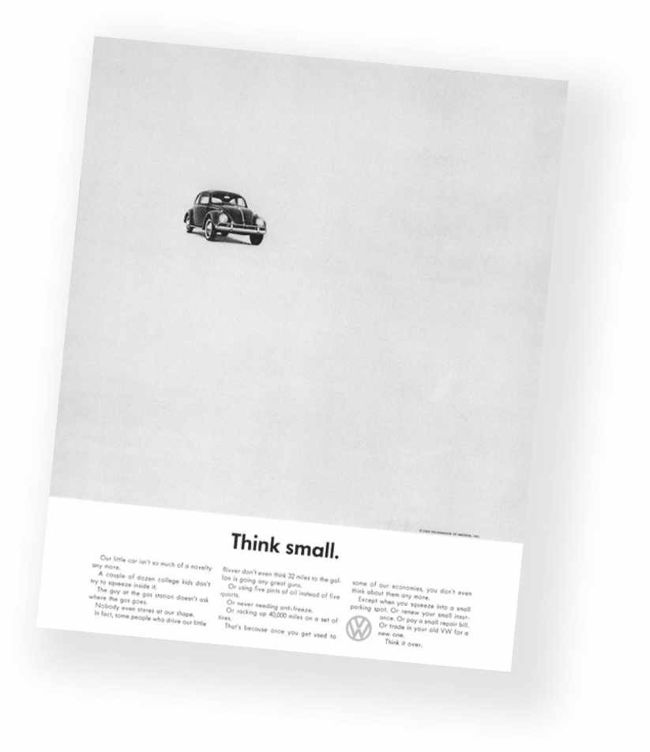
THINK SMALL AGAIN
Volkswagen’s recent history has been... patchy – Dieselgate, annoying touchscreens, you know the rest. Question is, can VW turn its fortunes around by thinking... tiny?
WORDS PAUL HORRELL PHOTOGRAPHY WILSON HENNESSY
IMAGES: GETTY
This little car has a big, big task.
From 2027 the production version should reinvent Volkswagen, literally from the bottom up. To you and me it’s just a car – a smart one and, at £18,000, a cheap one. To Volkswagen it’s much more: redemption. VW’s electric story so far has very much had its ups and downs, and the downs have been painful and self-inflicted.
The story arc begins when Dieselgate broke, back in 2015. VW was already planning bespoke electric cars, even if we saw no evidence until the ID concept in autumn 2016. Since the first Golf, VW – despite dark beginnings under the Nazis – always thought of itself as a force for good, a big employer making sound people’s cars, boosting the economy. The diesel scandal showed a malevolent side, and it wanted to regain the high ground. The ID cars were to be the route, and they were fast tracked.
Too fast. Software woes meant they launched late and unfinished. Germany’s biggest corporations do autos, finance, utilities. The country has produced no great software or data company. I suspect that’s because of a second ugly period in the country’s history. After the postwar split, the communist part’s all pervasive internal intelligence network, the Stasi, relied on hundreds of thousands of civilian informants. Neighbour spied on neighbour. Since reunification, a deep cultural attachment to privacy still remains. Start any German car and the screen won’t come on until you’ve prodded a data sharing agreement button. And so, in 2015 when VW wanted to design a range of connected EVs, it couldn’t find the software talent.