The Porsche flugmotor
WHEN PETER TOOK HELMUTH FLYING
Forty years ago Porsche made a serious attempt to break into the private flying market, as Total 911 explains…
Written by Kieron Fennelly
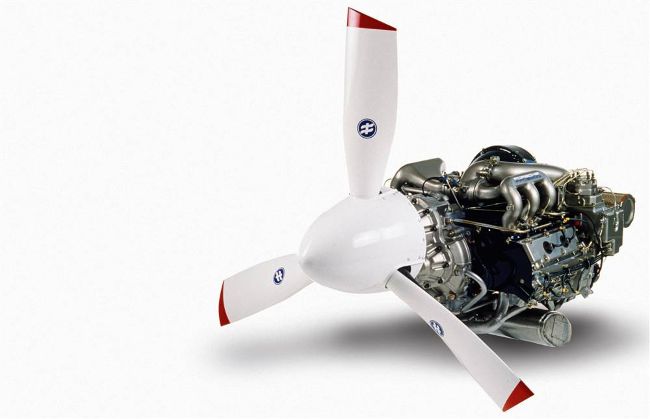
Photography by Porsche Archive
Dr Porsche began in 1930 as an engineering consultant and over the next two decades his company did design work on a range of vehicles. After a hiatus of two years during which Dr Porsche was imprisoned by the French, his son Ferry resurrected the company, initially as a repairer of military vehicles and then as a builder of sports cars based on components from Volkswagen that Dr Porsche had established and managed until 1945.
Although Porsche was a manufacturer in its own right, it retained a strong consultancy emphasis. Central to Porsche was Ferry’s relationship with Heinz Nordhoff, the post-war chief of VW. The latter supplied running gear to Porsche and in return Porsche carried out engineering and body design for VW, an arrangement that lasted until the early 1970s.
Helmuth Bott, Porsche’s engineering director, re-established Porsche’s R&D, which was now based at a new site at Weissach, 25km from the company’s Zuffenhausen headquarters. By 1980, Porsche Engineering was undertaking a variety of automobile and other consultancy jobs. These included design of a new car for Lada-manufacturer Zhiguli, engine design and factory planning for SEAT and a new series of water-cooled engines for Harley Davidson.
These were only the publicly acknowledged contracts. Much other third-party work remained confidential, but the whole enterprise gave Porsche immense self-confidence. This became more apparent when the gung-ho Peter Schutz was appointed in 1981, replacing Ernst Fuhrmann who had fallen out with the Porsche establishment. Porsche’s self-belief was reinforced by winning Le Mans that year with a chassis exhumed from the museum and a prototype racing engine that had never been used.