FLASH GORDON
FLASH GORDON APPROACHING! AS THE SCI-FI CLASSIC TURNS 40, TOTAL FILM DISPATCHES WAR ROCKET AJAX TO GET THE BEHIND-THE-SCENES STORY FROM THE DIRECTOR AND STARS.
WORDS RICHARD EDWARDS
It’s one of the biggest ‘what ifs?’ in cinema history. How different would modern Hollywood look had George Lucas succeeded in his mission to nab the film rights to Flash Gordon in the ’70s?
Of course, what happened next has become the stuff of legend. After his advances were snubbed by producer and Flash rights holder Dino De Laurentiis, Lucas went on to create his own galaxy far, far away - and his take on the 1930s sci-fiserials he’d fallen in love with as a kid subsequently did rather well at the box office.
Star Wars was so successful, in fact, that - in a bizarre role reversal - the new kid on the block was able to influence its spacefaring forebear. So with sci-fisuddenly hot property in cinemas around the world, De Laurentiis decided to cash in on his own piece of stardust.
Yet despite arriving the same year as The Empire Strikes Back, Flash Gordon was cut from rather different cloth. While Lucas and his hero Luke Skywalker were being drawn towards the emotional complexity of the dark side, this larger-than-life adaptation of Alex Raymond’s comic strips featured ornate, brightly coloured sets, a villain who had an actual moustache to twirl, and a clean-cut, all-American hero who never had any doubts whether he was doing the right thing. The film was also kinda funny.
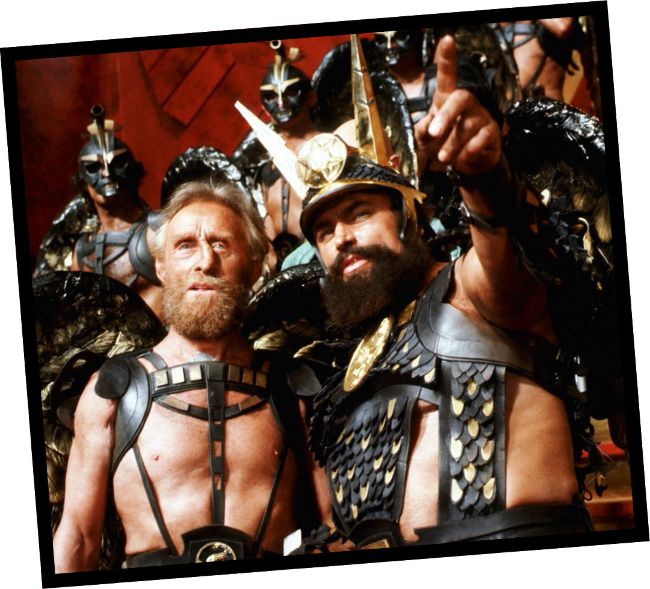
“I don’t see the connection between wanting to get the rights to Flash Gordon and eventually doing Star Wars!” Flash Gordon director Mike Hodges tells Total Film. “Star Wars was very entertaining but I found it visually kind of grey. What I loved about Flash and the strip cartoon is it’s so vivid - the colours are so primary and wonderful. Flash Gordon was a completely different thing to Star Wars, the antithesis of it in many ways. So Star Wars didn’t influence me at all and I was quite happy to be moving in a totally different direction. I wouldn’t have wanted to have competed with Star Wars, that’s for sure!”
Flash Gordon was a product of Depression-era America. Media baron William Randolph Hearst wanted a comic-strip space hero to rival Buck Rogers (of 25th Century fame), and after he lost out on the comic-strip rights to Edgar Rice Burroughs’ John Carter Of Mars, the man who’d later inspire Citizen Kane decided to bankroll his own. Enter 22-year-old artist Alex Raymond, whose polo-playing Yale graduate-turned-space adventurer became an icon as soon as he blasted into space in 1934. Within a couple of years, Gordon was alive on the big screen, with former Olympic swimmer Buster Crabbe saving the Earth in the popular adventure serials that would subsequently inspire Lucas.