A COMPLICATED MAN
Greek muses and World War II generals, the Catskills and the Gulf Of Mexico, wistful lovers and murdered presidents… Richard Williams files the epic, definitive review of Rough And Rowdy Ways. Bobcats assemble!
Photo by WILLIAM CLAXTON
IN his 2016 Nobel Prize lecture - which he did not deliver in person but eventually published as a recording, with piano accompaniment, and a short book - Bob Dylan began with a memory of how seeing Buddy Holly in person and being given a Lead Belly record changed his life. But then he went on to talk about the books he read in school that had made the deepest and most enduring impact on him: Moby-Dick, All Quiet On The Western Front and The Odyssey. He closed his speech with Robert Fitzgerald’s 1961 translation of Homer’s opening invocation: “Sing in me, O Muse, and through me tell the story.”
This was four years after Dylan had released Tempest, his last album of original material, and while he was in the middle of recording 50-odd songs from what is now generally referred to as the American songbook: the show tunes of Harold Arlen, Irving Berlin, George Gershwin, Jerome Kern and so on. Released between 2015 and 2017 as Shadows In The Night, Fallen Angels and the three-disc Triplicate, they received a mixed reception, many turning up their noses at what appeared to be a misguided project, and certainly an overextended one. In the first place, why would Dylan attempt to perform pieces already rendered definitively by others (like Frank Sinatra) when the earliest and most influential phase of his own career had amounted an organised assault on the values represented by those songs, with their moon-and-June lyrics and their neat 32-bar AABA structures?
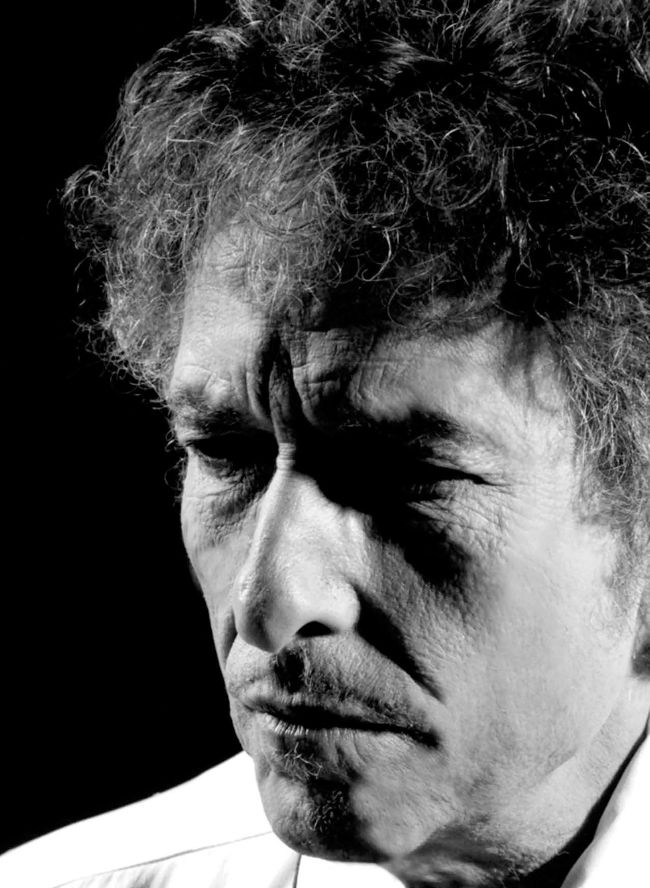
Dylan in the 21st century: creating mosaics from fragments of the past
GRADUALLY it became apparent that Dylan might have been up to something all along, just as he had been when he recorded The Basement Tapes in the ’60s and a couple of solo albums of blues and folk songs, Good As I Been To You and World Gone Wrong, in the early ’90s, using them as co-ordinates with which to realign his musical satnav. You can’t take liberties with Tin Pan Alley songs like “Stormy Weather” or “My One And Only Love”. You sing their finely wrought chromatic melodies as well as you possibly can, while allowing the lyrics to speak clearly; otherwise, don’t bother. And that is what, despite the effects of time on his vocal range, he did. So anyone who saw his concerts during this period - at the Albert Hall in October 2015, for instance - had to be struck by the way his attitude to his own songs had changed.
Listeners were no longer invited to spend the first minute of a song teasing out the clues to “Blowin’ In The Wind” or “She Belongs To Me”. This seemed a good thing. The technical exercise involved in phrasing the lines of the standard tunes - the sort of challenge for which Sinatra swam underwater in order to improve his breath control - must have appealed to Dylan, whose gift for shaping the cadence and internal rhythms of long lines, even when completely ignoring the melody, has always been just about his most unfairly overlooked expressive talent.
What is also perhaps underappreciated is the appeal of his speaking voice. The 101 programmes of his Theme Time Radio Hour series showed us (and perhaps him) what a spellbinding reader he can be.
It became hard to imagine a book of any sort that wouldn’t be improved by Dylan recording its audio edition. And that, too, has a very practical application to his new collection, in which his lyrics are spoken as much as they are sung.