STUBBORN GLORY
Instead of building on the modest success of his luminous 1973 breakthrough Solid Air, JOHN MARTYN dived straight back into Island’s West London studios to record the capricious, unruly Inside Out. As Graeme Thomson reveals in an extract from his new biography of the headstrong folk voyager, the album’s intoxicating, coke-fuelled experimentalism bemused the label but became Martyn’s personal favourite. “It wasn’t just a mad, drug-crazed romp,” insists one key collaborator. “We were completely in the zone with John’s music.”
JOHN MARTYN
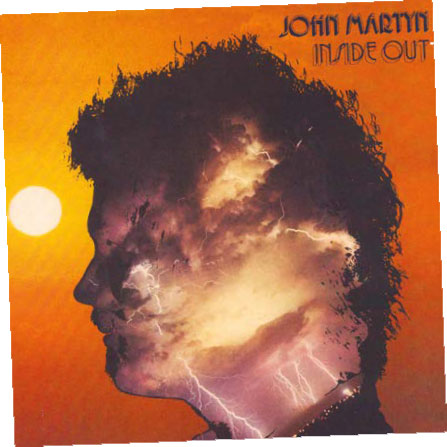
Photo by BRIAN COOKE
“I’M not really a great joiner,” John Martyn told this writer in 2005, sitting in a beer garden in his adopted hometown of Thomastown, in Kilkenny. “I prefer being on the fringe.” That maverick sensibility is scored deep into his catalogue. For anyone seeking evidence marking out Martyn as an player, a man who bolted at the first sign of consensus or acceptance, a contrarian of the first rank, Inside Out is the place to start.
A foray into the furthest reaches of his musical mind, a dazzling and sometimes bewildering experiment in tone, form, texture, pace and placement, Inside Out arrived barely six months after Solid Air, by some distance Martyn’s best known and most acclaimed album. The only person who didn’t seem to love Solid Air was the man who made it.
“John always moaned about Solid Air,” says John Wood, the engineer who worked with Martyn on the album and its predecessor, Bless The Weather. “He never gave me the impression he liked the record much.” In the immediate aftermath of its release, Martyn publicly expressed his disappointment. “I’m not as pleased with it as I have been with previous ones,” he said. “It was all too rushed.”
In private, he was often more blunt. “He actively hated it,” says Jim Imlach, the son of Martyn’s great friend and mentor, the late Scottish folk singer Hamish Imlach. “I could tell you a dozen times where he said he hated that album, hated the songs. It was part of his journey, but he didn’t want it to define him. He wanted to be innovative. He was a stubborn sod.”
A free-jazz-orientated improvisation, Inside Out is Martyn’s freedom song, the most committed communique from the part of him which was in thrall to Pharoah Sanders, Dudu Pukwana and the Spontaneous Music Ensemble. A fuzzy miniature stitched together from a series of unruly, unmapped performances, it is beautiful and maddening; indulgent and inimitable. The splendidly cosmic cover art, depicting the artist’s inner thoughts as a fury of lightning bolts and thunderclouds, visualises the guiding principle of Martyn’s music: creation as the ultimate catalytic converter, spinning a ton of messy psychological shit into sunshine - and vice versa. Inside. Out. Outside. In.