STRANGE DAYS
Burdened by troubles, legal and otherwise, THE DOORS may well have imploded in 1970. Only they didn’t. Band members and eyewitnesses tell Peter Watts how The Doors instead enjoyed an astonishing burst of unrivalled creativity. Welcome, then, to Morrison Hotel: “a place where you could start a religion or plan a murder...”
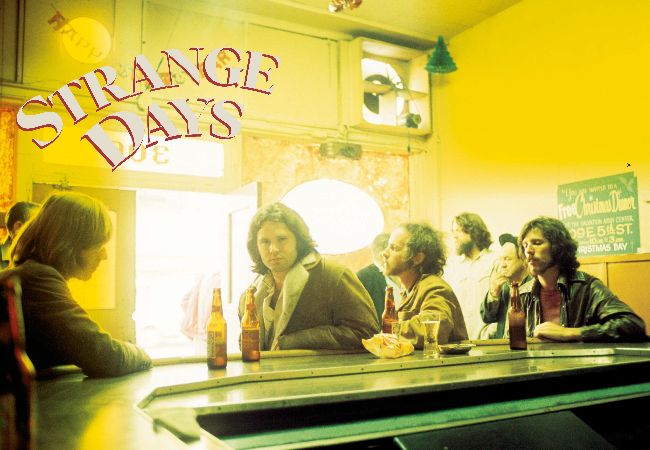
Let it roll: after shooting the cover for Morrison Hotel, The Doors repair to LA’s Hard Rock Café at 300 East 5th Street, December 17, 1969
Photo by HENRY DILTZ
WHEN The Doors arrived at Elektra Sound Studios in Los Angeles in September 1969, it was a homecoming of sorts. The studio was built in a Mission revival style, with cheerful yellow walls and terracotta roofing. It was just a block from the Alta Cienega Motel - where Jim Morrison was living out a bohemian existence - while Morrison’s girlfriend Pam ran a boutique called Themis just down the road. But the band had spent the summer at the studio labouring through gruelling sessions for The Soft Parade, an experience so miserable they nearly split. Would their next album go the same way?
“Actually, most of it was really fun,” recalls Robby Krieger, The Doors’ guitarist, who even now seems surprised to be saying this. “We still didn’t think of it as work. It could be long hours and some of it was boring - getting the right sound from the snare drum for four hours - but once we started playing it was always fun. We were a pretty odd lot, but when you put us all together it made sense.”
For The Doors, 1969 had been one disaster after another. In March, a drunken Morrison was alleged to have flashed his penis during a gig in Miami. He was charged with public indecency and many American venues refused to book the band. The threat of imprisonment hung over the Soft Parade sessions. Then, just as the band began work on Morrison Hotel, Morrison was arrested after getting drunk on a plane on the way to see The Rolling Stones in Phoenix. In a bid to get them to focus, Elektra owner Jac Holzman gave the band a pep talk.
“How do you deal with it on a day-to-day basis?” says Holzman. “You support them. You encourage them to go back into the studio to make a terrific album to show the world they are still there. ‘You don’t let something like this ruin your life. At one point, when you are on trial, it will override everything. But right now, nothing is happening and three of you haven’t been arrested. You all contribute to the music, so let’s keep going.’ I told them that we’d show people that The Doors and Elektra were moving forward by making great music, as we always did.” It worked. Although troubled by post-Miami litigation and Morrison’s antics both on stage and off, 1970 was a surprisingly productive period for The Doors. You can get a sense of their creative engagement from the 50th-anniversary reissue of Morrison Hotel. Before the first take of “Roadhouse Blues”, for instance, we find a relaxed Morrison setting the scene. “Gentlemen,” he says, “the subject of this song is something everybody has known at one time or other. It’s an old roadhouse down South or maybe Midwest, perhaps on the way to Bakersfield, and we’re driving in a 57 Chevy -dig it? It’s about 1.30 and we’re not driving too fast but we’re not driving too slow either. We’ve a six-pack of beer, a few joints and we’re just listening to the radio on the way to that old roadhouse.” He hardly sounds like a man preoccupied with his own worries.