QUINCY JONES | 1933 – 2024
THE DUDE
Producer, arranger, composer, conductor, impresario and trumpeter, QUINCY JONES was one of music’s dominant forces for over half a century, whose genius gilded albums by artists including Ray Charles, Frank Sinatra, Michael Jackson and Miles Davis, as well as his own inimitable forays into jazz, big band, French pop, soundtracks and more. Neil Spencer reflects on Q’s remarkable life and achievements, from aspiring wiseguy to hit-making legend. “He could hear the complete thing,” recalls one former collaborator. “More than a dozen instruments, what they were doing, all in his head.”
Photo by JACK VINCENT PICONE
WHEN he was a boy, Quincy Jones wanted to be a gangster. This was South Side Chicago in the late 1930s and mob life was everywhere – “Piles of cash, stogies, bodies, machine guns” – and young Jones wanted to fit in. Things got out of hand when he was 10 and strayed onto someone else’s turf and had his hand pinned to a fence by a stiletto. His father, a carpenter and part-time pro baseball player, decided it was time to escape and abruptly decamped, driving 2,000 miles with his family to work in the naval yards near Seattle. His mother, a bipolar sufferer, was already confined to an asylum.
It was an early life that would leave many men beaten down and running scared, but Quincy Jones discovered he had a hidden superpower, an affinity with music that over the next half century transformed him into an American icon, an artist and composer who helped shape his nation’s culture for modern times. The career landmarks are well known. The Grammy nominations and awards (including his first for Producer Of The Year for 1981’s The Dude), producer of Thriller, the bestselling album of all time, era-defining soundtracks like In The Heat Of The Night, collaborations with Basie, Sinatra and more. He also became a magazine publisher (Vibe), a movie producer (The Color Purple) and TV magnate (The Fresh Prince Of Bel-Air).
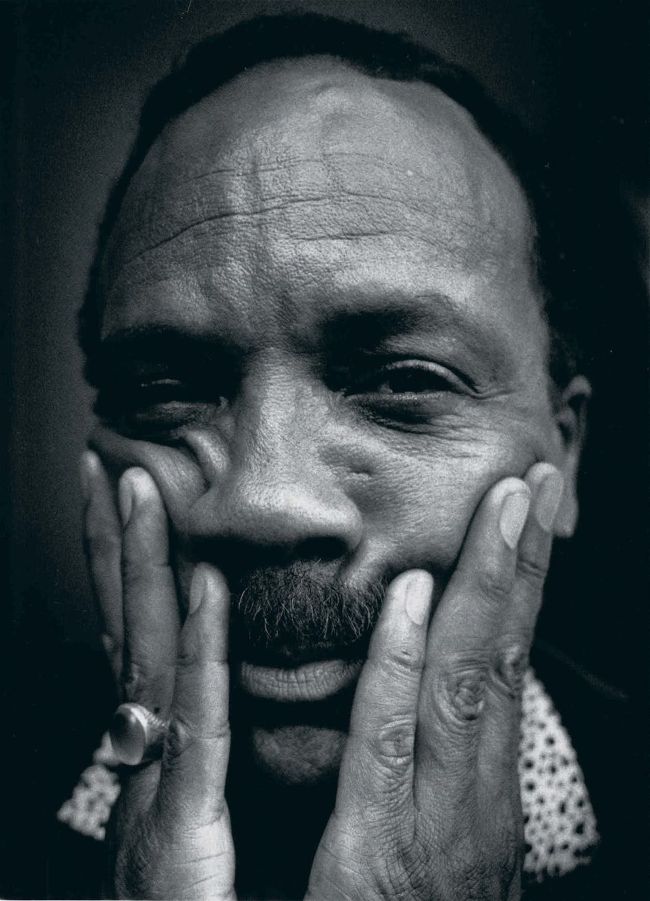
A musical superman: Quincy Jones, March 27, 1990
JACK VINCENT PICONE/FAIRFAX MEDIA VIA GETTY IMAGES
Jones did all this and more without being a star of his instrument (the trumpet) unlike, say, Louis Armstrong, or Miles Davis. He did all this without being a songwriter of the order of Cole Porter, Dylan or The Beatles – though he co-composed plenty, he never wrote lyrics – and without being a noted singer or a celebrated performer. Think of Quincy Jones and what comes to mind is a good-looking dude with a baton in his hand. Yet he always boasted a raffish charm – he was always a ladies’ man – a fierce intelligence and a chiselled pencil ’tache.
When I interviewed him for Uncut in London in 2010, he kept me waiting for an hour before I was finally ushered into his presence. Thankfully, this proved to be the only evidence of prima donna behaviour – when we finally met, he was charming and affable, brandishing photos of his kids and happy to talk about past glories but eager to divert into subjects such as the history of the African drum, numerology or the geography of China. In passing, he name-dropped the Stones, Brando, Picasso and David Beckham. Then aged 77, with a credit on over 100 albums, I asked what was the secret to his success. “The sequence is very important,” he said. “That’s the architecture of an album…”
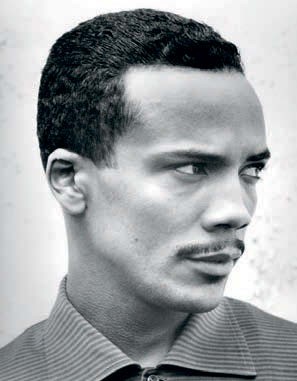
QUINCY JONES
FRANZ HUBMANN/IMAGNO/GETTY IMAGES; MICHAEL OCHS ARCHIVES/GETTY IMAGES
UNLIKE Chicago, Seattle Usu suited Quincy. His superpower grew vigorously, from hearing his neighbour play stride piano to learning every instrument in the school band. At 14 he met Ray Charles, two years his senior, who instilled in him the need for dedication to his craft. The pair became fast friends, playing be-bop into the small hours at the Elks club and occasionally dressing up as sailors to try to impress women. As a major port in the Pacific war, the city was bursting with energy. “Seattle was on fire, it was a wonderful time to come up,” he told me.