Album by album
Field Music
The Brew is brothers reflect on 16 years of pragmatic pop classicism
ON completion of their new album, the bright and poignant Flat White Moon, Field Music’s Peter Brewis came to a realisation. “I think we’ve done as many albums as Led Zeppelin did!” he declares proudly.
“And sold about 80 million less…”
Yet Field Music’s mere survival, as a cottage industry on the far outskirts of the pop mainstream, is worth any number of platinum discs. “We’re really lucky that we’ve managed to develop an audience that are happy with all of these tangents we might go off on,” says David Brewis. “It’s partly luck, and partly because that’s what we’ve forced on them! And maybe driven a few casual listeners away. But if that’s the price of being able to do whatever we want, that’s how it’s got to be.”
There are other sacrifices too, of course. It’s hard to imagine Led Zeppelin building their own studio – three times – or driving themselves to gigs by borrowing their dad’s car. And the brothers remain rooted in Sunderland, as much out of financial necessity as overriding affection for their hometown. “Sunderland’s really cheap to live,” says Peter frankly. “I don’t think we could live anywhere else in the UK.”
There is an old-fashioned view that artists need to be absolved of all practical responsibility in order to tap into the muse, but the Brewises are having none of it. “We use the pragmatism as a way to make the space to be creative,” argues David. “And the creativity happens in our brains – it doesn’t require all those clichéd rock’n’roll stimuli. We’re thinking about things all the time.”
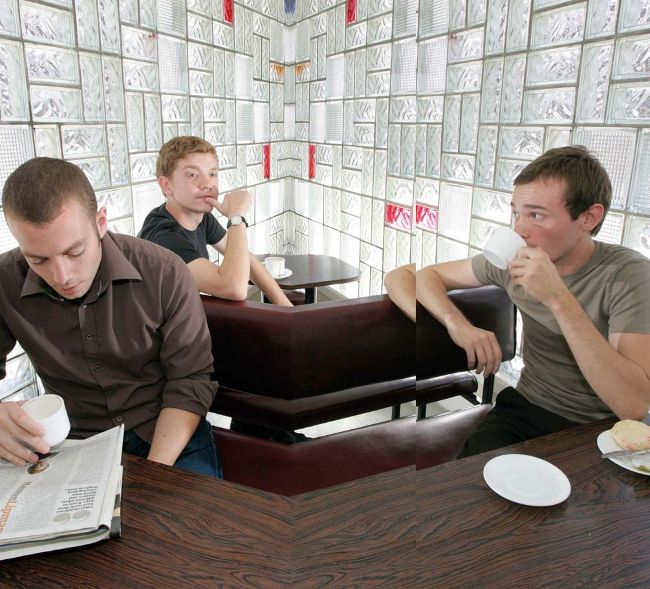
A Field of three: Peter Brewis and (right) David Brewis with keys player Andy Moore, 2006
FIELD MUSIC
MEMPHIS INDUSTRIES, 2005
An impressive debut that quickly establishes the abiding Field Music tenets of resourcefulness, melody and lyrical self-doubt
DAVID:
From 1997 to the end of 2003 we were flailing around, waiting for someone to tell us what to do.
We thought that going into someone else’s studio would make it real, and it didn’t. So we realised that we’d just have to do it ourselves. At the time, we were very anti-cliché and very sceptical about how people talked about music –a totally normal song with a load of squiggly synth noises on the top, for me that’s not experimental enough. So we’re going to take totally normal sounds and make really strange music. Looking back, it still sounds a bit like a collection of interesting ideas that we didn’t quite know how to execute. I have a fondness for it, though.