PULP
RAZZMATAZZ
Pulp’s 40 Greatest Songs
What a year it’s been for
PULP! From the chart-topping success ofMore, their first new album for 24 years, to a world tour and now a deluxe reissue for their masterpieceDifferent Class,Jarvis Cockerand co’s glorious art-pop paeans to the human condition are once again centre stage.To celebrate, the band – Cocker, guitaristMark Webber,keyboardistCandida Doyleand drummerNick Banks– talk us chronologically through 40 key songs in Pulp’s uncommon career, from Sheffield (sex city) toTop Of The Popsand a stellar comeback, along the way revealing profound insights into the band’s mercurial working practices. “Wasps sent me on a long tangent,” Cocker confides to Peter Watts. “And wax dummies in Liverpool…”
Photo by TOM JACKSON
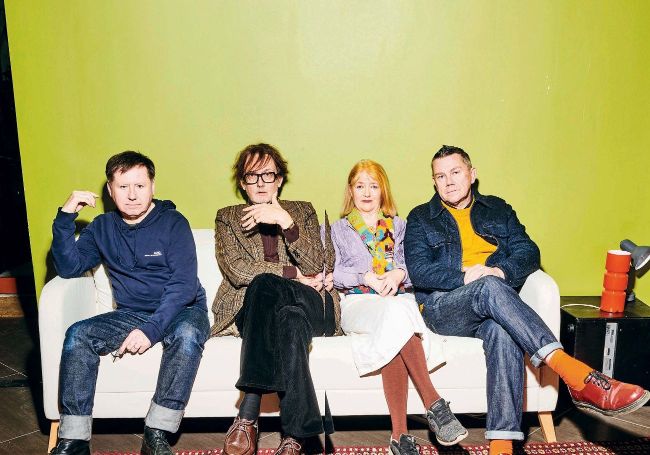
This is your life: (l–r) Mark Webber, Jarvis Cocker, Candida Doyle and Nick Banks in 2025
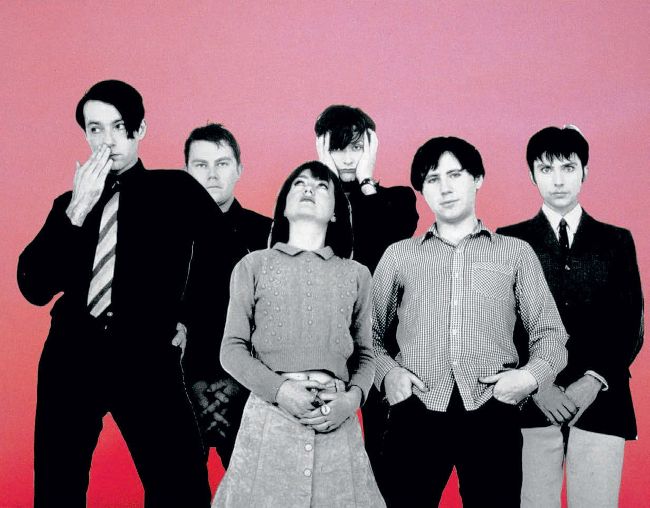
Different Class
-era Pulp in 1995: (l–r): Steve Mackey, Nick Banks, Candida Doyle, Jarvis Cocker, Mark Webber and Russell Senior
“BEING in a band does something strange to your sense of time,” says Jarvis Cocker as he reflects on the peculiar symmetries of 2025. He’s talking about the way that the past and present have collided this year for Pulp – and specifically, their annus mirabilis of 1995. There were No 1 albums (2025’s More; 1995’s Different Class) and ecstatically received performances at Glastonbury.
“We wanted to play Glastonbury because that concert in 1995 was the first show we played since we were kind of famous, a bit,” he says. “Then we had 30 years of ups and downs and were coming back. It felt right. I could tell the concert was going to be good, but I didn’t think about it too much, I just did it – which is a good way to live your whole artistic life.”
All the same, it’s clear that Jarvis – along with bandmates Candida Doyle, Nick Banks and Mark Webber – have thought long and hard for Uncut about their favourite Pulp songs. They start with the first Pulp song ever recorded and cover every era of the band’s history. Banks and Webber include songs from before they joined the band, alongside great B-sides, classic singles, rarities, hits from an alternate universe and highlights from More. They have evidently come a long way since Cocker formed Arabicus Pulp in Sheffield almost 50 years ago.
When they regrouped in 2023, new songs were not on the agenda, but Cocker’s thinking began to evolve. Maybe Pulp still had legs? “That meant I had to think about why I wanted to make another record, given I don’t usually enjoy the process,” says Cocker. “The answer I got was that music is my main pleasure in life. I started writing because I heard songs on the radio that gave me a tingle – and that is still my yardstick. When I heard the mix of [More’s lead single] ‘Spike Island’, the tingle was on.”
“I HEARD SONGS THAT MADE ME TINGLE – THAT IS STILL MY
YARDSTICK”
JARVIS COCKER
But Cocker knew recording had to be done differently to the past, particularly the onerous sessions for This Is Hardcore (1998) and We Love Life (2001). “I didn’t want to take too long because the band would walk out, so we had to do it and then work out what it means afterwards, during conversations like this,” he says. “If only I’d learnt that a few years ago, things might have worked out a bit differently.”
Compiling Pulp’s 40 favourite songs allowed Cocker to compare the experience of making More with making Different Class, which has been remastered as a double album at 45rpm and is being reissued next month. He also reflects on the absence of Russell Senior, who left the band in 1997; and Steve Mackey, who died in 2023. “Russell was really important,” he says. “He provided direction. Without Russell, I wouldn’t have continued with Pulp. I also worked very closely with Steve and I miss him. Making music with other people is more interesting than making it on your own. You can get an idea, but if you want it to be more than the sum of its parts, you need other people.”
So that’s the past and present of Pulp. What of the future? There will be more touring for the first half of 2026, while longtime collaborator Garth Jennings is working on a Pulp documentary. After that? “We have shows in America and then we have a few months off and I am going to think about it then – but not too much, as I’ve said. Then we will see. Everybody’s enjoyed it, as far as I can tell, so we might write some more songs. Who knows?”
1 WHAT DO YOU SAY?
(
YOUR SECRET’S SAFE WITH US
, 1982)
Pulp’s recorded debut – on a Various Artists indie compilation that nobody bought.
JARVIS COCKER: “This was the first Pulp song that people had the chance to buy. It was on the demo tape I gave to John Peel that got us our Peel session, but we didn’t record it for the session. In the wake of that session, the only interest we got was this compilation called Your Secret’s Safe With Us. I thought we’d get all these offers but we got this one demo on a compilation nobody bought.
“We really were clueless. I bribed other people with beer to be in my band. We stumbled into things like the John Peel session and our first show. But I don’t mind this song. I am singing very high and lyrically I haven’t hit my stride, but it’s somewhere to start. There was nobody on Your Secret’s Safe With Us that went on to be big. The secret really did stay safe for many years.”
2 MY LIGHTHOUSE
(
IT
& SINGLE, 1983)
The band’s debut single, a charming acoustic love song written by Cocker with early guitarist (and future co-founder of The Mission) Simon Hinkler.
NICK BANKS: “This was when I discovered Pulp. I knew Jarvis a bit because I put on bands in a pub and Jarvis would sit on the step outside so he could see the band without paying 50p. I went to see Pulp and they blew me away. It was the complete opposite of what I listened to, with acoustic guitars, trombone and backing singers. “Jarvis was mesmerising. He engaged with the audience rather than mumbling between songs and had these strange dance moves. ‘My Lighthouse’ was their first single and it’s a lovely song. It showed a spotty 18-year-old there were ways to expand your musical mind. If they have a trombone tooting away, embrace it. What’s the worst that can happen?”
3 LITTLE GIRL (WITH BLUE EYES)
(“LITTLE GIRL (WITH BLUE EYES) AND
OTHER PIECES” EP, 1985)
A standalone EP – and Candida Doyle’s Pulp debut – receives rave reviews. But momentum slows when Cocker suffers an injury while trying to impress a girl at a party.
CANDIDA DOYLE: “This was one of the first songs I learnt. I was already a fan and joined the third lineup. My brother Magnus played drums and Pete [Mansell], my boyfriend, was on bass. The keyboard player left, but they had a show so needed somebody quickly. I was petrified, but I loved the band.
“I love the keyboards on this song. On most of the early ones I just play two or three notes, but on “Little Girl” I’m playing a lot. I also sang backing vocals, which I didn’t do often because Jarvis sings too low for me. It’s about his mum. Jarvis often wrote about women because he grew up in an all-women household. After ‘Little Girl’ came out, Jarvis fell out the window [trying to impress a girl at a party]. When we visited him in hospital his mum gave us a real bollocking for not visiting him sooner. I think Jarvis was a bit embarrassed about that.”