FUEL FOR THOUGHT
Since the UK Government announced a ban on the sale of new petrol and diesel cars from 2030, it’s been clear that electric cars will be central to a more sustainable future. However, man-made e-fuels might also have a role to play. The European Union recently agreed to exempt cars that run on e-fuel from its ban on new combustion-engined vehicles in 2035.This means these cars can still be sold in the EU after that date, provided they’re fitted with tech to prevent the use of fossil fuels in them. So, what exactly are e-fuels? Are they a potential alternative to electric power, and are we likely to see them being used in the UK to power new or existing cars? George Hill has the answers
How e-fuels are produced
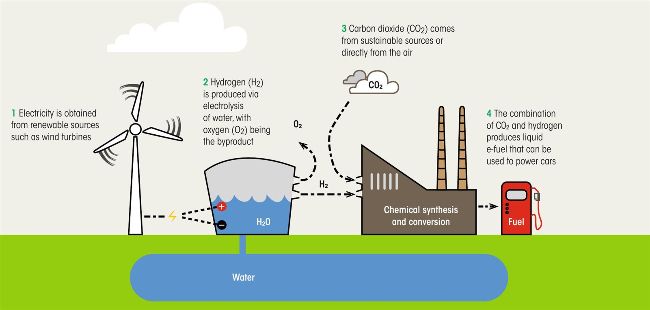
ILLUSTRATION BY TARA TUOHY
What are e-fuels?
E-fuels – or electrofuels, to give them their full name – are a type of synthetic fuel suitable for use in combustionengined vehicles. Unlike petrol and diesel, which are produced from oil, synthetic fuels are man-made from renewable resources.
E-fuels shouldn’t be confused with other synthetic fuels such as ethanol and biodiesel, though. Ethanol – which is made from plant materials – is used as a blending agent with petrol to increase octane and reduce carbon monoxide emissions, while biodiesel comes from vegetable oils and animal fats. E-fuels, on the other hand, are made by using electricity to combine hydrogen and carbon dioxide (CO2 ).