GB
  
You are currently viewing the United Kingdom version of the site.
Would you like to switch to your local site?
19 MIN READ TIME

INSIDE NEIL ARMSTRONG

JOHN F. KROSS PRESENTS AN EXCLUSIVE INTERVIEW WITH JAMES HANSEN, AUTHOR OF “FIRST MAN”
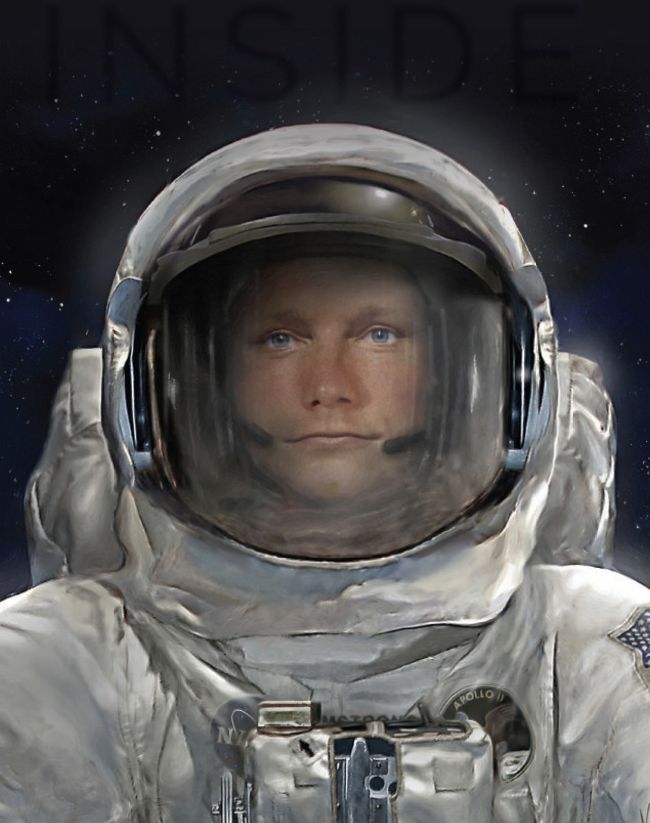
Neil Armstrong
Credit:James Vaughan
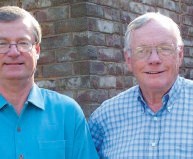
James Hansen,to left with Neil Armstrong
credit: James Hansen

Dr. James Hansen is Professor of History at Auburn University and an authority on the history of science and technology. “First Man,” his best-selling biography of Neil Armstrong, has received major awards and is the basis of the Oscar-nominated flm of the same name. “Ad Astra” sat down with Hansen to explore the life and career of the frst man to walk on the Moon.

AD ASTRA: “First Man” is in itself a “first” in so many ways. Why do you think that Neil Armstrong agreed to an authorized biography after turning down so many previous offers?

HANSEN: I think it was just the right time for him. I know that [his family] … was encouraging him [and] … I think … when he saw my previous books he knew that I would take his engineering seriously. I think the fact that I was an academic actually was in favor of having it done. Neil … [had] been an academic himself at the University of Cincinnati, so I think it was just a combination of factors.

AD ASTRA: What features about Armstrong’s background from growing up in Middle America during the 1930s and 1940s shaped the kind of person he became?

HANSEN: I believe it strongly did and certainly as a biographer I feel … you really need to understand … how he was raised and what kind of community he was in. I think it was just a sense of togetherness and Americana, and also ambition to some extent. The kind of values that were rooted in small town community life … that translated in some interesting ways for personality development and that … seemed to lead in a direction for achievement.

AD ASTRA: You spent a lot of time with Armstrong.Can you give us some insight into his personality? He often came across as introspective and reticent.

HANSEN: Both of those characteristics are true, but at the same time he could be very social, had such a great dry sense of humor, and was just a lot of fun to be around. I think once you had found his comfort zone … Neil came out of the shell in a lot of ways, whereas in public he [was] … more cautious and circumscribed in his personality. What really impressed me the most was … that once he gave me the go-ahead with the book, he trusted me … and he didn’t try to … control the contents, the tone, or anything.

AD ASTRA: Do you think Armstrong was uniquely qualified among the astronauts because of his X-15 experience?

HANSEN: I think he was. A lot of people have commented on the fact that Neil was the only one that had any experience in a rocket-powered vehicle … and all the other test flying that he had done in so many different types of vehicles when he was in NACA and a NASA test pilot. Of course, he had the military aviation experience too. He flew 70 combat missions in Korea and was in one of the first all-jet fighter squadrons with the Navy. Six of the seven Apollo commanders were naval aviators.

AD ASTRA: What was Armstrong’s attitude about applying to be a NASA astronaut? Do you think he was ambivalent because of his late application? He had other options to fly in space, such as the X-20 Dyna-Soar.

Read the complete article and many more in this issue of Ad Astra
Purchase options below
If you own the issue, Login to read the full article now.
Single Digital Issue 2019 - 2
 
£5.99 / issue
This issue and other back issues are not included in a new subscription. Subscriptions include the latest regular issue and new issues released during your subscription. Ad Astra

This article is from...


View Issues
Ad Astra
2019 - 2
VIEW IN STORE

Other Articles in this Issue


COMMS
THE YEAR OF APOLLO
As I certainly need not tell you, this year marks a
A Message FROM THE Incoming Chair of the NSS Executive Committee
A Message FROM THE Incoming Chair of the NSS Executive
APOLLO 11
FIRST MAN ON THE MOON
THE REAL
To celebrate the 50th anniversary of the first lunar landing, National Space Society President and “Ad Astra” columnist, Geoffrey Notkin, sat down with his childhood hero, Apollo 11’s Lunar Module Pilot Buzz Aldrin, for an exclusive NSS interview about spaceflight past, present, and future.
SETTING THE STAGE
SETTING THE STAGE
Landing humans on the Moon was an enormous undertaking. The massive Saturn V had to be designed, tested and tamed. The Lunar Module had to be developed from whole cloth, and many other machines and systems perfected before the first mission to the lunar surface could be successful. This is the story of that preparation.
CHESLEY BONESTELL:A BRUSH WITH THE FUTURE
Directed and produced by Douglass Sterwart
A COMMANDING PRESENCE: The story of the APOLLO COMMAND MODULE
The Apollo Command Module was a critical component to the lunar missions, and the story of its development-including the tragic tale of Apollo 1—is central to understanding the story of the Apollo program.
A FORGOTTEN FIRST: THE FIRST LIVING CREATURES TO LOOP THE MOON
In the race to beat America to the Moon, the Soviet Union developed two different systems for lunar flight–one for landings, and another for lunar flybys. This story explains how the latter were successfully tested, but came too late to bring the Soviets glory in the space race.
The Apollo Guidance Computer
What would you do with a surplus Apollo Guidance Computer, a true gem of the space age? Here is one man’s quest to revive one such piece of space race history…with a lot of help from like-minded friends.
Not So Hidden:
Ten Unsung Heroes of Apollo
A MISSION TO THE MOON
Eyewitness TO HISTORY
The mission of Apollo 11 was covered primarily by seasoned, mid-life journalists. But one teenager managed to wrangle a press pass–here is David Chudwin’s account of the events of July, 1969, complete with exclusive photos he took of the events.
FIRST ON THE MOON
Hundreds of things had to go according to plan for Apollo 11 to land astronauts on the Moon and return them to Earth successfully. The flight proceeded mostly generally as planned, but there were a number of potential missionstoppers that the general public only learned about later.
A NEW GENERATION OF APOLLO ART:
Inspirations from the International Association of Astronomical Artists.
THE CHILDREN OF APOLLO
To the children of the Apollo astronauts, growing up in the new suburbs outside the Johnson Space Center seemed normal. Upon later reflection, however, it was anything but ordinary. This book excerpt contains the recollections of Rick Armstrong and Andrew Aldrin.
AND DON’T FORGET… ONE IN THE COMMAND MODULE
While we hear much about the astronauts that walked on the Moon, there was a third crewmember on each Apollo mission that was critical to success: the Command Module Pilot, without whom none of the Apollo missions would have accomplished its goals.
APOLLO’S LEGACY
One Giant, 50-Year Leap:
Imagine an organization with a name recognized in every country in the world, whose every move was watched by hundreds of millions of people, and whose successes fulfilled the dreams of a nation and inspired awe and admiration around the world. This was NASA in the 1960s. How can the space agency revive it’s “brand” in the 21st century?
Op-Ed Caught Between The Moon AND A STEAM CARRIER
The Apollo program encouraged countless young people to enter fields such as engineering, science and math. On this 50th anniversary, it’s time to rekindle that passion.
NSS, ON A MISSION TO THE STARS
NSS Chapters
PROMOTING LUNAR SETTLEMENT
Chat
X
Pocketmags Support