AZTEC EMPIRE
How nomadic tribes united to a Central American superpower
Written by Owen Jarus create
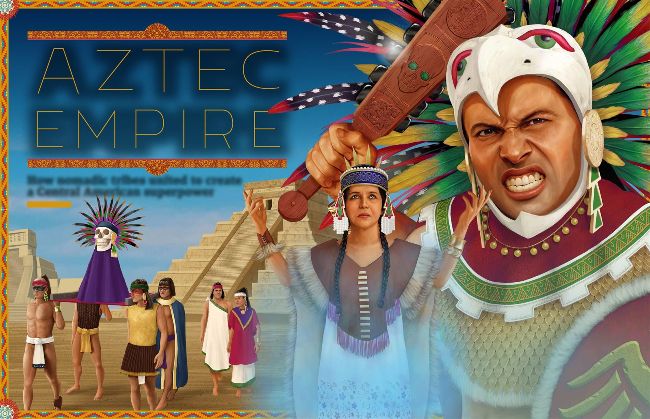
Illustration by: Kevin McGivern
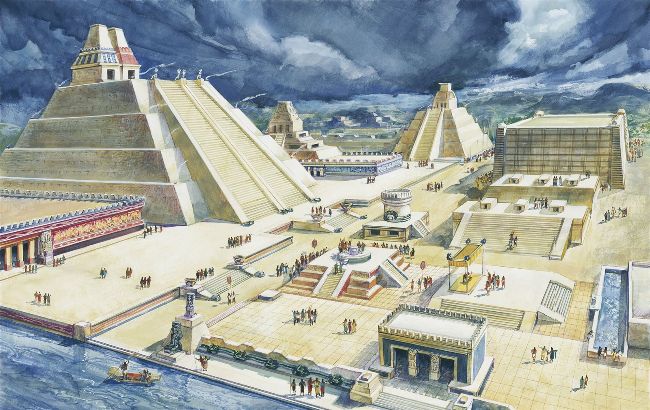
A depiction of the central square of Tenochtitlán as it would have looked at the peak of the Aztec Empire
A t their height, around 1500, the Aztecs controlled a large amount of territory in central Mexico. They grew their empire through military conquest. “According to their own histories, military power [was] the main advantage they had,” says Davide Domenici, an anthropology professor at the University of Bologna.
Scholars use a wide variety of sources to reconstruct Aztec warfare, including texts written by the Aztecs and Spanish, archaeological discoveries and experiments such as testing out the effects of different Aztec weapons.
Defining who exactly the Aztecs were can be complicated. The word ‘Aztec’ comes from the Nahuatl language and means ‘people from Aztlan’. David Carrasco, author of The Aztecs: A Very Short Introduction, describes Aztlan as the “revered place of origin of the various ethnic groups who eventually dominated central Mexico in the century before the arrival of Europeans.” Where exactly Aztlan is and whether it should be considered a real or mythical place is a source of debate among scholars.
The people whom we call Aztecs didn’t use that word to describe themselves. They would sometimes use words linked to various ethnic groups that they belonged to such as the Mexica, who were based around the city of Tenochtitlán and became the most powerful Aztec group.
Scholars often use the term Aztec Empire to describe the entity that came to control much of central Mexico. At the heart of the Aztec Empire was the ‘Triple Alliance’ of the cities of Tenochtitlán, Tetzcoco and Tlacopa who, around 1428, agreed to work together to grow their influence and share the spoils of war. This happened after they overthrew the Tepanecs, who had been one of the most powerful groups in the region and had exercised power over Tenochtitlán and other cities. As time went on Domenici describes how the Mexica based at Tenochtitlán “gained a position of prominence within the so-called Triple Alliance.”
“HAD T HE SPANIARDS BEEN THE SOLE COMBATANTS AGAINST THE AZTECS, THE CONFLICT WOULD HAVE ENDED QUICKLY IN THE AZTECS’ FAVOUR”
IMPORTANCE OF TRADE
Trade also played an important role in how the Aztecs became powerful. The Mexica built the large city Tenochtitlán on an island on Lake Texcoco and Camila Townsend, a history professor at Rutgers University, says the location of the city meant that “they became the most important merchants in the region, as they were just a quick canoe ride away from dozens of other tribal groups”, noting that “they grew rich through trade.”
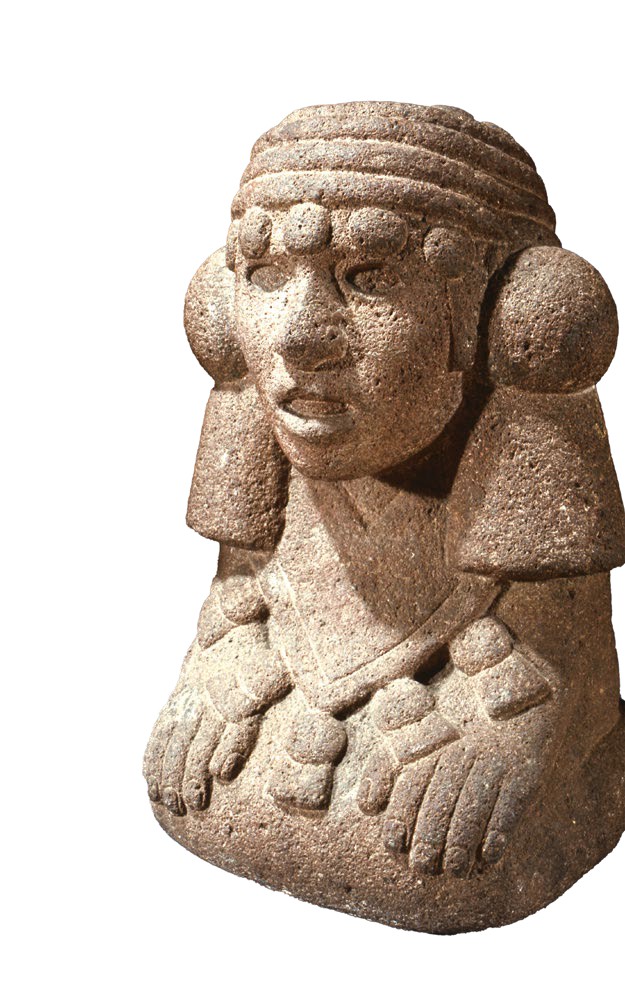
Figure of the fertility goddess Chalchihuitlicue
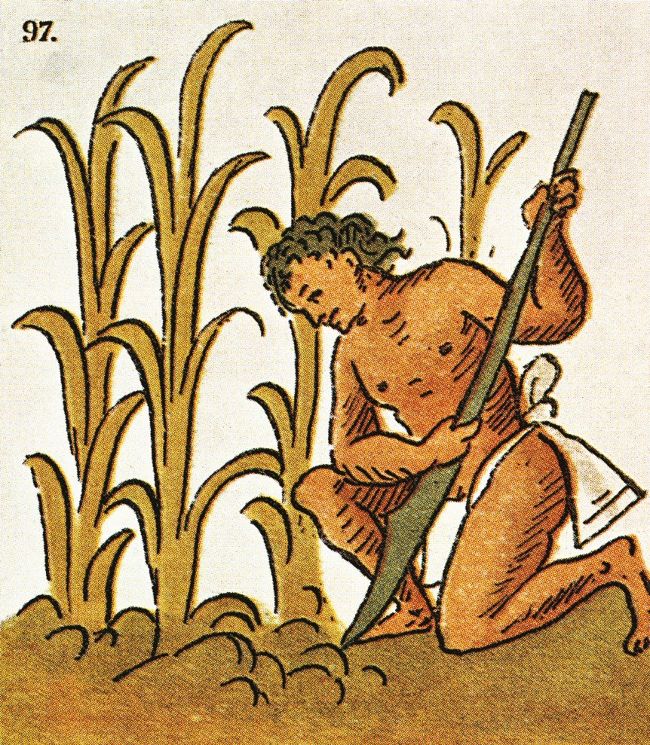
The cultivation and harvesting of crops needed to be worked around in order to also raise an army
When the Spanish arrived they marvelled at Tenochtitlán. Hernan Cortes, who led the conquest of Tenochtitlán, wrote that “the city is as big as Seville or Cordoba. The main streets are very wide and very straight; some of these are on the land, but the rest and all the smaller ones are half on land, half canals where they paddle their canoes.”
Cortes noted that trade was abundant, writing that it had a great marketplace where “sixty-thousand people come each day to buy and sell.” Its merchandise included “ornaments of gold and silver, lead, brass, copper, tin, stones, shells, bones and feathers.” The gold at Tenochtitlán particularly impressed Cortes and was an important reason why he wanted to take over the city.